![[등록] 2026-09-01 15:48:31](/support/_updata/banner2/tl181982910_6749.png)


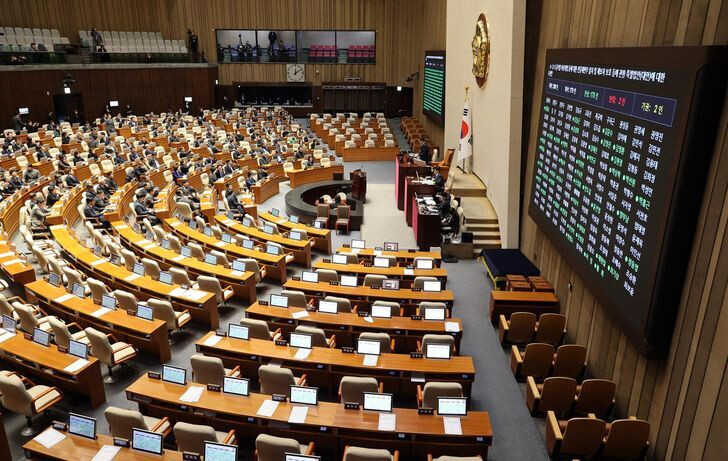
SEOUL — In a move that has sent shockwaves through South Korea’s legal and political landscapes, the National Assembly passed a contentious amendment to the Court Organization Act on Saturday. The bill, which seeks to nearly double the number of Supreme Court justices, was pushed through by the ruling Democratic Party despite fierce resistance and a 24-hour filibuster by the opposition.
The Core of the Expansion
The amendment marks the final piece of the so-called "Three Major Judicial Reform Bills," which also include the introduction of a "Law Distortion" crime and the "Constitutional Complaint" system for court rulings.
According to the passed legislation:
The Bench Expansion: The number of Supreme Court justices will increase from the current 14 to 26.
Phased Implementation: Starting two years after the bill's promulgation, four new justices will be added annually over a three-year period.
Case Backlog Argument: The ruling party justifies the move as a necessary measure to resolve "trial delays" caused by an overwhelming surge in cases reaching the highest court.
Presidential Influence: A "Court-Packing" Controversy?
The most explosive aspect of this legislation is the resulting concentration of appointment power. If the law is enacted as planned, President Lee Jae-myung will appoint a total of 22 justices during his single five-year term.
This total includes:
-12 newly created seats through the expansion.
-10 existing seats that will become vacant as current justices reach the end of their six-year terms.
The opposition People Power Party (PPP) has slammed the move as "judicial capture," accusing the administration of attempting to "pack the court" with pro-government figures to provide a legal shield for the President. They argue that having 85% of the nation's highest judicial body appointed by a single president fundamentally violates the principle of the separation of powers.
Fierce Political and Judicial Backlash
The legislative process was anything but smooth. On February 28, the National Assembly floor became a scene of chaotic protest. PPP lawmakers occupied the speaker’s rostrum, holding a silent sit-in after their filibuster was forcefully ended by a closure vote. The final tally stood at 173 in favor and 73 against, reflecting the deep partisan divide.
The judiciary itself has voiced unprecedented alarm. Chief judges from across the country held an emergency meeting earlier this week, expressing "grave concern" that such a massive influx of new justices in a short period could lead to:
Inconsistency in Precedents: A sudden shift in the court’s composition might lead to the overturning of long-standing legal doctrines.
Dilution of Expertise: Critics fear the rapid appointment process may prioritize political alignment over judicial depth.
Subordination of the Judiciary: Many legal scholars warned that the judiciary could become a subordinate branch to political power, rather than a check on it.
Conclusion: A Turning Point for the Rule of Law
With the passage of the Supreme Court expansion, alongside the Law Distortion bill (which allows for the criminal punishment of judges for their rulings) and the Trial Petition bill, South Korea's 80-year-old judicial framework is facing its most radical transformation yet.
While the ruling party promises a more efficient and "people-centered" legal system, the legal community remains wary. As one former presiding judge noted, "When the referee is chosen entirely by one team, the fairness of the game is permanently called into question."
[Copyright (c) Global Economic Times. All Rights Reserved.]