![[등록] 2026-09-01 15:48:31](/support/_updata/banner2/tl181982910_6749.png)


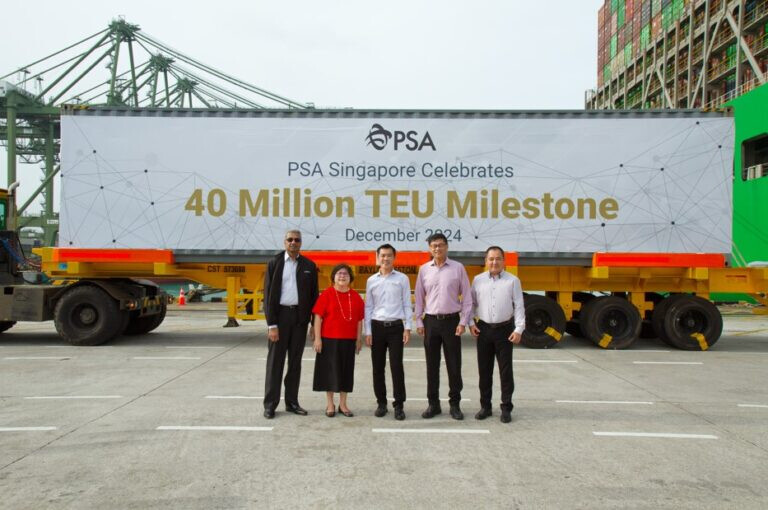
Singapore's ambitious project, Tuas Port, has handled 10 million TEUs (twenty-foot equivalent units) in just two years since its opening, demonstrating its might as the world's largest automated port. Tuas Port, which opened in September 2022, achieved this remarkable throughput with a minimal workforce, thanks to the active role of over 200 high-speed charging autonomous electric vehicles.
These advanced transport vehicles can simultaneously carry two 20-foot containers at a maximum speed of 25 km/h (15.5 mph). At the central control center, implemented as a digital twin of the port, human supervisors monitor the movements of these vehicles and key equipment such as cranes in real time, supporting efficient operations. The Maritime and Port Authority of Singapore (MPA) has announced plans to introduce at least 200 additional autonomous electric vehicles in line with future port expansion.
Singapore aims to enhance operational efficiency and reduce greenhouse gas emissions caused by inter-port logistics by consolidating its existing multiple ports into Tuas Port over the coming years. The autonomous electric vehicles and advanced equipment introduced at Tuas Port have resulted in a 50% reduction in carbon emissions compared to traditional diesel equipment. Furthermore, additional efforts to enhance efficiency have led to a 60% reduction in power consumption compared to traditional ports of a similar scale. The MPA plans to further accelerate the digitalization of port operations by introducing a Next Generation Vessel Traffic Management System utilizing artificial intelligence (AI) and satellite technology.
Tuas Port has set long-term goals to achieve an annual container handling capacity of 65 million TEUs by the 2040s and Net Zero Emissions by 2050. To achieve this, it plans to continuously upgrade its automated operating systems and expand the adoption of eco-friendly energy technologies.
The successful operation of Tuas Port is being evaluated as presenting a future-oriented port model that simultaneously pursues automation and sustainability. Major ports around the world are paying close attention to the case of Tuas Port and actively discussing the adoption of automation and the establishment of eco-friendly operating systems. In particular, facing the challenges of port labor shortages and increasingly stringent environmental regulations, Tuas Port's innovative efforts are expected to offer significant solutions.
Automated systems can enhance work efficiency and safety while also bringing about labor cost savings. Additionally, the introduction of electric-powered equipment reduces air pollutant emissions generated during port operations, enabling environmentally friendly port operations. The Singaporean government is striving to simultaneously achieve the dual goals of economic growth and environmental protection through Tuas Port, which offers important implications for other countries as well.
However, the construction of an automated port system requires substantial initial investment costs, and there remain challenges to be addressed, such as security issues related to system errors or cyberattacks, and social discussions regarding job losses due to automation. The Singaporean government and the MPA are expected to carefully review these issues and build a future-oriented smart port ecosystem through technological development, workforce retraining, and social consensus.
The continuous growth and innovation of Tuas Port will be an important indicator for understanding the future of the global maritime industry, and attention is focused on how this port will change global logistics flows in the future.
[Copyright (c) Global Economic Times. All Rights Reserved.]