![[등록] 2026-09-01 15:48:31](/support/_updata/banner2/tl181982910_6749.png)


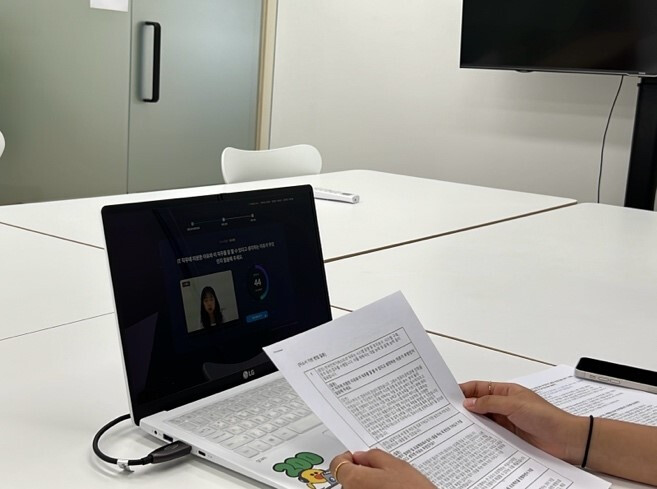
Seoul, South Korea – The laborious task of crafting compelling cover letters, once a rite of passage for job seekers, appears to be undergoing a significant transformation, largely driven by the digital fluency of Generation Z. A recent survey conducted by the South Korean recruitment platform Catch reveals a striking trend: an overwhelming 91% of Gen Z job applicants have utilized artificial intelligence (AI) in the process of writing their cover letters. This widespread adoption signals a fundamental shift in how young professionals approach the crucial initial stage of their career journeys.
The survey, which polled 2,012 Gen Z individuals actively seeking employment, sheds light on the multifaceted ways in which AI is being integrated into the cover letter writing process. The primary motivations cited by respondents underscore a pragmatic and strategic approach to job applications. A significant 43% reported using AI for in-depth company and job role analysis, leveraging its capabilities to quickly synthesize vast amounts of information. Another 34% utilized AI to structure their sentences effectively, ensuring clarity and coherence in their written communication. Furthermore, 33% found AI invaluable for organizing their thoughts and articulating them in a clear and concise manner.
Beyond these core functions, Gen Z job seekers also turned to AI for more tactical advantages. Approximately 26% cited the speed of AI-assisted writing as a key benefit, acknowledging the time-sensitive nature of job applications. Enhancing vocabulary diversity was another significant draw, with 20% utilizing AI to inject more sophisticated language into their writing. Even basic tasks like proofreading for typographical errors saw AI adoption, with 14% relying on the technology for this purpose.
This widespread embrace of AI in cover letter writing has naturally led to discussions within the hiring landscape about the potential for detecting AI-generated content. Companies are reportedly considering the implementation of ‘AI detection programs’ to discern the authenticity of application materials. However, the Catch survey reveals a cautious and largely negative sentiment among Gen Z towards such measures. A substantial 44% of respondents expressed uncertainty about AI detection programs, while a notable 33% actively opposed their introduction – a figure exceeding the 23% who supported them.
The reasons for this opposition are illuminating. The most prevalent argument, cited by 56% of those against AI detection, is the assertion that ‘AI utilization is also a skill’ in the modern digital age. This perspective frames proficiency in leveraging AI tools as a valuable competency, akin to mastering any other software or technology relevant to the professional world. An additional 21% argued that ‘it’s an era where everyone uses AI,’ suggesting that attempting to restrict its use in job applications is anachronistic and out of touch with current technological realities. Concerns about the ‘accuracy of detection technology’ were also significant, with 18% expressing skepticism about the reliability of AI detection software. A smaller but still relevant 4% emphasized the importance of ‘efficiency in job preparation,’ implying that AI tools contribute to a more streamlined and effective application process.
Conversely, those who supported the implementation of AI detection programs primarily voiced concerns about ‘excessive reliance on AI,’ with 48% citing this as their main reason. This suggests a recognition that while AI can be a helpful tool, over-dependence might hinder the development of genuine writing and critical thinking skills. A desire for ‘fair evaluation’ was another key motivator for support, with 20% believing that restricting AI use would lead to a more equitable assessment of candidates' individual abilities. Concerns about the ‘decreased sincerity when using AI’ (18%) and the potential for an ‘increase in formulaic cover letters’ (13%) also contributed to the support for detection measures.
Interestingly, the survey also revealed that even those who utilize AI are mindful of its limitations and potential pitfalls. When asked about ‘points to consider when using AI,’ a majority (54%) emphasized the importance of verifying ‘incorrect information or exaggeration’ that the AI might generate. The ‘possibility of plagiarism or duplication’ was another significant concern, cited by 34%, highlighting an awareness of the ethical implications of AI-generated content. Ensuring ‘sincerity’ in the writing was equally important to 34% of respondents, suggesting a desire to maintain a personal voice despite AI assistance. The ‘naturalness of sentences’ was also a key consideration for 29%, indicating an effort to refine AI-generated text to sound more human and less robotic. Notably, 14% reported ‘checking for AI dependency,’ suggesting a conscious effort to avoid over-reliance on the technology.
Kim Jeong-hyun, Head of Catch at Jinaksa, offers a pertinent insight into this evolving landscape: “For Gen Z, who are familiar with digital technology utilization, AI is already a naturally internalized tool. Since most are using AI, it is necessary to focus on how strategically the applicant utilizes it and whether they are excessively dependent on it.” This observation underscores the need for a nuanced understanding of AI's role in the job application process. Rather than simply trying to eliminate its use, employers might benefit more from evaluating how effectively candidates leverage AI as one of their many skills, while also discerning genuine insight and critical thinking within their applications.
The findings of this survey highlight a critical juncture in the relationship between technology and the job application process. As AI tools become increasingly sophisticated and accessible, their integration into traditionally human-driven tasks like cover letter writing is likely to continue. Understanding the perspectives of the digital native generation, who are at the forefront of this shift, is crucial for both job seekers and employers as they navigate this evolving landscape. The debate over AI in recruitment is not simply about the use of technology; it touches upon fundamental questions of skill, authenticity, and the very nature of work in the age of artificial intelligence.
[Copyright (c) Global Economic Times. All Rights Reserved.]