![[등록] 2026-09-01 15:48:31](/support/_updata/banner2/tl181982910_6749.png)


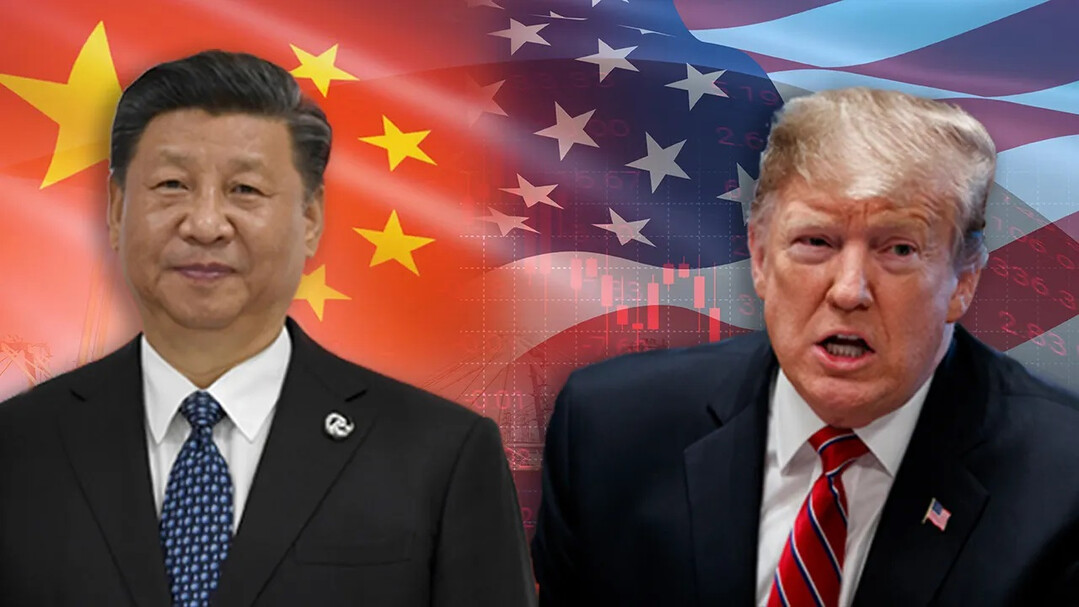
Donald Trump, the former U.S. President, is intensifying efforts to isolate China from the global supply chain. A preliminary trade agreement between the United States and Vietnam, announced last Wednesday (local time, July 2), clearly demonstrates the Trump administration's strategy. This agreement imposes a 20% tariff on Vietnamese products, but notably, it applies a significantly higher tariff of 40% on goods routed through third countries, i.e., items classified as Chinese-origin. This is interpreted as a strong signal to block China's attempts to evade U.S. tariffs by funneling goods through neighboring countries, including Vietnam.
During his presidency, President Donald Trump focused on reducing U.S. companies' dependence on China. Now, his strategy is evolving to further pressure individual countries to exclude China from their own supply chains. This agreement with Vietnam is considered the most significant advancement towards that goal.
All-Out Pressure on Southeast Asia
Beyond Vietnam, U.S. trade negotiators are demanding that export-oriented Southeast Asian countries like Indonesia reduce their reliance on Chinese components. Thailand's government is reportedly being pressured to tighten foreign direct investment reviews to prevent Chinese companies from relocating and even to consider export controls on critical technologies like semiconductors. Steve Okun, CEO of APAC Advisors, pointed out, "The Trump administration is saying, 'If you want to be a trading partner with the U.S., you need to strategically decouple.'" He added, "The question is, will countries agree to it?"
These U.S. moves place greater vulnerability on Southeast Asian nations, which are at the forefront of China's global trade and manufacturing dominance. Tensions in the region are expected to escalate, especially as China has strongly reacted to the U.S.-Vietnam agreement, stating, "We firmly oppose any agreement that infringes upon China's interests and will take corresponding measures to protect our legitimate rights and interests."
Vietnam's Dilemma and Corporate Reactions
Vietnam had much to lose in trade negotiations with the U.S. President Donald Trump had threatened to impose import tariffs of up to 46% on Vietnamese products, which would have severely impacted industries highly dependent on Vietnam, such as footwear, apparel, and electronics. While the 20% tariff is lower than anticipated, it could still be a burden for Vietnamese companies. However, Tran Quang, an executive at a home fragrance company, stated that the 20% tariff wasn't the worst-case scenario and expressed support for the higher transshipment tariffs, which could prevent Chinese companies from relocating to Vietnam to avoid tariffs and unfairly compete with local businesses.
China's massive investments and trade have contributed to economic growth in Southeast Asia, including Vietnam. However, with the recent difficulties in the Chinese economy due to the real estate crisis, there's also been an issue of products from subsidized Chinese factories flooding global markets, threatening the survival of domestic companies in the region.
Uncertainty and Ripple Effects
The specifics of this U.S.-Vietnam trade agreement, particularly the definition of "transshipment" and the permissible percentage of Chinese components, remain unclear. Experts analyze that the impact will vary significantly depending on these details. Concerns are also being raised that if restrictions on Chinese components are strict, U.S. companies might withdraw their production bases from Vietnam. Matt Priest, CEO of the Footwear Distributors & Retailers of America (FDRA), stated, "If compliance is too burdensome or difficult, companies won't seize the opportunity to increase sourcing from Vietnam." He added, "If there's price competitiveness, they might even return to China."
Furthermore, this agreement increases uncertainty for Southeast Asian countries regarding the types of tariffs and China restrictions they might agree to in potential future trade negotiations with a Trump administration. Restrictions on Chinese content will demand unprecedented levels of export scrutiny from local customs officials, raising questions about their effective enforcement capabilities. Some countries are even reportedly discussing establishing separate supply chains for the U.S. market.
Washington also risks pushing some countries, deeply integrated with the Chinese economy, closer to China. Many Asian governments are concerned about how China will react to agreements designed to isolate Chinese companies. China has shown an increasingly assertive stance, taking retaliatory measures like product boycotts, restrictions on essential mineral exports, and strengthening its territorial claims in the South China Sea. Pavida Pananond, a professor of international business at Thammasat University in Thailand, emphasized, "Politically, we have to navigate carefully between the two major powers." She added, "China is a very important economic power, not just as an importer of goods but also as a source of investment and an export destination."
In recent weeks, Southeast Asian countries have taken their own measures to strengthen transshipment monitoring and enforcement, offering clues as to what agreements might emerge in trade negotiations with the U.S. Thailand estimated that enhanced transshipment export scrutiny could lead to a $15 billion reduction in exports to the U.S. if President Donald Trump follows through on his threat of a 36% tariff. This represents one-third of Thailand's trade surplus with the U.S. last year. Thailand has also pledged to scrutinize foreign investments in areas like electric vehicles, where Chinese companies have made significant investments, relocating their own suppliers to Thailand. Malaysian and Indonesian authorities have tightened export regulations to ensure U.S.-bound exports are accurately documented and have centralized the authority to issue export certificates.
Even before a concrete trade agreement has emerged, the pressure from the Trump administration is already reshaping how the region views China. Deborah Elms, the head of trade policy at the Hinrich Foundation, explained, "The idea is to squeeze China out." However, for countries like Vietnam, complying with U.S. demands is a geopolitically risky gamble. Elms added, "Watching how the U.S., China, and their own domestic companies react is a gamble on all sides."
[Copyright (c) Global Economic Times. All Rights Reserved.]