![[등록] 2026-09-01 15:48:31](/support/_updata/banner2/tl181982910_6749.png)


Behind the seemingly neutral and pure "aesthetics of cleanliness" often lies a hidden agenda. The obsession with orderly, minimalist, and refined visual purity, along with the imposition of uniform aesthetic standards, is never innocent. Throughout history, this aesthetic has been used as a tool of control, aligning with ideologies that seek to suppress diversity under the guise of false uniformity.
The Origin of the 'Neutrality' Obsession: The Renaissance and the Rediscovery of Ancient Greece
Where did this obsession with neutrality originate? We can trace its roots to the Renaissance. During this period, the rediscovery of Greco-Roman traditions led to white marble sculptures becoming the ideal of beauty and the aesthetic standard of the era. However, recent research by two German scholars has revealed that ancient Greek sculptures were, in fact, vibrant with color, and were only considered complete works after being painted. In other words, the "pure white ancient sculptures" we know were not their original form but an aesthetic illusion created by the interpretations and reinterpretations of the Renaissance.
Aesthetic Control of Totalitarian Regimes
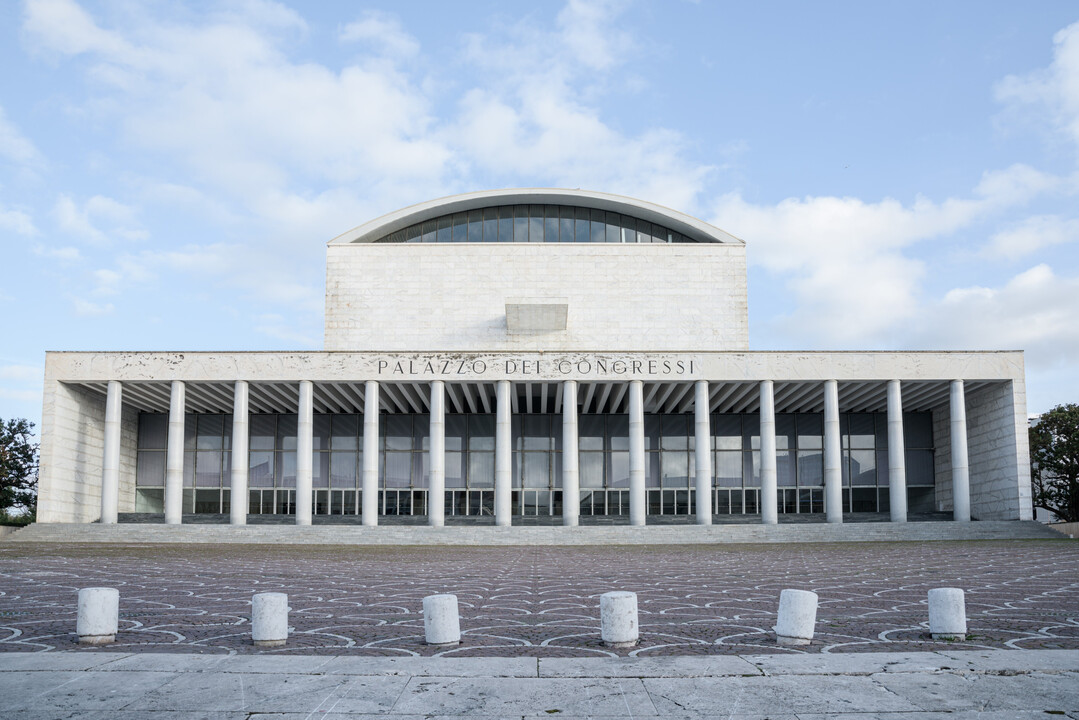
Fascism manifested in various forms, but it quickly grasped that aesthetics could be a powerful political weapon. From the monumental and symmetrical architecture of Mussolini's regime to the Nazi government's visual "sterilization" of public spaces, "cleanliness" functioned as a metaphor for "purity." This demanded an ideal that sought to eradicate anything challenging their norms. Conversely, "dirtiness"—the chaotic, the diverse, the popular, the dissident—was associated with regression and danger. This dichotomy was not merely decorative; it was used to justify exclusion, censorship, and ultimately, the extermination of the "other."
For example, the architecture of Nazi Germany emphasized massive and grand scale and orderly straight lines, highlighting the insignificance of the individual and symbolizing the authority and control of the state. Architects like Albert Speer sought to visually embody the superiority of the Aryan race and the permanence of the nation through this aesthetic. This was more than simply constructing buildings; it was a political act that disciplined the way citizens thought and behaved.
The Reappearance of 'Cleanliness' in the Neoliberal Era
Beyond a literal comparison with totalitarian regimes, the reverence for "cleanliness" performs a similar symbolic function today. In many gentrifying cities, graffiti and street art are often replaced by clean facades. The "hip" alleys of Seoul, which erase the traces of past graffiti and daily life to be filled with tidy cafes and shops, are in a similar vein. In fashion and design, neutral colors (white, achromatic), smooth and simple textures, and conflict-free aesthetics like the "Clean Girl Look" have become synonymous with universal elegance. All of this functions as a mechanism to silence non-conforming expressions behind the mask of harmony.
This aesthetic is packaged as "sophistication" and "luxury," but its essence aims for standardization and homogenization. Lifestyle images spread through social media like Instagram further reinforce this "cleanliness" aesthetic. Perfectly organized spaces, minimal props, and achromatic clothing implicitly impose certain consumption patterns and values, and anything that does not conform can be dismissed as "immature," "unrefined," or "unsophisticated."
What 'Cleanliness' Suppresses: Traces of Humanity and Memories of Resistance
What do we lose when this "aesthetic of cleanliness" is imposed? We lose the texture of human life. Urban art, marginalized cultural expressions, and even certain forms of spontaneous disorder—all of these are expressions of resistance. Murals depicting the faces of survivors from dictatorships, messages written on walls—these gestures contain collective memories that fascist aesthetics, or their modern neoliberal counterparts, seek to erase. "Cleanliness" is not just a visual choice; it is a declaration of what deserves to exist and what should not exist culturally.
Modern architecture, with its straight lines and sterile spaces, provides another example. Even minimalism can be seen as part of this trend. While seemingly functional, the rejection of ornamentation often conceals a disdain for cultural traditions that do not fit the narrative of progress. This is not merely a design issue but an attempt by certain ideologies to reconstruct reality through space.
Rediscovering 'Impurity' as Resistance
Behind every aesthetic choice lies a political project, even if it is simply packaged as "good taste." So, what is true resistance? It is perhaps in advocating for the impure, the spontaneous, that which is not disciplined by hegemonic codes. Because in such so-called "dirtiness," traces of freedom almost always remain.
Today, we can resist the aesthetic of "cleanliness" in various ways. By seeking out hidden alleys in cities to discover vibrant cultures in graffiti and paintings, by expressing our individuality beyond mainstream fashion trends, and by recognizing the beauty of imperfectly organized, "human" spaces. This awareness and action are not merely aesthetic preferences but important attitudes in safeguarding diversity and freedom in a homogenized world.
[Copyright (c) Global Economic Times. All Rights Reserved.]