![[등록] 2026-09-01 15:48:31](/support/_updata/banner2/tl181982910_6749.png)


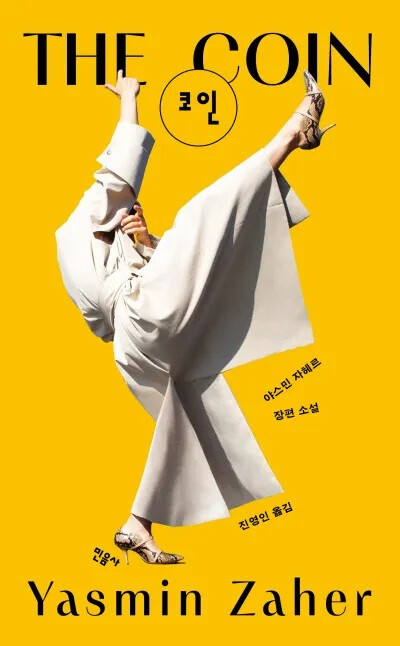
NEW YORK – In the bustling heart of New York City, a wealthy Palestinian woman carries a life defined by paradox. She navigates the city's consumerist landscape, draped in luxury brands like Hermès and Issey Miyake, but beneath the polished exterior lies a profound sense of instability and a struggle for identity. This is the world of Yasmin Zaher's debut novel, "Coin," a book that delves into the complex realities of the Palestinian diaspora.
The protagonist, a woman of means who inherited her wealth, embodies the quintessential New York immigrant success story on the surface. Yet, her internal life is anything but settled. She is plagued by obsessive-compulsive tendencies, particularly an intense need for cleanliness. Her elaborate bathing rituals, using products from "Korea, the world capital of porcelain, pure, and spotless skin," reflect a deeper psychological unease. She is haunted by the feeling of a swallowed coin from her childhood, a symbol of a past she cannot cleanse away, no matter how hard she tries to conform to her new environment.
Zaher, a Palestinian journalist born in Jerusalem, masterfully juxtaposes her protagonist's outward wealth with her inward turmoil. The author highlights the dissonance between the character's social standing—that of a successful, affluent migrant—and the underlying fragility of her identity, which is constantly challenged by her heritage.
The novel unfolds through the protagonist's daily life as an English teacher at a private school in New York. Her interactions with her Eastern European boyfriend, Sasha, and a mysterious man she calls "Trench Coat" form the narrative's core. Throughout these encounters, the theme of luxury persists, with a particularly long passage dedicated to her quest for a Birkin bag in Paris and London.
Amidst this seemingly detached, materialistic existence, the protagonist experiences sudden, poignant reminders of her homeland. A news report on the radio announces the deaths of 55 people in Gaza, stirring a "stabbing pain" in her heart. Yet, the feeling is fleeting, as she notes, "I looked up at the trees and the sky, and nothing had changed." This moment encapsulates the novel's central conflict: the struggle to reconcile a comfortable present with a traumatic past and the ethical complexities of living in a world so far removed from her ancestral homeland.
The protagonist's confusion about her identity is palpable. She reflects on the American dream, acknowledging the country's appeal for countless immigrants, including her ancestors. But she also grapples with the country's "sins abroad," particularly its actions in Vietnam, Guatemala, and Palestine. "I mean," she ponders, "how could the devil become a dream?" This question lies at the heart of her chaotic existence, making her identity difficult to define.
Zaher's prose is a standout feature of the novel. It flows like a stream of consciousness, a series of monologues and reflections that reveal the protagonist's innermost thoughts. The writing is poetic, at times surreal, and imbued with a unique rhythm and wit that capture the protagonist's refined yet materialistic persona.
Upon its 2024 publication, "Coin" was hailed as one of the best books of the year by publications such as The New Yorker and Time magazine. It also earned Zaher the Dylan Thomas Prize, awarded to young writers. In the current geopolitical climate, with renewed attention on the conflict in Gaza, the novel’s themes have become even more resonant. As acclaimed philosopher Slavoj Žižek notes in his blurb for the book, readers who once viewed Palestinians as a "violent Other to Western civilization" will "realize that this Palestinian writer sees the truth of our world that we have so far failed to see."
"Coin" is a timely and important read, offering a nuanced and deeply personal exploration of a diasporic identity caught between the allure of consumer culture and the enduring weight of history.
[Copyright (c) Global Economic Times. All Rights Reserved.]