![[등록] 2026-09-01 15:48:31](/support/_updata/banner2/tl181982910_6749.png)


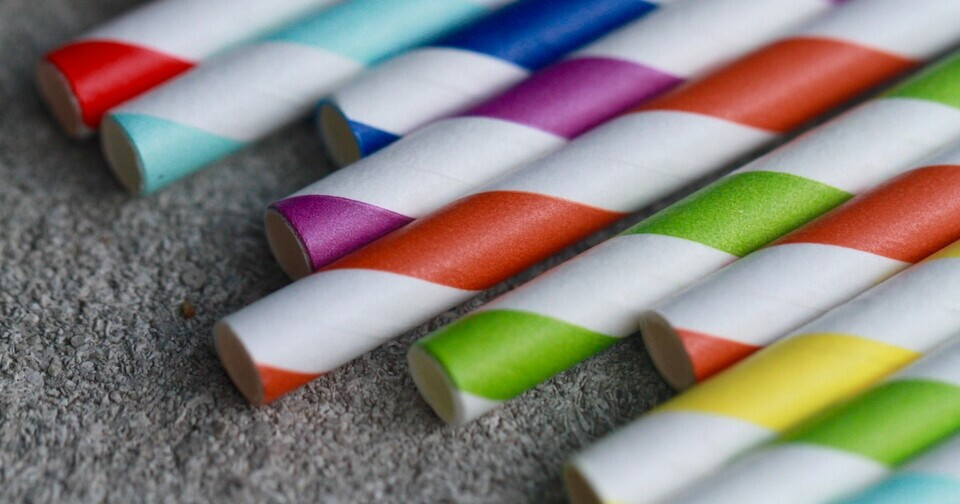
The South Korean government has announced that it will reconsider the effectiveness of its ban on plastic straws, following a recent "back to plastic" movement in several countries, including the United States under President Donald Trump. The Ministry of Environment had initially banned the use of plastic straws in cafes and restaurants under the Moon Jae-in administration, but has since backtracked with repeated postponements, leading to consumer inconvenience and pushing domestic paper straw manufacturers to the brink of collapse.
The Ministry of Environment plans to conduct a Life Cycle Assessment (LCA) of both plastic and paper straws. LCA is a method of evaluating the environmental impact of a product throughout its entire life cycle, from production and consumption to disposal.
In addition to the LCA, the ministry will also consider various other factors to reassess the effectiveness of the regulation. This includes closely examining plastic-related regulations in other countries, such as the European Union, monitoring the usage of paper straws by franchise businesses that have signed agreements with the government, and gathering feedback from consumers.
An official from the Ministry of Environment explained, "There is much debate among experts regarding the eco-friendliness of paper straws, causing confusion for consumers and straw producers. The government intends to comprehensively review the environmental impact of plastic straws, paper straws, and other alternatives to plastic straws."
Indeed, the environmental friendliness of paper straws has been a subject of ongoing debate. Some argue that paper straws have a much higher carbon footprint than plastic straws. The U.S. Environmental Protection Agency (EPA) estimated in 2020 that the production of paper straws generates 5.5 times more carbon emissions than plastic straws. However, others argue that paper is still more environmentally friendly than plastic in terms of biodegradability.
Experts have also pointed out that the environmental impact of paper straws has not been sufficiently verified. Bae Jae-geun, a professor of Construction Environment Convergence at Seoul National University of Science and Technology, stated, "Ultimately, it is best not to use disposable straws at all. However, when LCA is done on the premise of recycling, paper straws are at a disadvantage compared to plastic straws."
Major countries and companies that had introduced paper straws are now reverting back to plastic straws. President Trump recently signed an executive order to encourage the purchase of plastic straws by the federal government and consumers. Starbucks Japan also decided to use biodegradable plastic straws in all its stores earlier this year, five years after phasing out plastic straws. Beverage company Capri-Sun has decided to reintroduce plastic straws in some countries, including Switzerland, due to a sharp decline in sales after switching to paper straws.
The import of paper straws into South Korea has also decreased significantly. According to the Ministry of Food and Drug Safety, the import volume of paper straws in 2023 was 919 tons, but it decreased by more than half to 401 tons last year.
In South Korea, the results of the LCA conducted by the Ministry of Environment are expected to determine whether the ban on plastic straws will be lifted. The Ministry of Environment revised the Enforcement Rules of the Resource Recycling Act in 2021 and planned to ban the use of plastic straws from 2022. However, it extended the grace period once in 2022 and then indefinitely in 2023. Although the ban has not been officially lifted, the measure has been virtually withdrawn.
The government has been criticized for prematurely introducing the regulation without sufficient environmental review, causing confusion among consumers and harming the industry. According to industry sources, more than half of the paper straw manufacturers in South Korea have gone bankrupt or switched to other businesses due to the indefinite postponement of the plastic straw ban, despite initial expectations of a surge in demand for paper straws. The remaining companies are also operating at low capacity.
[Copyright (c) Global Economic Times. All Rights Reserved.]