
![[등록] 2026-09-01 15:48:31](/support/_updata/banner2/tl181982910_6749.png)


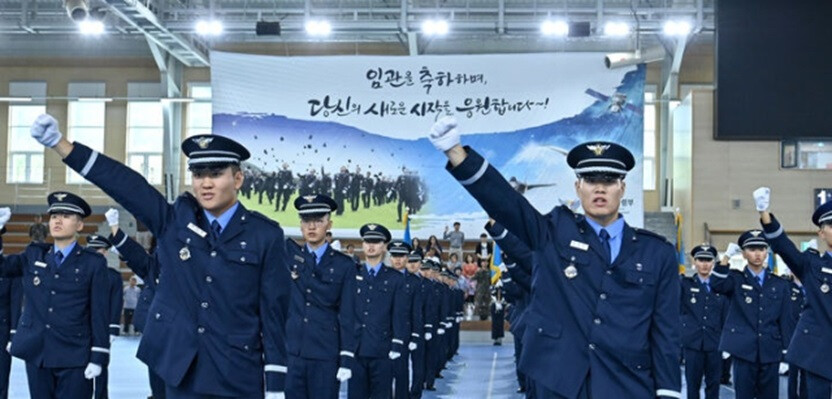
(C) The Republic of Korea Air Force (ROKAF)
In a decisive move to stabilize its shrinking manpower pool, the Republic of Korea Air Force (ROKAF) announced on Thursday the establishment of a new "Pre-Non-Commissioned Officer (NCO) Candidate" system. Starting this March, the program will target high school sophomores and juniors, marking a significant shift in the military’s recruitment strategy from reactive hiring to early-stage talent acquisition.
The initiative comes as the ROK military faces a looming "personnel cliff" driven by record-low birth rates and a declining interest in military careers among Gen Z. By securing commitments from high school students before they enter the job market or higher education, the Air Force aims to fill approximately 20% of its annual NCO recruitment quota through this pre-selection model.
New Recruitment Standards and Pathways
The ROKAF plans to finalize the specific selection criteria later this month, with the first official recruitment notice slated for March. The program is open to male high school students aged 18 to 29 (at the time of commissioning).
Academic Requirements: Applicants must maintain an academic achievement level of ‘Grade B’ or higher in at least five selected subjects per semester.
Evaluation Metrics: The selection process is divided into two phases. The first phase evaluates high school academic transcripts (40 points) and attendance records (35 points). The second phase involves a rigorous interview (25 points) and additional bonus points (5 points) for certifications or special qualifications.
Special Track for Vocational Schools: Students from specialized vocational high schools that signed a Memorandum of Understanding (MOU) with the Air Force last October will benefit from a "Special Track." These students can bypass the first-phase evaluation with a recommendation from their school principal.
Addressing the "Personnel Cliff"
The urgency behind this policy is underscored by alarming data. Over the past five years, NCO recruitment rates across all branches have plummeted. According to defense statistics, the Army’s recruitment rate crashed from 95% in 2020 to a staggering 42% in 2024. During the same period, the Air Force—traditionally the most popular branch—saw its rate drop from 100% to 69%.
Experts point to several factors for this decline: relatively low pay compared to the private sector, the rigid hierarchical culture of the military, and the shrinking population of military-aged males. By adopting a model similar to the Marine Corps' "Pre-High School NCO" system, the Air Force hopes to create a more "stable foundation for the backbone of the military," as one ROKAF official stated.
Retention Strategy: Beyond Recruitment
The ROKAF recognizes that bringing people in is only half the battle; keeping them is equally critical. To improve retention rates for junior NCOs (Staff Sergeants and Sergeant First Classes), the Air Force is overhauling its promotion and "long-term service" (tenure) selection processes.
1. Separation of Career Change and Tenure Selection Previously, NCOs had to apply for a "Specialty Change" (moving to a different job role within the Air Force) at the same time they applied for long-term service. This created high pressure and low success rates. Moving forward, these two evaluations will be separated. NCOs who have already secured long-term service status will be given a separate window to apply for a role that better fits their aptitude, encouraging high-performing personnel to stay in uniform.
2. Focus on "Core Mission" over "Spec-Building" The evaluation system for promotions will be simplified to mirror the criteria used for long-term service selection. This change aims to reduce the "spec-building" burden—such as excessive pursuit of outside degrees or language certifications—that often distracts personnel from their primary duties. Bonus points for external qualifications will now have a strict cap to ensure that excellence in daily operations is the primary driver of career advancement.
3. Welfare and Family-Centric Incentives Reflecting societal changes, the new evaluation system will grant additional points for personnel raising multiple children. It also introduces improved scoring for those serving in "isolated or remote areas" (Gyeok-o-ji) and specific flight-related roles, acknowledging the hardship of these postings.
Streamlined Training for Veterans
Finally, the Air Force is making it easier for those with prior military experience to return. Reserve officers or former Air Force enlisted personnel who re-enlist as NCOs (within 3 years of discharge and under age 32) will see their training period slashed from 11 weeks to just 5 weeks (approximately 200 hours). This "fast-track" focuses on core leadership skills, recognizing the foundational training they have already completed.
Conclusion: A Pivotal Moment for the ROKAF
The introduction of the Pre-NCO Candidate system represents more than just a new hiring tool; it is a fundamental reassessment of how the South Korean military values and secures its human capital. If successful, this "high school-to-hangar" pipeline could serve as a blueprint for other branches struggling to maintain readiness in an era of demographic transition.
The defense community will be watching closely this March to see if the younger generation responds to this early call to duty.
[Copyright (c) Global Economic Times. All Rights Reserved.]














