![[등록] 2026-09-01 15:48:31](/support/_updata/banner2/tl181982910_6749.png)


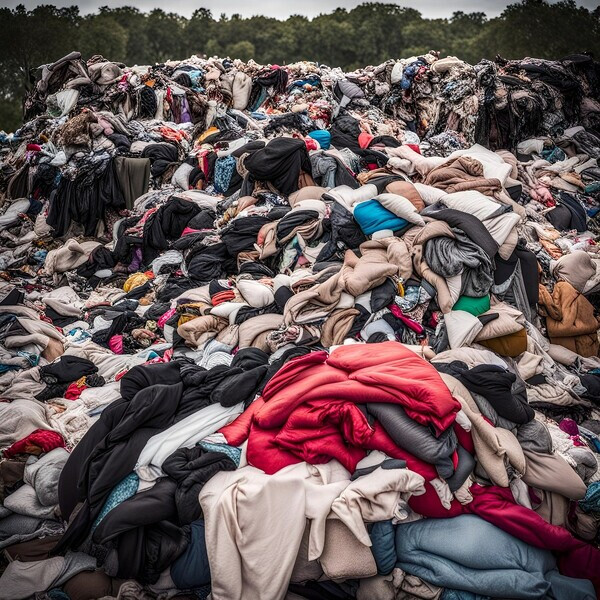
The state of Rhode Island, USA, is gaining attention for passing groundbreaking legislation to address textile waste and transition to a circular economy. This legislation is seen as a significant precedent for other US states and the international community, as it proactively responds to the projected saturation of the state's sole landfill by 2046 and seeks a societal shift in recognizing rapidly increasing textile waste as a resource.
Currently, approximately 28,860 tons of textile waste are landfilled in Rhode Island annually, accounting for a significant portion of the total waste. To address this issue, the Rhode Island state government plans to establish an integrated response system for textile waste. The key aspects are strengthening public education, expanding institutional foundations, and sharing responsibility with the private sector.
Public Education and Awareness Improvement: Spreading the 'Textiles are Resources' Mindset
In collaboration with the Rhode Island Resource Recovery Corporation (RIRRC), the Rhode Island Department of Environmental Management (DEM) will launch a large-scale public education program on textile recycling starting in 2026. This program will provide easily accessible online recycling guidelines for residents and businesses, along with practical support tools for reducing textile waste. The focus is on spreading the awareness that textiles are no longer discarded waste but valuable recyclable resources. This is expected to induce changes in consumer behavior and contribute to establishing a fundamental solution for textile waste reduction.
Strengthening Institutional Foundations: Data-Driven, Systematic Management
Another important pillar of the legislation is the establishment of a data-driven, systematic textile waste management system. Starting in 2028, all private businesses involved in textile collection must submit annual reports. These reports will include detailed information on the total volume of collected textiles and their processing history, which DEM will use to establish annual state-level recycling targets. By bringing the previously difficult-to-track private textile waste flow into the institutional framework, more accurate status assessment and effective policy formulation will become possible.
Furthermore, DEM plans to establish specific enforcement regulations regarding textile waste collection and recycling by June 2026. These regulations will set clear targets for reducing the amount of textile waste entering landfills and will include provisions for penalties or fines for violations to enhance the effectiveness of the system. This mandatory aspect is expected to play a crucial role in achieving textile waste reduction targets.
Private Sector Participation and Industry Revitalization: Creating New Business Opportunities
Rhode Island's current initiative can serve as an important foundation for revitalizing the local recycling industry. Expanding textile recycling infrastructure is highly likely to create new business opportunities in areas such as upcycled products and sustainable textile technology development. The Rhode Island Resource Recovery Corporation is already collaborating with private startups to promote pilot projects for upcycling textile waste and is making practical efforts, such as planning recycling material design education programs with local universities. This will encourage innovative participation from private companies and contribute to building a sustainable textile industry ecosystem.
A Leading Model in Line with International Trends
The textile industry accounts for approximately 10% of global carbon emissions, and the spread of fast fashion with its short production and consumption cycles is identified as a major cause of increasing textile waste. Consequently, there is an accelerating global movement to shift from a linear consumption structure to a circular system.
Europe plays a leading role in institutionalizing the textile circular economy. Since 2007, France has extended the Extended Producer Responsibility (EPR) scheme to textiles, mandating manufacturers to bear the costs of collecting and treating discarded clothing. From 2025, the mandatory separate collection policy for clothing will be expanded across the entire European Union (EU). Finland has fully implemented 100% separate collection of textile waste since 2023 and is investing national funds in developing high-performance textiles using it, while Sweden is attempting innovative approaches such as fostering pyrolysis technology for discarded clothing as a strategic technology.
Rhode Island's current legislation actively aligns with these international trends, and its approach, which organically combines education, regulation, and industrial incentives, is particularly noteworthy for inducing long-term behavioral changes beyond short-term numerical targets. This is expected to serve as a role model for other states and countries and become an important milestone in building a textile circular economy for a sustainable future.
[Copyright (c) Global Economic Times. All Rights Reserved.]