![[등록] 2026-09-01 15:48:31](/support/_updata/banner2/tl181982910_6749.png)


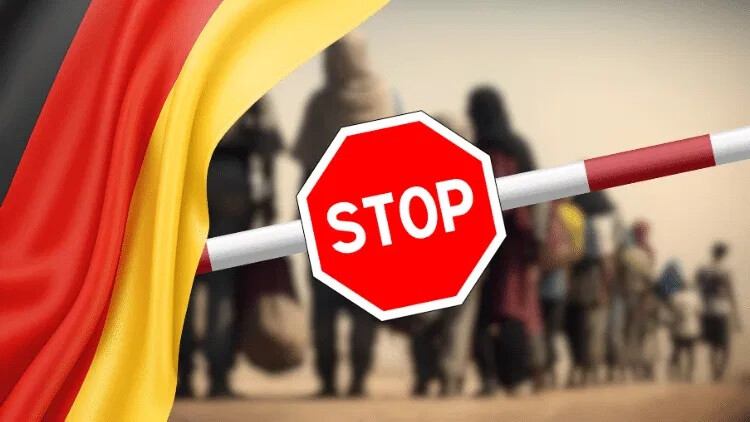
Berlin's recently announced hardline immigration policy is triggering a wave of strong opposition from neighboring countries, most notably Switzerland and Poland, escalating into a significant international dispute concerning the Schengen Agreement and human rights principles. The German government, under Interior Minister Alexander Dobrindt, declared on May 8th its intention to deny entry to the majority of undocumented migrants and asylum seekers, implementing significantly tightened border controls. Exceptions will reportedly be made for vulnerable individuals such as children and pregnant women.
This policy shift marks a stark departure from Germany's relatively open-door approach during the 2015 European refugee crisis. Analysts suggest this change is a response to increasing domestic political pressure, fueled by recent serious crimes involving foreign nationals and a surge in support for far-right political parties.
However, Germany's unilateral move to tighten border controls is fraught with controversy, potentially violating the Schengen Agreement and the Dublin Regulation, which govern European border management and asylum application processing. These agreements explicitly prohibit the forced return (refoulement) of asylum seekers without due process.
Switzerland, sharing over 360 kilometers of border with Germany, reacted with immediate and strong condemnation. Swiss Justice and Police Minister Beat Jans expressed his regret on X (formerly Twitter) over Berlin's lack of prior consultation, labeling the action a "violation of binding legal norms." While a ministerial-level phone call is planned, Bern authorities warn that Germany's intended policy could breach human rights, Schengen obligations, and core principles of the Dublin asylum system.
The Swiss State Secretariat for Migration (SEM) also cautioned that Germany's strengthened border controls could negatively impact bilateral relations. They raised concerns about potential disruptions to the daily movement of approximately 80,000 cross-border commuters and the substantial volume of trade between the two nations. Germany had already increased border checks and deployed an additional 3,000 border guard personnel since 2023.
Poland, which has previously voiced concerns over Germany's border measures, has also adopted a firm stance. Polish Prime Minister Donald Tusk urged German Chancellor Friedrich Merz to focus on protecting the EU's external borders instead of undermining the Schengen area, escalating the criticism.
Schengen Agreement Under Strain: Implications for European Unity
The Schengen Agreement, a cornerstone of European integration guaranteeing free movement between member states, has long symbolized European unity and facilitated economic activity and citizen convenience. However, recent crises, including the refugee crisis, terrorist threats, and the pandemic, have led some nations to temporarily reinstate border controls, raising questions about the fundamental principles of Schengen.
Germany's latest move to tighten its borders is seen as not only a further erosion of the Schengen spirit but also a potentially serious breach of humanitarian values and international law. Blocking asylum seekers from entry without due process raises significant concerns about violating the principle of non-refoulement enshrined in international refugee conventions.
Shifting European Political Landscape and Hardening Immigration Stances
Germany's shift towards a stricter immigration policy reflects a broader trend across Europe's political landscape. The rise of far-right and populist parties in various European nations, often advocating for strong border controls and stringent immigration policies, is a significant factor. Economic anxieties, social unrest, and cultural tensions have contributed to a heightened sense of caution and concern regarding immigration across European society.
In this context, the German government faces criticism for seemingly succumbing to domestic political pressure and adopting a hardline approach that risks undermining the core tenets of the Schengen Agreement and international law. This policy shift is particularly striking when contrasted with Germany's humanitarian leadership during the 2015 refugee crisis, potentially leading to disappointment across Europe.
Strong Reactions from Switzerland and Poland Fuel Concerns of Weakening European Solidarity
The immediate and forceful reactions from Switzerland and Poland underscore the negative impact of Germany's actions on neighboring countries and a fundamental distrust in the Schengen system. Switzerland, in particular, emphasizes the cross-border commuter issue and the significant economic interdependence between the two nations, warning of severe economic repercussions. Poland also stresses the importance of protecting the EU's external borders, arguing that Germany's internal tightening could destabilize the Schengen area.
As Germany's unilateral border control measures provoke strong opposition from its neighbors, concerns are mounting about the weakening of European solidarity and the fracturing of the Schengen system. There are growing fears that the ideal of a unified Europe based on shared values and norms is being undermined, and that a focus on national self-interest could negatively impact the overall stability and prosperity of the continent.
Future Outlook and International Response
The outcome of the planned ministerial-level phone call between Germany and Switzerland will be closely watched by the international community. Switzerland is expected to strongly urge Germany to reverse its policy, and a refusal to do so could further strain bilateral relations. Additionally, other Schengen member states are likely to voice their concerns about Germany's actions, potentially deepening divisions within the Schengen system.
International human rights organizations have also expressed serious concerns about Germany's policy shift, urging adherence to international law and humanitarian standards. They criticize the potential undermining of the principle of shared international responsibility for refugee protection and the infringement on the rights of vulnerable individuals.
Ultimately, Germany's decision to tighten border controls represents a critical test for the future of the Schengen system and the spirit of European solidarity. The international community will be paying close attention to whether the German government heeds the concerns of its neighbors and the criticisms of the international community, and whether it will reconsider its policy in line with the principles of the Schengen Agreement and its international legal obligations.
[Copyright (c) Global Economic Times. All Rights Reserved.]