![[등록] 2026-09-01 15:48:31](/support/_updata/banner2/tl181982910_6749.png)


After retiring, I found myself with some spare time and decided to try my hand at stock trading with a small amount of money. I installed a trading program and deposited funds into a brokerage account. My rule was simple: I wouldn't spend a penny more than this initial amount, regardless of whether I made a profit or took a loss. If I lost it, I’d simply consider it the "tuition fee" for my learning. I also set a principle to maintain only three to five different stocks at a time.
However, whenever I set buy or sell orders and went out, rarely was anything executed. Instead of looking at the financial health of the companies or the news, I was merely following other people's movements—always a step behind. Many companies had no trading volume at all. This led me to believe that certain "forces" (market manipulators) were playing games. A small group likely bought stocks cheaply in advance and then spread rumors to the masses that they would perform well. Once the price rose, they would sell and exit. What else could explain people flocking to a company with no significant events if not for these manipulators? I realized then: "I should buy stocks in solid companies and hold them for the long term." Books also emphasize the "buy-and-hold" strategy. Without inside information, trying to catch the right timing by watching other investors required staring at the monitor all day. My eyes hurt, and my mind felt drained. I asked myself, "Is this really what I should be doing?" I decided to quit and simply reduce my spending instead.
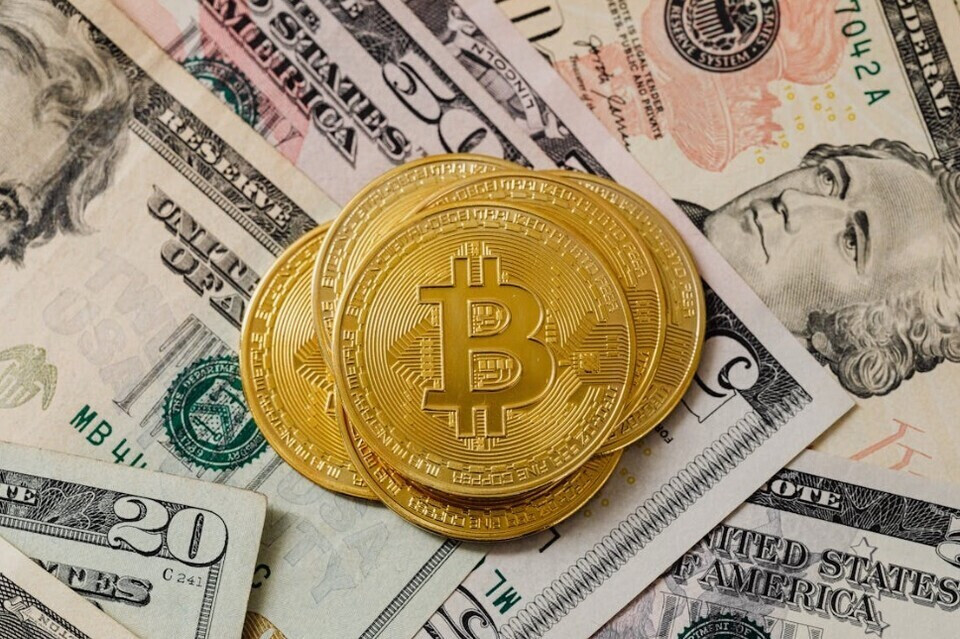
There is an online game called Lineage. To enjoy the game, players need items—weapons, armor, and characters. I heard that rare items, which provide an advantage in battle, can cost millions or even tens of millions of won. The in-game currency, "Adena," began to circulate like real currency, and eventually, it was traded for actual cash. If hundreds of millions of people played this game, "Adena" would become exactly like Bitcoin. I often wonder how Bitcoin’s value can fluctuate around the 100 million won mark. Perhaps the price rose because it has become harder to mine, carries no international remittance fees, is convenient, and remains unregulated. Still, it has risen too much. Didn't it start as a bit of fun, then turn into money as people gathered, and finally become a massive market because money was involved?
On February 6th, around 7:00 PM, the cryptocurrency exchange 'Bithumb' was running an event to distribute between 2,000 and 50,000 KRW to each user. However, due to an employee's mistake, they input "Bitcoin (BTC)" instead of "Korean Won (KRW)." As a result, a total of 620,000 Bitcoins were distributed to 249 winners. The Bitcoin each winner received was worth approximately 197 billion KRW—totaling about 60 trillion KRW. Since Bithumb only holds about 42,000 Bitcoins in its actual wallet, how could they distribute 620,000? It’s because the numbers Bithumb credited to the customers' accounts had not yet been uploaded to the blockchain (the external ledger), so the coins hadn't actually been transferred to individual wallets. Most of it was recovered, but if all customers had withdrawn those 620,000 coins, it would have caused a massive crisis due to insolvency.
When prices fluctuate wildly, we say they have "high volatility," and volatility is regarded as risk. Like stocks, Bitcoin is a risky asset because of this volatility. Therefore, it fails to meet the requirement of being a "stable medium of exchange," which is a key function of currency. While it falls short of being a true currency, it functions like one because so many people use it. It has the advantage of being a medium of exchange—allowing people to send money abroad easily without carrying cash—but since there are no underlying physical assets, it will eventually disappear if the number of users declines (though that may not happen anytime soon).
During the Dutch Golden Age in the 17th century, a single tulip bulb was said to be worth as much as a house near an Amsterdam canal. Then, it collapsed in an instant. Why? Doubts surfaced that prices had risen too high; people hesitated, trading volume dropped, and the bulbs became worthless scraps of paper. The world has its ups and downs—its rises and falls. It is inevitable. Furthermore, "Stablecoins" with steady prices are expected to emerge soon.
A Ponzi scheme is a scam that attracts funds by promising high interest, paying out that "interest" using the principal from new investors. Once people stop depositing money, the interest can no longer be paid. Eventually, you won't even be able to get your principal back, let alone the interest. It reminds me of multi-level marketing (pyramid schemes). As long as new members are recruited, it keeps running. If recruitment stops, it collapses.
People pay into pensions. Most pensions are backed by the government in some form; it is an official public promise. However, the number of current contributors is decreasing, while the lifespan of pension recipients is increasing. As contributions decrease, if investment returns are poor, the pension fund will dwindle. If this continues, the fund will be depleted, and without government intervention, pensions cannot be paid. While it shouldn't be compared directly to a pyramid scheme, if you keep drawing water out, the well—like the wallet—will eventually run dry. A path is formed when many people walk on it, but even an existing path disappears if no one travels it anymore. / kieejo@naver.com
[Copyright (c) Global Economic Times. All Rights Reserved.]