• 2026.11.23 (Mon)
  • All articles
  • LOGIN
  • JOIN
Global Economic Times
한인동포뉴스(상단)
  • Synthesis
  • World
  • Business
  • Industry
  • ICT
  • Distribution Economy
  • Well+Being
    • Pet Life
    • Halal Horizon
  • Travel
  • Eco-News
  • Education
  • Korean Wave News
  • Opinion
  • Arts&Culture
  • Sports
  • People & Life
    • International Student Report
    • With Ambassador
  • Column
    • Cho Kijo Column
    • Cherry Garden Story
    • Ko Yong-chul Column
    • Kim Bong-seon's Photo Column
    • Kim Seul-Ong Column
    • Lee Yeon-sil Column
    • Professor Lee Soo-young’s Life Essays
  • Photo News
  • New Book Guide
MENU
 
Home > Opinion

The Quiet Mediator: Lessons from an Afrikaner Peacemaker for a Divided Korea

KO YONG-CHUL Reporter / Updated : 2026-11-23 09:42:09
  • -
  • +
  • Print


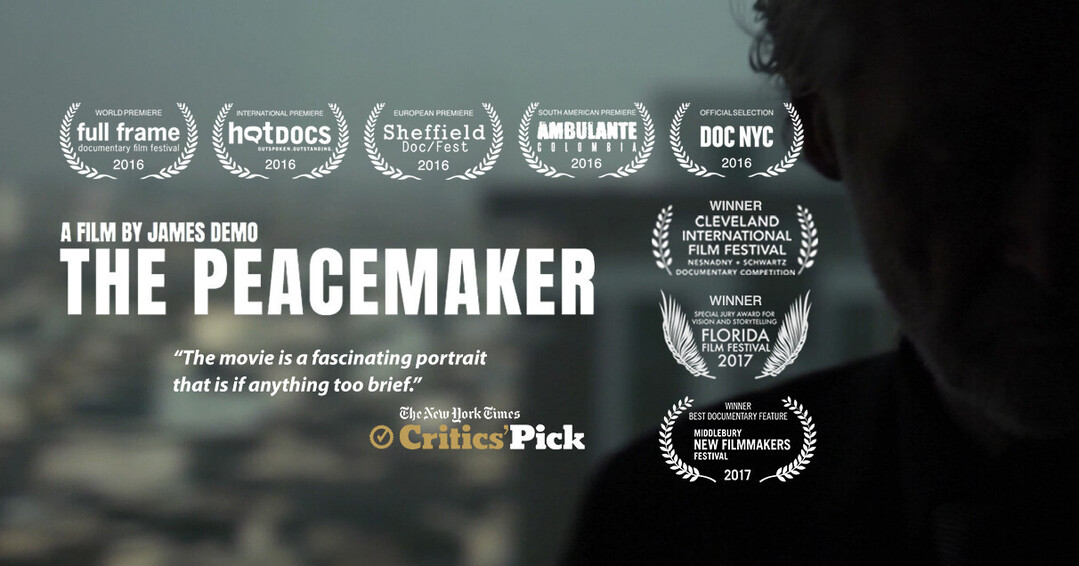
In the long history of political conflict, breakthroughs rarely begin with grand treaties signed under television lights. More often, they start in quiet rooms where sworn adversaries simply agree to sit across from one another. Few lives illustrate this truth better than that of Hendrik van der Merwe (1929–2001), a white South African sociologist who spent decades building backchannels across the rigid racial divides of apartheid.

Born into a conservative Calvinist Afrikaner family in South Africa’s Western Cape in 1929, van der Merwe belonged to the very demographic that institutionalized racial segregation in 1948 under Prime Minister Hendrik Verwoerd. Yet, after earning his doctorate in sociology at UCLA in 1963 and returning home, van der Merwe dedicated his academic career to dismantling the barriers his community had erected.

In 1968, he established the Abe Bailey Institute for Inter-Racial Studies—later renamed the Centre for Intergroup Studies—at the University of Cape Town. Operating under a regime that viewed cross-racial engagement with deep suspicion, he used the institute as a neutral platform for dialogue. By 1976, he had successfully pushed to integrate the previously all-white South African Sociological Association.

Van der Merwe’s most consequential intervention came in 1984. At a time when the African National Congress (ANC) was banned and branded a terrorist organization by Pretoria, he facilitated unprecedented face-to-face meetings between exiled ANC leaders and prominent South African newspaper editors. Guided by his Quaker faith, which emphasizes consensus and reflective silence over ideological triumph, van der Merwe understood that humanizing the "enemy" was a prerequisite for any political settlement. When Nelson Mandela later wrote the foreword to van der Merwe’s 2000 memoir, Peacemaking in South Africa, he acknowledged the vital role such quiet diplomacy played in preventing a full-scale civil war.

Decades later, van der Merwe’s legacy offers timely reflections for South Korea, a nation grappling with both external division on the Korean Peninsula and deepening internal polarization.

First, his work challenges the reflex to criminalize or distrust contact itself. While national security concerns inevitably regulate inter-Korean relations, an absolute freeze on civil society exchanges—among scholars, journalists, and religious leaders—only entrenches mutual ignorance. History suggests that unofficial track-two diplomacy often lays the groundwork when official channels are deadlocked.

Second, the South African experience speaks to Korea’s domestic political divide. Ideological polarization has increasingly turned everyday spaces—from family gatherings to online communities—into echo chambers. Van der Merwe’s insistence on engaging ideological opponents demonstrates that democratic resilience depends on the willingness to listen across partisan lines without immediate hostility.

Finally, van der Merwe’s 1989 book, Pursuing Justice and Peace in South Africa, highlights the delicate balance required in resolving historical grievances. South Africa’s subsequent Truth and Reconciliation Commission sought to pair accountability with national healing. For South Korea, where debates over modern historical injustices remain unresolved, the lesson is clear: sustainable peace cannot be achieved by silencing victims, nor can justice thrive on perpetual retribution.

True reconciliation seldom relies on a single heroic figure. As demonstrated by small religious communities like the Quakers—whose ethos also influenced Korean thinkers such as Ham Sok-hon—sustained social change often stems from principled minorities willing to endure criticism from all sides. In an era of hardened political walls, the most urgent task may not be winning the argument, but keeping the channels of conversation open.

[Copyright (c) Global Economic Times. All Rights Reserved.]
  • #Cherry Garden
  • #HalalFood
  • #Halal
  • #Petlife
  • #Halalhorizone
  • #Hormuz Impasse
  • #Joseon
  • #globaleconomictimes
  • #micore
KO YONG-CHUL Reporter
Reporter Page

Popular articles

  • Culinary Mashups and Nostalgia with a Twist: South Korea’s F&B Giants Vie for Consumer Attention

  • Japanese Hotel Prices Surge Nearly 9% Amid Booming Korean Tourism

  • AI Health and Wellness: How Generations Differ in Their Use of Artificial Intelligence

I like it
Share
  • Facebook
  • X
  • Kakaotalk
  • LINE
  • BAND
  • NAVER
  • https://www.globaleconomictimes.kr/article/1065573674148257 Copy URL copied.
Comments >

Comments 0

Weekly Hot Issue

  • Local Nonprofit Distributes Free Pet Food to Over 300 Animals Ahead of Thanksgiving
  • National Audit Ensures Fair Weight and Accurate Labeling for Australian Pet Owners and Farmers
  • Bracing for Super El Niño: Essential Summer Safety Guide to Protect Your Pets from Extreme Heat
  • Putri Ariani, a world-famous female singer 
  • Mexican President Flies 21 Hours on a Commercial Flight
  • Learn from Singapore, a Drug-Free Nation

Most Viewed

1
South Korea and Ethiopia Sign Trilateral MOU to Introduce Liquid-Based Cytology (LBC) Technology for Cervical Cancer Diagnosis
2
South Korean Burger Chain Lotteria Expands Singapore Footprint with Halal Certification and New Teriyaki Lineup
3
AI Semiconductor Stocks Plummet: Philadelphia Index Drops 5.28% and Micron Plunges 7.59% Amid Executive Shakeup and Export Restrictions
4
"Stay Out, Get Paid, or Have Police Stay With You": Shenzhen Imposes Strict Security Ahead of APEC Summit
5
AI Music Tops Melon Chart: Is the K-Pop Production Formula Changing?
체리가든 스토리
nutri huevos
로타리
동포저널

Hot Issue

US-China Trade Truce Teeters as Tech and Telecom Crackdowns Escalate

AI Bots Scrape 140,000 Articles in an Hour, Threatening Journalism’s Survival

Surge in Chinese-Built EVs Pushes South Korea’s Auto Trade Deficit with China to Record $4.23 Billion

Fashion Runway Show 2026

Let’s recycle the old blankets in Jeju Island’s closet instead of incinerating them.

Global Economic Times
korocamia@naver.com
CEO : LEE YEON-SIL
Publisher & Editor : KO YONG-CHUL
Registration number : Seoul, A55681
Registration Date : 2024-10-24
Youth Protection Manager: KO YONG-CHUL
Singapore Headquarters
5A Woodlands Road #11-34 The Tennery. S'677728
Korean Branch
Phone : +82(0)10 4724 5264
#304, 6 Nonhyeon-ro 111-gil, Gangnam-gu, Seoul
Copyright © Global Economic Times All Rights Reserved
  • News K
  • 반달곰 프로젝트
  • 광고문의
Search
Category
  • All articles
  • Synthesis
  • World
  • Business
  • Industry
  • ICT
  • Distribution Economy
  • Well+Being 
    • 전체
    • Pet Life
    • Halal Horizon
  • Travel
  • Eco-News
  • Education
  • Korean Wave News
  • Opinion
  • Arts&Culture
  • Sports
  • People & Life 
    • 전체
    • International Student Report
    • With Ambassador
  • Column 
    • 전체
    • Cho Kijo Column
    • Cherry Garden Story
    • Ko Yong-chul Column
    • Kim Bong-seon's Photo Column
    • Kim Seul-Ong Column
    • Lee Yeon-sil Column
    • Professor Lee Soo-young’s Life Essays
  • Photo News
  • New Book Guide
  • Overseas Koreans
  • Multicultural News