![[등록] 2026-09-01 15:48:31](/support/_updata/banner2/tl181982910_6749.png)


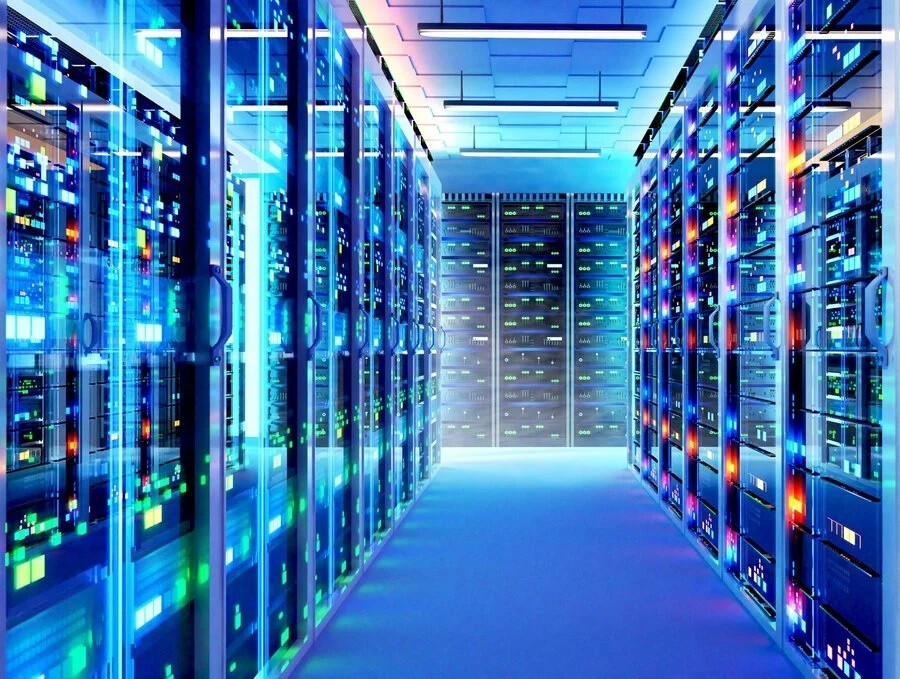
SEOUL — South Korea’s three major telecommunications giants—SK Telecom, KT, and LG Uplus—are undergoing a seismic shift in their business portfolios. As the traditional wireless market hits a saturation point with 5G penetration surpassing 80%, the companies are aggressively pivoting toward Artificial Intelligence Data Centers (AIDC) to secure future growth.
According to industry data released on May 14, 2026, the first-quarter results for these carriers highlight a stark contrast between the explosive growth of AI infrastructure and the stagnation of traditional mobile services.
Explosive Growth in AIDC Revenue
The surge in AI infrastructure demand, driven by global Big Tech and the domestic need for generative AI, has significantly boosted the bottom lines of the "Big Three."
SK Telecom (SKT): Witnessed a staggering 89.3% year-on-year increase in AIDC revenue, reaching 131.4 billion KRW. This growth was fueled by high utilization rates at its Gasan and Pangyo centers, alongside the successful rollout of its GPU-as-a-Service (GPUaaS) offerings.
LG Uplus: Reported a 31.0% jump in revenue (114.4 billion KRW). The company successfully transitioned from simple colocation to a comprehensive Design, Build, and Operate (DBO) model, capturing a wider value chain in the data center market.
KT: Through its subsidiary KT Cloud, maintained a steady revenue of 250.1 billion KRW. While some DBO projects concluded, the high demand at its Gasan facility offset potential dips, keeping the company at the forefront of the market in terms of total capacity.
The Sunset of the Wireless Era
The pivot to AIDC is not just a choice but a necessity. The South Korean mobile market has officially entered a "plateau" phase. With 5G penetration rates hitting 81% for SKT, 82.7% for KT, and 84.2% for LG Uplus, there is little room left for organic subscriber growth.
In Q1 2026, SKT saw a 3.0% decline in wireless service revenue, hampered by the lingering effects of previous security incidents. KT managed a meager 0.4% growth, while LG Uplus grew by 3.7%, though analysts warn that these figures represent the upper limit of the current market structure.
Strategic Moves: Cooling, Scale, and Specialized Zones
To capitalize on a market that McKinsey predicts will grow at an annual rate of 33% through 2030, the three carriers are deploying distinct strategies:
1. SK Telecom: Speed and Execution
SKT recently overhauled its corporate structure, establishing dedicated AIDC Business and Development divisions within its AI Company-in-Company (CIC). Following its Gasan and Pangyo hubs, SKT is currently constructing an AIDC in Ulsan and scouting further locations in Seoul to scale up its "Haein" B200 GPU cluster.
2. KT: The "Two-Track" Regional Strategy
KT is addressing power supply challenges by dividing its focus:
Metropolitan Areas: Focusing on low-power, high-efficiency centers.
Non-Metropolitan Areas: Building high-power AIDCs to handle massive AI workloads. KT notably commercialized South Korea’s first liquid cooling system at its Gasan center and aims to secure over 500MW of data center capacity within the next five years.
3. LG Uplus: Expanding the Value Chain
LG Uplus is moving beyond being a mere landlord for servers. By officially adding DBO services to its articles of incorporation during the last shareholders' meeting, the company is now positioning itself as a full-service provider for large-scale enterprise clients requiring specialized GPU clusters.
Expert Outlook
"The shift from traditional Internet Data Centers (IDC) to AIDC is the defining trend of the mid-2020s," says an industry analyst. "For telcos, it’s no longer about how many people use their network, but how much computing power they can provide to the AI models that run on that network."
As AI workloads are expected to account for 70% of global data center demand by the end of the decade, the race to build the most efficient, high-performance "AI factories" in Korea is only just beginning. For SKT, KT, and LG Uplus, the clouds in the data center business are looking remarkably bright.
[Copyright (c) Global Economic Times. All Rights Reserved.]