![[등록] 2026-09-01 15:48:31](/support/_updata/banner2/tl181982910_6749.png)


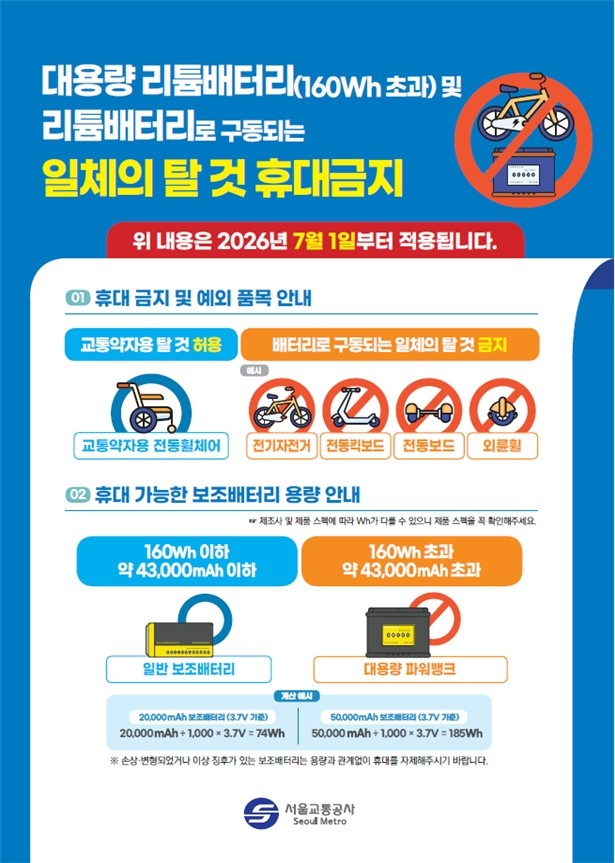
SEOUL — Starting July 1, 2026, passengers will be prohibited from bringing personal mobility (PM) devices powered by lithium batteries and high-capacity lithium batteries into Seoul Metro stations and trains. Seoul Metro (Seoul Transportation Corporation) announced the updated passenger transport terms and conditions on June 25, aiming to mitigate fire hazards and prioritize commuter safety.
Policy Overview and Scope
The revised policy officially designates all lithium-battery-operated vehicles—including electric bicycles, electric scooters, and electric unicycles—as restricted items within the subway system. Furthermore, any individual lithium battery with a capacity exceeding 160Wh is now strictly forbidden from entering metro premises.
Exceptions: To ensure the mobility rights of vulnerable individuals, electric wheelchairs and other medically necessary assistive devices are exempt from this restriction.
Excluded Items: Common daily consumer electronics, such as smartphones, tablets, laptops, and standard portable power banks, typically possess capacities well below the 160Wh threshold and remain permitted for transit.
Safety Justification and Regulatory Context
This decision follows a series of rigorous legal reviews and consultations with the Ministry of Land, Infrastructure and Transport. The 160Wh limit is based on international safety standards widely utilized in the aviation industry for the transport of hazardous materials.
The necessity of this measure is underscored by the unique dangers posed by lithium battery fires. Unlike standard fires, lithium battery incidents often trigger "thermal runaway," a chemical process that makes initial suppression extremely difficult and increases the likelihood of re-ignition. In the enclosed, high-density environment of an underground subway system, such occurrences present an extreme risk to public safety.
Implementation and Public Awareness
Seoul Metro is currently executing a comprehensive public awareness campaign to ensure a smooth transition. Initiatives include the installation of warning posters at stations, notifications on platform arrival displays, official website announcements, and joint campaigns with relevant transit authorities. During the initial period of enforcement, staff will prioritize on-site guidance and public education to help commuters adjust to these new protocols.
Contextual Background: The Growing Concern
The rise in PM device usage across metropolitan areas has paralleled an increase in reported safety incidents involving battery failure. Experts point out that while these devices offer efficient "last-mile" transportation, the charging and storage of non-certified or damaged batteries pose significant infrastructure threats. Public transit operators worldwide have increasingly moved toward tighter regulations to prevent catastrophic outcomes, as subway platforms lack the ventilation and specialized fire-suppression infrastructure required to neutralize a major lithium-related blaze immediately.
By enforcing these standards, Seoul Metro aligns itself with global transit safety trends, placing the collective security of millions of daily riders above individual convenience. Passengers are encouraged to check the specifications of their portable batteries before entering the subway to avoid potential inconveniences or denied boarding.
[Copyright (c) Global Economic Times. All Rights Reserved.]