![[등록] 2026-09-01 15:48:31](/support/_updata/banner2/tl181982910_6749.png)


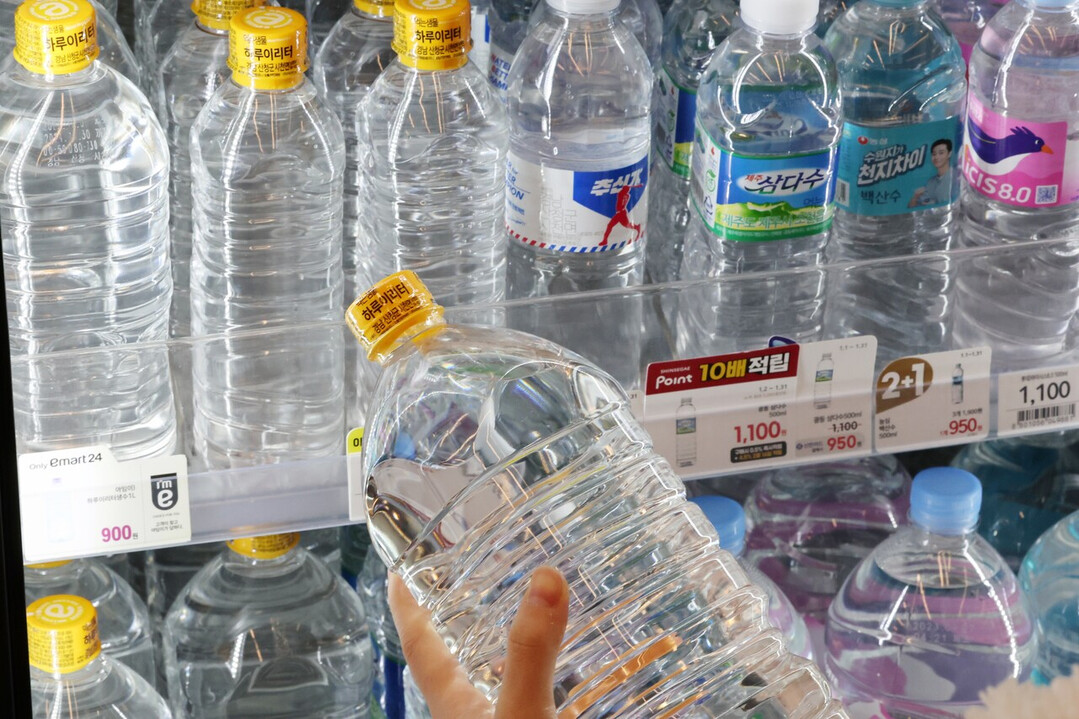
Seoul, South Korea - Marking 30 years since the implementation of the bottled water sales system, the South Korean Ministry of Environment has announced a comprehensive overhaul of regulations governing the industry. The reforms aim to elevate safety standards to international levels and establish a management system centered on groundwater conservation. This policy shift comes in response to mounting concerns over groundwater depletion in an era of climate crisis, public distrust regarding potential contaminants, and a lack of consumer information.
The Ministry of Environment finalized the "Bottled Water Management System Improvement Plan" at a cabinet meeting on April 24th, as confirmed by officials at the Government Seoul Complex. The plan, to be rolled out in phases by 2028, encompasses a wide range of improvements, including the introduction of a certification system, mandatory groundwater level monitoring, stricter distribution regulations, and the promotion of voluntary ESG (Environmental, Social, and Governance) practices within the industry.
Shin Young-soo, Head of the Soil and Groundwater Division at the Ministry of Environment, highlighted the necessity of regulatory reform during a pre-briefing on April 22nd at the Government Complex Sejong. "The bottled water market has grown significantly, but the regulatory framework has not kept pace," stated Shin. "Despite the market's expansion to 3.2 trillion won, accumulated distrust due to concerns over harmful substances, lack of information, and groundwater depletion necessitates a regulatory overhaul." The South Korean bottled water market is substantial, with market research estimating revenues of approximately $2.87 billion USD in 2023 and projecting further growth in the coming years.
A key component of the reform is the introduction of a comprehensive "Bottled Water Quality and Safety Certification System" covering the entire process from manufacturing to distribution. This system will integrate HACCP standards with ISO 22000, tailored to the specific conditions in South Korea. The Ministry plans to finalize the system design by 2025, conduct pilot operations in 2026, and fully implement it by 2027.
Shin explained that while past management focused primarily on water quality standards, an integrated quality control system across the entire production and distribution chain has been lacking. "Considering the industry's adaptation, the certification will initially be voluntary, but we plan to design it in a way that certification will enhance export opportunities and marketing competitiveness in the future," Shin added. ISO 22000 is an international standard for food safety management systems, complementing HACCP (Hazard Analysis and Critical Control Points), a system focused on identifying and controlling hazards in food production.
The safety of bottled water distribution will also be reinforced. Following concerns raised by the Board of Audit and Inspection regarding the potential leaching of harmful substances like acetaldehyde when exposed to direct sunlight, storage standards will be revised from the ambiguous "appropriate method" to specific requirements such as "installation of light-shielding covers." Furthermore, penalty clauses, previously centered on fines, will shift towards administrative fines to enhance effectiveness and reduce the burden on the industry. "Enforcement of fines has been difficult on the ground, rendering them largely ineffective," Shin noted. "We aim to clarify the standards and realistically adjust penalties to ease the burden on businesses."
Management of unregulated harmful substances, including microplastics and per- and polyfluoroalkyl substances (PFAS), will be strengthened. Shin acknowledged the ongoing international discussions regarding the health risks of microplastics and the need for standardized measurement methods like FTIR (Fourier Transform Infrared Spectroscopy). "We plan to expand our investigation and analysis capabilities domestically and discuss the necessity of risk assessment and regulation in the future," Shin stated. PFAS regulations are gaining traction globally, with various countries and regions implementing or proposing restrictions due to their potential environmental and health impacts.
The Ministry also intends to streamline overly strict regulations. For instance, the standard for general bacteria in raw water is currently more stringent than that for the final drinking product, a discrepancy the industry has long called forrectification. "Since the domestic manufacturing process includes sterilization, it is reasonable to align the standards for raw water and the final product," Shin clarified.
Measures for sustainable groundwater management are also included in the reform plan. усиление enhanced pumping tests will be required before granting well development permits, and experts will conduct prior reviews of the appropriateness of extraction volumes. Post-permit issuance, real-time monitoring of well water levels will be implemented, allowing for restrictions or cessation of extraction if levels fall below a certain threshold. Local governments will also be granted new authority to limit or reject extraction permits. South Korea's National Groundwater Information System (GIMS) will play a crucial role in monitoring and managing groundwater resources.
To enhance consumer transparency, an integrated "Bottled Water Information Portal" will be established by 2026, providing easy access to product-specific water quality information, violation history, and source water location. This portal will be linked with the GIMS to improve real-time data management.
Furthermore, the Ministry will support the expansion of ESG practices within the bottled water industry. Initiatives such as nitrogen filling, label-free products, and the use of recycled materials will be encouraged through regular meetings and linkage with certifications, promoting environmentally and socially responsible practices within the sector. The bottled water industry's environmental impact, particularly concerning plastic use, has driven a growing emphasis on ESG considerations globally.
The comprehensive regulatory reforms signal a significant step towards ensuring the safety and sustainability of South Korea's bottled water industry, addressing long-standing concerns from both consumers and environmental advocates. The effectiveness of these changes in fostering greater trust and promoting responsible practices will be closely monitored in the coming years.
[Copyright (c) Global Economic Times. All Rights Reserved.]