![[등록] 2026-09-01 15:48:31](/support/_updata/banner2/tl181982910_6749.png)


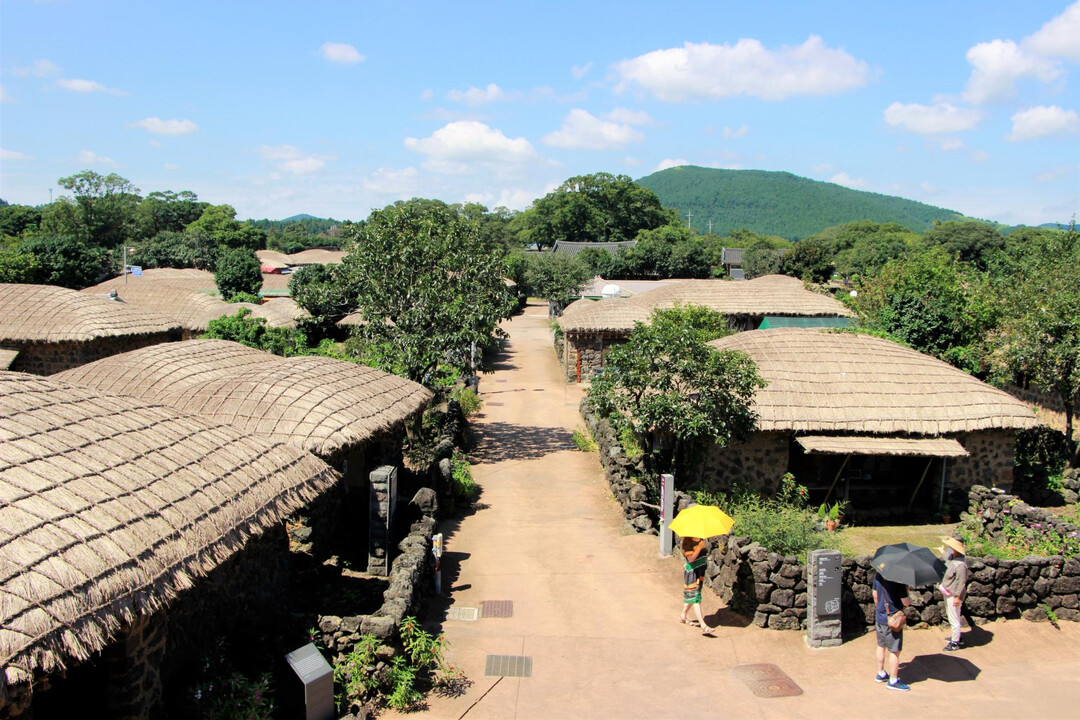
Seongeup Folk Village, a living testament to Jeju's historical administrative center of Jeongui-hyeon, marks its 40th anniversary as a National Important Folklore Material amidst a deep conflict. The delicate balance between preserving its cultural heritage and improving the living conditions of its residents remains a formidable challenge. Beneath the iconic thatched roofs and along the ancient stone walls, the lives of those who have long upheld its traditions are gradually fading, overshadowed by outdated and inconvenient living environments.
In Seongeup 1-ri, Pyoseon-myeon, Seogwipo City, a thatched-roof house provides a stark illustration of this predicament. The cramped, roughly 10-pyeong (approximately 33 square meters) dwelling is home to a grandmother in her nineties. Overcrowded with her belongings, it barely offers space to receive guests comfortably. The ceiling and walls show significant deterioration, with exposed rafters and crumbling earth revealing a precarious structure. Exposed electrical wiring along the roof heightens the risk of fire, and the absence of piped water forces her to rely on a hose connected to an outdoor tap for daily use.
"Can you believe people live like this in 2024?" the grandmother's deep sigh encapsulates the harsh reality faced by many in Seongeup Folk Village. Nearby, another thatched house bears the scars of recent monsoon rains, with makeshift plastic sheeting failing to prevent water from streaming into the rooms. The aged thatched roof has long become a habitat for beetle larvae.
The primary obstacle to improving these conditions lies in the severe restrictions on property rights. Designated as a National Folk Cultural Heritage site, any alteration or repair to the exterior of the thatched houses necessitates navigating a complex and demanding process of obtaining permission for changes to the existing state. Even minor modifications such as adding a toilet or bathroom, or installing a sink or air conditioning, require local government approval. The lengthy approval periods, often exceeding a year, coupled with high renovation costs, fuel residents' discontent and contribute to a cycle of unauthorized construction.
Ko Yun-shik, the head of Seongeup 1-ri, voiced his frustration: "We can't even freely expand our kitchens or build a toilet, even though it's our own house." He recounted the story of a resident who sold his thatched home and moved out of the village out of sheer exasperation, lamenting, "How frustrated must he have been to do that?" Kim Myeong-ho, former head of the Pyoseon-myeon Community Security Council, pointed out, "Because obtaining permission for changes to the existing state takes so long, many residents simply don't bother and resort to illegal additions or alterations. Moreover, cultural heritage repairs can only be carried out by approved companies, leading to significant financial burdens."
Consequently, a considerable number of residents are abandoning the uncomfortable thatched-roof lifestyle and leaving the village. Some who cannot afford to resettle elsewhere have resorted to living in container buildings on the outskirts of the village near Cheonmicheon Park, a poignant testament to their plight. According to the Jeju World Heritage Center, out of the 306 registered households and 1305 buildings within the designated area of Seongeup Folk Village, 77 households with 260 buildings are thatched-roof houses within the fortress walls, and 158 households with 674 buildings are thatched-roof houses outside the walls. The Jeju government has already purchased 44 houses and 109 buildings, and over 870 structures are identified as illegal constructions, indicating that the majority of the village's thatched houses have been altered, losing their original form.
Kim Cheol-hong, former head of Seongeup 1-ri, emphasized, "If it's designated as a living folk village, at the very least, an environment where people can raise families should be created." He argued, "Thatch roofs are properly preserved when people live in and care for them. Instead of wasting enormous budgets on repairing dilapidated houses, support should be provided so that residents can protect the village while living here." Current village head Ko Yun-shik also expressed concerns about the village's very survival, citing the exodus of young people and the risk of school closures due to a declining school-age population.
In response, an official from the Jeju World Heritage Center stated that they are operating an expert advisory group to assist with the complex process of obtaining permission for changes to the existing state and are conducting a 'Seongeup Village 3rd Comprehensive Improvement Plan Establishment Service' that will reflect residents' opinions as much as possible. However, unless the fundamental policy approach, which has prioritized original form preservation over resident convenience for the past 40 years, undergoes a significant shift, Seongeup Folk Village faces the risk of not only disappearing into history but also degenerating into a characterless tourist attraction.
Designated as a National Important Folklore Material in 1984, Seongeup Folk Village preserves the traditional houses and old village appearance of Jeju, offering a glimpse into Jeongui-hyeon, which served as the island's administrative, military, and educational center during the Joseon Dynasty. The thatched houses lining the stone-walled paths showcase Jeju's unique architectural style, and ancient trees and rustic scenery remain scattered throughout the village. Visitors can experience various intangible cultural heritages, including the Important Intangible Cultural Heritage Jeju Gut (shamanic ritual), the sight of turning millstones, and traditional weddings. Restaurants serving traditional Jeju cuisine and shops selling folk crafts are also present. Despite its charm, with canola flowers blooming in spring and eulalia grasses swaying in autumn, creating beautiful natural landscapes, the deteriorating living conditions are causing the village to lose its original vitality, eliciting deep regret.
[Copyright (c) Global Economic Times. All Rights Reserved.]