
![[등록] 2026-09-01 15:48:31](/support/_updata/banner2/tl181982910_6749.png)


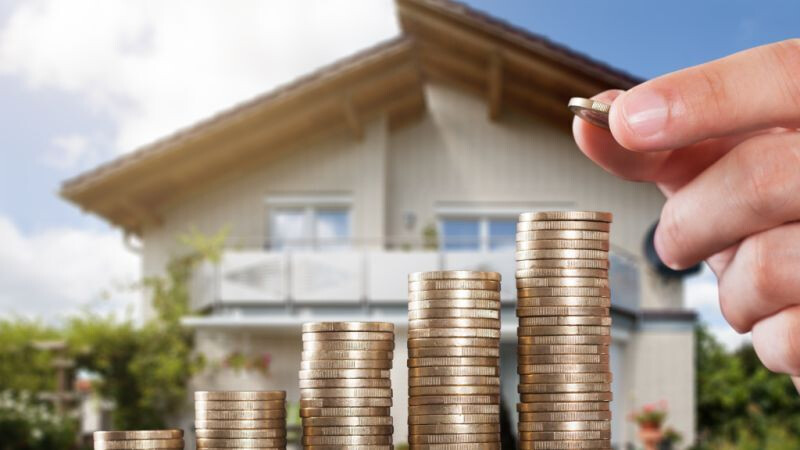
SEOUL – The era of "Young-kkeul"—a popular Korean term meaning "pulling every last soul" to secure a mortgage—has come to an abrupt halt. As the South Korean government maintains a firm "financial decoupling" policy between the banking sector and the real estate market, both the new apartment subscription market and the court-ordered auction market are experiencing a severe "cold wave."
The primary culprit behind this paralysis is the stringent cap on mortgage loans. Currently, mortgage limits for homes in the Seoul Metropolitan Area are capped at 600 million KRW, while high-end properties exceeding 2.5 billion KRW face an even tighter ceiling of just 200 million KRW. This liquidity crunch is forcing successful bidders and lottery winners to forfeit their contracts, unable to bridge the massive funding gap.
The "Unclaimed" Crisis in Prime Locations
The "subscription fever" that once guaranteed success for developers has turned into a headache of "unclaimed" units. According to data from the Korea Real Estate Board’s ‘Subscription Home,’ the Daebang Station Yeouido The Road Castle in Yeongdeungpo, which recorded a 10:1 competition rate last September, has released six units for a second "pick-up" (Musunwi) subscription this week.
Similarly, the Anyang Xi Herition saw healthy initial demand with over 1,700 applicants for 294 units. However, despite the competitive start, 86 units returned to the market last month in a secondary random drawing. The most shocking case remains The Sharp Bundang Centro in the affluent Bundang district. Despite initial competition rates reaching 51:1, 50 out of 86 units remained unsold. With price tags for 84㎡ units exceeding 2.1 billion KRW—higher than some established landmark complexes—the combination of high prices and loan restrictions proved fatal.
"Before the June 27 measures or the designation of new regulatory zones, buyers would have scraped together the 10% down payment and held on," said Park Ji-min, CEO of Wol-yong Subscription Research Institute. "But with these loan caps, the threshold for entry has become insurmountable for the middle class."
Auction Market: High-End Properties Losing Luster
The auction market, traditionally viewed as a "regulatory shelter" because it bypasses certain residential requirements, is no longer immune. For the first time in six months, the average winning bid rate (the ratio of the winning bid to the appraised value) for Seoul apartments dropped below the 100% threshold.
According to a March 2026 report by GG Auction, the winning bid rate for Seoul apartments stood at 99.3%, a 2.4 percentage point drop from February. The decline was most pronounced in the "luxury" segment. Apartments valued at over 2.5 billion KRW saw their bid rates plummet from 125.6% in January to a staggering 92.2% in March.
"Increased holding taxes and the fear of a price ceiling are weighing heavily on investors," noted Lee Ju-hyun, a senior researcher at GG Auction. "While auctions allow for 'gap investment' (buying with a tenant's deposit), the rising tax burden on multi-homeowners and the downward trend in Gangnam prices have cooled the speculative fire."
A Flight to Safety under 1.5 Billion KRW
As the high-end market freezes, demand is concentrating on "affordable" units priced under 1.5 billion KRW, where loan regulations are slightly more manageable. Last month, the ‘Heights’ apartment in Seongdong-gu attracted 34 bidders, eventually selling for 783 million KRW. This shift suggests that while the desire for homeownership remains, the financial capacity of the average buyer has been strictly curtailed by policy.
With the central bank and financial authorities showing no signs of easing the "financial decoupling," experts warn that the cooling trend in the metropolitan housing market may persist well into the second half of the year, potentially leading to a broader correction in South Korean property valuations.
[Copyright (c) Global Economic Times. All Rights Reserved.]














