![[등록] 2026-09-01 15:48:31](/support/_updata/banner2/tl181982910_6749.png)


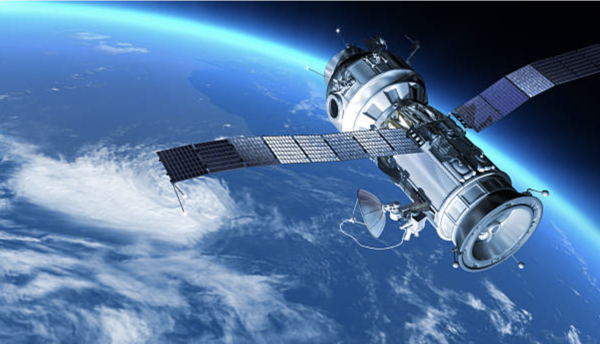
Following Apple's lead, Samsung Electronics' Galaxy smartphones are poised to introduce satellite communication services. This development comes as the chipsets featured in the recently launched Galaxy S25 series support satellite communication capabilities, with a US carrier, in partnership with a satellite communication provider, recently showcasing a trial service.
According to reports from GSM Arena and other foreign press outlets, the Galaxy S25 series' satellite emergency text service is set to debut with Verizon, the leading US telecommunications provider.
This move was anticipated from the Galaxy S25 series' initial release, as the devices are equipped with Qualcomm's Snapdragon 8 Elite, the first chipset to support satellite communication.
Qualcomm stated, "The Snapdragon 8 Elite is custom-designed for Samsung and the Galaxy series. The Galaxy S25 series is the first commercial product to feature 'Snapdragon Satellite,' enabling message exchange via satellite communication supported by the Android operating system (OS)."
Verizon has also been preparing for satellite communication services. In August of the previous year, they announced a collaboration with Skylo to provide satellite connectivity to their subscribers. Furthermore, they mentioned the availability of satellite text messaging with the Galaxy S25 series this year.
Recently, CNET reported that Skylo demonstrated the functionality of satellite text messaging, indicating that commercialization is imminent. The demonstration utilized a Samsung internal test smartphone (reference phone), which was configured to disable cellular communication and rely solely on satellite connectivity for messaging.
Google, in collaboration with Skylo, has also introduced satellite-based SOS functionality in select models of the Pixel 9 series. These models are equipped with Samsung's Exynos 5400 chipset, which supports satellite features.
During the demonstration, message reception from Skylo took approximately 8 to 27 seconds, with reply times averaging around 17 seconds.
While the service is currently exclusive to the Galaxy S25 series on Verizon, the commercialization of satellite text messaging is expected to catalyze the widespread adoption of direct satellite-to-smartphone connections. This will gradually reduce communication dead zones where terrestrial mobile networks are unavailable.
Skylo emphasized the demonstration's "commercial-grade user experience" and highlighted their advantage in utilizing existing orbiting satellites.
Currently, Skylo does not own satellites but partners with six satellite network providers, including ViaSat and Inmarsat, to offer services. This enables coverage of approximately 50 million square kilometers globally, roughly five times the land area of the United States.
Apple has already partnered with Globalstar to offer satellite connectivity in iPhone 14 series models and later. This feature supports emergency text messaging in areas without cellular service and can also be used in standard situations.
Another US carrier, T-Mobile, is set to officially launch its Starlink satellite-based service on the 7th of this month. AT&T is also pursuing the launch of satellite communication services in collaboration with AST SpaceMobile.
Skylo plans to expand its services to include satellite voice calls by the end of this year or mid-next year, although current satellite connectivity is limited to small data transmission messages.
However, the timeline for introducing these services in South Korea remains uncertain. Given the extensive communication coverage already in place and the need for domestic carriers to partner with satellite communication providers, similar to Verizon's approach, the focus in South Korea is expected to be on business-to-business (B2B) applications. Currently, Starlink is in the process of entering the South Korean market, with plans to provide services in the aviation and maritime sectors through SK Telink, KT Skylife, and LG Uplus.
[Copyright (c) Global Economic Times. All Rights Reserved.]