• 2026.03.02 (Mon)
  • All articles
  • LOGIN
  • JOIN
Global Economic Times
fashionrunwayshow2026
  • Synthesis
  • World
  • Business
  • Industry
  • ICT
  • Distribution Economy
  • Well+Being
  • Travel
  • Eco-News
  • Education
  • Korean Wave News
  • Opinion
  • Arts&Culture
  • Sports
  • People & Life
    • International Student Report
    • With Ambassador
  • Column
    • Cho Kijo Column
    • Cherry Garden Story
    • Ko Yong-chul Column
    • Kim Seul-Ong Column
    • Lee Yeon-sil Column
  • Photo News
  • New Book Guide
MENU
 
Home > Well+Being

New Frontier in Hospital Infection Control: Korean Researchers Unlock Pre-emptive Immune Defense

Hee Chan Kim Reporter / Updated : 2026-02-11 13:20:52
  • -
  • +
  • Print


(C) KBR


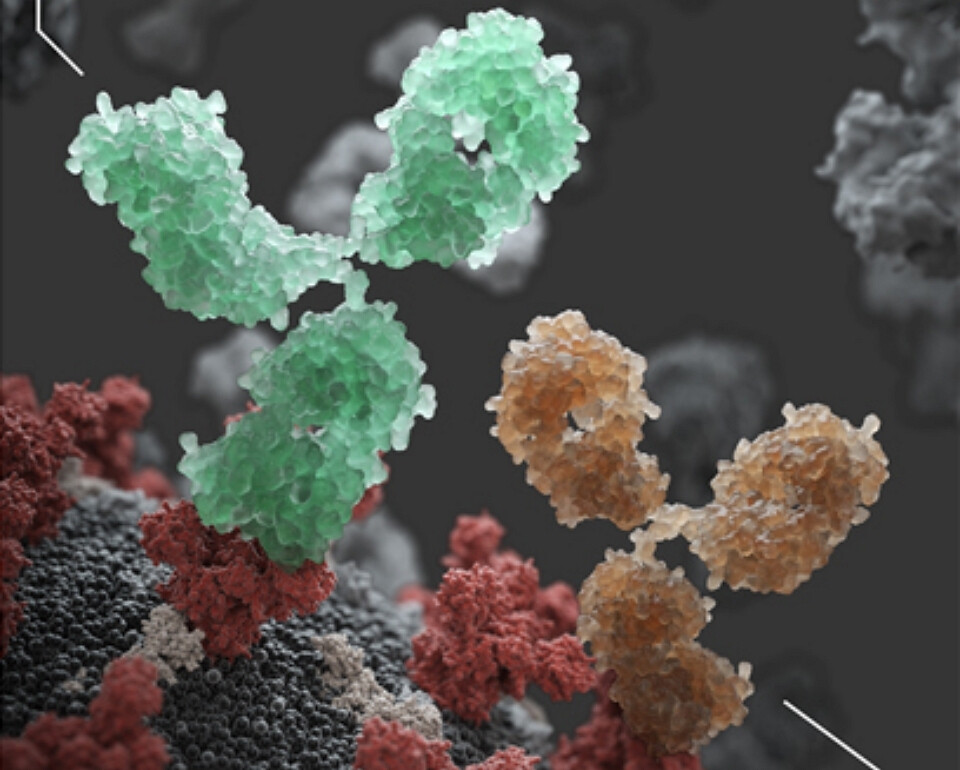
Secondary infections occurring within hospital environments—often involving bacteria or viruses—have remained one of modern medicine’s most stubborn challenges. For immunocompromised patients in intensive care units (ICUs), co-infections involving both bacteria and viruses are particularly lethal, significantly driving up mortality rates due to their complexity and resistance to standard treatments.

As antibiotic-resistant "superbugs" proliferate and rapidly mutating viruses bypass traditional vaccines, the medical community has been desperate for a new line of defense.

The "Pre-emptive Strike" Strategy
A research team at the Korea Research Institute of Bioscience and Biotechnology (KRIBB), led by Drs. Ryu Choong-min and Seo Hwi-won, has introduced a paradigm-shifting strategy. Rather than attacking specific pathogens directly, their approach prepares the body’s innate immune system to react faster and more aggressively the moment a threat is detected.

From Pharmaceutical Stabilizer to Lifesaving Immunomodulator
The breakthrough centers on a substance called n-Dodecyl-β-D-maltoside (DDM). Traditionally, DDM has been used as a simple stabilizer in pharmaceutical manufacturing to maintain the integrity of drug components. However, the KRIBB team discovered that DDM possesses a hidden talent: it acts as a potent immunomodulator.

In animal trials, researchers administered DDM one day prior to pathogen exposure. The results were stark:

Control Group: Faced with highly virulent antibiotic-resistant bacteria and influenza viruses, the untreated group suffered 100% mortality.
DDM-Treated Group: Maintained a 100% survival rate, demonstrating a robust defense against both bacterial and viral threats.

The Role of Neutrophils
The mechanism behind this protection lies in the mobilization of neutrophils, the "first responders" of the human immune system. DDM does not loiter in the body as a toxin; instead, it signals the body to prime its neutrophils.

When an infection occurs, these primed cells rush to the site of invasion more rapidly than usual, enhancing phagocytosis (the process of engulfing and destroying pathogens) and bactericidal functions. Crucially, this activity is selective; DDM does not trigger excessive inflammation or side effects in the absence of an actual infection.

A Universal Shield for the Vulnerable
This "precision immune preparation" is significant because it is pathogen-agnostic. Because it boosts the host's natural defenses rather than targeting a specific protein on a virus or bacterium, it could theoretically protect against a wide array of known and unknown threats.

"This research represents a new infection response strategy that helps the body cope with complex infections by stimulating our own immunity," said Dr. Seo Hwi-won, the lead researcher. "We expect this to develop into a universal preventive strategy against unpredictable threats like antibiotic-resistant bacteria and novel emerging viruses."

Clinical Outlook
The potential applications are vast, particularly for protecting high-risk groups such as:

ICU Patients: Reducing the risk of fatal secondary infections.
The Elderly: Bolstering naturally waning immune responses.
Immunocompromised Individuals: Providing a safety net where vaccines may fail.
The study was published on January 29 in eBioMedicine, a sister journal of the world-renowned medical journal The Lancet. The research was supported by the Ministry of Science and ICT’s Bio/Medical Technology Development Program and KRIBB’s core research initiatives.

[Copyright (c) Global Economic Times. All Rights Reserved.]
  • #Globaleconomictimes
  • #Korea
  • #Seoul
  • #Samsung
  • #LG
  • #Bitcoin
  • #Meta
  • #Business
  • #Economic
  • #The Woori Bank
  • #Elon Musk
  • #C
Hee Chan Kim Reporter

Popular articles

  • AI Vision: New Neuromorphic Chip Detects Motion 4 Times Faster Than Human Eye

  • Shinsegae Department Store Hits Record 7.4 Trillion KRW in Sales, Driven by Strategic "Landmark" Investments

  • Gyeongbuk Province to Invest 344 Billion Won to Elevate K-Food to Global Markets

I like it
Share
  • Facebook
  • X
  • Kakaotalk
  • LINE
  • BAND
  • NAVER
  • https://www.globaleconomictimes.kr/article/1065586782436607 Copy URL copied.
Comments >

Comments 0

Weekly Hot Issue

  • Samsung’s 5-Year Obsession with Clarity: The Dawn of the ‘Privacy Display’
  • Thinking Twice: KAIST Unveils Brain-Inspired AI That Predicts Its Own Mistakes
  • President Lee Embarks on State Visit to Singapore and Philippines, Aiming to Expand AI Cooperation
  • South Korea’s Daily Exports Hit Record $3.5B as AI Semiconductor Boom Fuels 13th Month of Surplus
  • Homeplus Rehabilitation Triggers Structural Shift in Korea's Retail "Big 3"
  • Samsung Electronics Unveils Vision for 'AI-Driven Factories' by 2030: A Paradigm Shift in Global Manufacturing

Most Viewed

1
2026, The Grand Year of Hangeul Celebration — The River of History Where Five Streams Converge
2
A New Milestone for Ukraine’s Post-War Reconstruction: The Birth of ISVP
3
Mexican currency and the powerful history behind its designs
4
Revised and Expanded Edition of ‘Failure of Negotiations with North Korea: Truth and Solutions’ Published
5
Commentary That Douses the Joy of Victory: A Twisted Perspective
광고문의
임시1
임시3
임시2

Hot Issue

President Lee Embarks on State Visit to Singapore and Philippines, Aiming to Expand AI Cooperation

Buffett’s Final Report Card: Berkshire Hathaway Operating Profits Plunge Amid Asset Write-downs

Samsung Electronics Unveils Vision for 'AI-Driven Factories' by 2030: A Paradigm Shift in Global Manufacturing

Oil Hits $130 Amid Prolonged Hormuz Blockade: How Will Global Markets React?

Let’s recycle the old blankets in Jeju Island’s closet instead of incinerating them.

Global Economic Times
korocamia@naver.com
CEO : LEE YEON-SIL
Publisher : KO YONG-CHUL
Registration number : Seoul, A55681
Registration Date : 2024-10-24
Youth Protection Manager: KO YONG-CHUL
Singapore Headquarters
5A Woodlands Road #11-34 The Tennery. S'677728
Korean Branch
Phone : +82(0)10 4724 5264
#304, 6 Nonhyeon-ro 111-gil, Gangnam-gu, Seoul
Copyright © Global Economic Times All Rights Reserved
  • 에이펙2025
  • APEC2025가이드북TV
  • 독도는우리땅
Search
Category
  • All articles
  • Synthesis
  • World
  • Business
  • Industry
  • ICT
  • Distribution Economy
  • Well+Being
  • Travel
  • Eco-News
  • Education
  • Korean Wave News
  • Opinion
  • Arts&Culture
  • Sports
  • People & Life 
    • 전체
    • International Student Report
    • With Ambassador
  • Column 
    • 전체
    • Cho Kijo Column
    • Cherry Garden Story
    • Ko Yong-chul Column
    • Kim Seul-Ong Column
    • Lee Yeon-sil Column
  • Photo News
  • New Book Guide
  • Multicultural News
  • Jobs & Workers