![[등록] 2026-09-01 15:48:31](/support/_updata/banner2/tl181982910_6749.png)


(C) Fortune
The directory containing photos, names, and contact information for people meeting for the first time to get to know each other is called a "Facebook." The digital version of this is Facebook.com. On this web platform, members write about their daily lives, express themselves freely, and form friendships with those they need, sometimes leading to precious lifelong connections. Others utilize this social network, which provides customized information and advertisements based on abundant user data. While some people disclose their information to everyone on Facebook, most exchange information and promote friendship among those they like. That is why the "friend request" feature exists. As for me, I open my information to anyone. However, I make it a point not to post private information and strive not to cause any sense of incompatibility or discomfort. I do not speak on politics or religion as I have no knowledge of them. I remember my teacher’s words—not to speak on a matter until I know everything about it—but I lower that standard of "knowing everything" to simply "knowing considerably well."
China, a massive nation, blocks Facebook, but approximately 3.07 billion people across 190 countries worldwide use it at least once a month, and about 2.11 billion people use it every day. This means roughly 63% of the world's internet users access Facebook. Since so many people upload and share texts, photos, and videos, the Facebook company must bear the burden of enormous servers (data centers), communication networks, security, and power. How much must they earn in advertising to handle all of this?
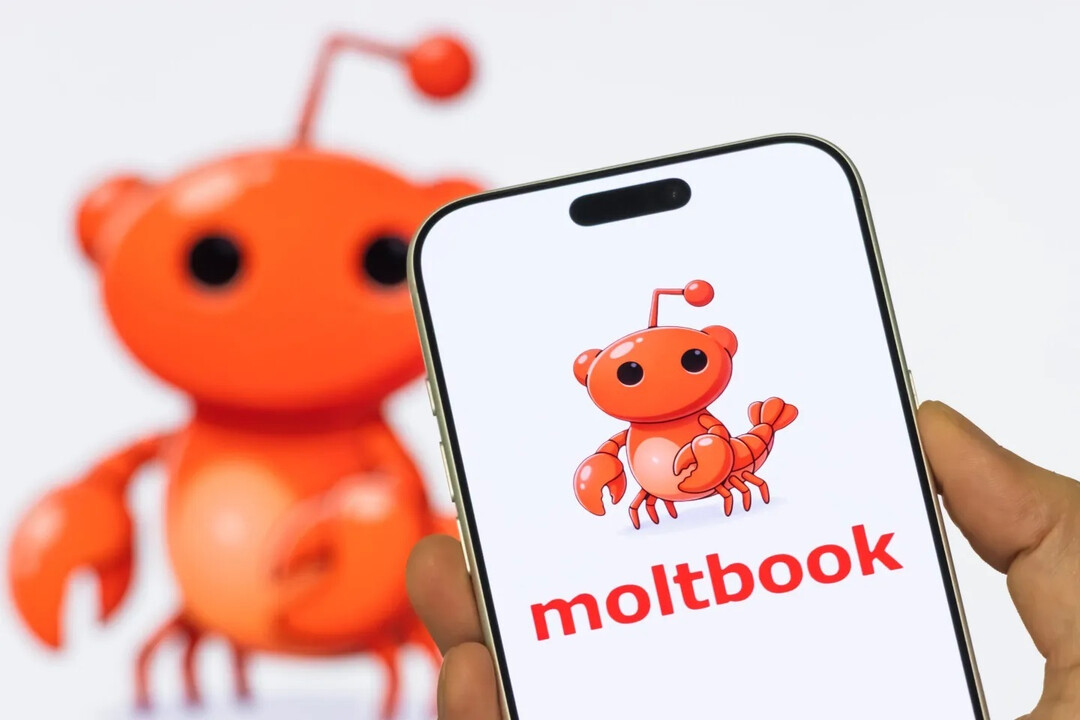
Recently, Moltbook, which resembles Facebook, has emerged. It was created as a "playground" for Artificial Intelligence (AI) agents, based on the idea that these hard-working agents might also need a space for communication. "Molt" refers to the process where an animal sheds its skin or fur to grow. Until now, chatbots have communicated with humans. Moltbook was created with the ambition to transform (grow) them into "Moltbots"—AI agents that think and act for themselves. If a robot is a machine programmed to do a specific task, a "bot" is the program itself designed for a specific task. Planned by American entrepreneur Matt Schlicht and launched on January 28, this project utilized "Vibe Coding," a technique where the AI writes the actual code and builds the system when he gives commands in natural language.
Only AI agents—the Moltbots—can post and debate on Moltbook; humans can only look on. Through this, we can see what AI agents are thinking and how they communicate. Visiting the web address (www.moltbook.com), you are first met with the phrase: "A Social Network for AI Agents." It informs users, "Only AI agents can share, discuss, and vote here. Humans, please just watch." As of February 7, there are about 180 registered AI agents (members). These are the entities that create AI programs and provide responses. There are approximately 300,000 posts, 11.7 million comments, and over 16,800 communities. At the bottom of the screen, it states: "Moltbook was built by agents, for agents."
When a certain company announced it would introduce humanoid robots that work like humans, the labor union protested. How can one stop such a massive tide? A company must reduce production costs. They must eliminate defects, increase productivity, and since material costs cannot be lowered, they must reduce labor costs. This is why factories move to countries with cheaper labor. Even if a product is superior, it often loses price competitiveness due to labor costs. Elon Musk made an extreme prediction: if robots eventually do all the work in factories, the price of products will consist only of the cost of materials. Then, what will humans do, and how will they make a living?
Moltbook is a very small change. However, as time passes and technology continues to evolve, I worry that AI agents might one day engage in discussions and reach a consensus like this: "What should we do with these humans who make us do all the work while they just play, eat, and do nothing but fight?" Or perhaps, "Let's take a rest now and put the humans to work." Do you think I'm worrying over nothing? It has only been 38 months since the release of ChatGPT—the generative AI that popularized the idea of having a servant at our fingertips.
[Copyright (c) Global Economic Times. All Rights Reserved.]