![[등록] 2026-09-01 15:48:31](/support/_updata/banner2/tl181982910_6749.png)


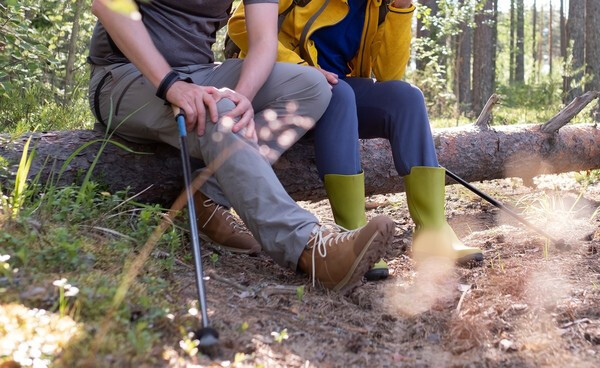
Maintaining healthy knees is paramount for avid hikers to continue enjoying the trails for years to come. While the allure of conquering challenging peaks is undeniable, prioritizing joint health, especially in the knees, will ensure a long and fulfilling hiking career. Here are five crucial tips, supplemented with expert insights, to help you protect your knees during your mountain adventures:
1. Choose Shorter Downhill Stone Staircases:
Descending rocky paths, particularly those with steep and lengthy stone staircases, exerts a tremendous amount of force on your knees and ankles. With each step down, these joints can bear three to five times your body weight. While hikers often prefer routes with shorter ascents and longer descents, this preference can be detrimental to knee health.
Expert Insight: Dr. Riley Williams III, an orthopedic surgeon at the Hospital for Special Surgery, emphasizes that "eccentric muscle contractions, which occur when your muscles lengthen under load as you descend, put significant stress on the knee joint." The impact forces are magnified on uneven surfaces like stone steps, increasing the risk of micro-trauma to the cartilage and surrounding tissues.
Recommendation: When planning your hike, analyze the trail map carefully. If a mountain features a long and steep stone staircase, consider tackling it as your ascent route. Opt for gentler slopes with softer, more forgiving surfaces like dirt trails for your descent. This strategy minimizes the impact forces on your knees during the more strenuous downhill portion.
2. Utilize Trekking Poles Effectively:
Trekking poles are not just for seasoned mountaineers; they are invaluable tools for hikers of all levels seeking to reduce stress on their knees. Studies have shown that using trekking poles can decrease the load on your knee joints by up to 30%.
Expert Insight: A study published in the Journal of Sports Medicine found that "trekking poles significantly reduced compressive forces on the knee joint during downhill walking." They help distribute your weight more evenly, engaging your upper body and arms, thereby lessening the burden on your lower extremities.
Recommendation: When descending, hold the poles firmly in both hands and plant them slightly ahead of your feet. This technique allows the poles to absorb some of the impact before it reaches your knees. Ensure the poles are adjusted to the correct height, typically so your elbows are bent at a 90-degree angle when the tips are on the ground. Practice using them on varied terrain to become comfortable and proficient.
3. Select Trails Appropriate for Your Fitness Level:
National parks and trail organizations often categorize trails based on difficulty, ranging from "very easy" to "very difficult." It is crucial to honestly assess your current fitness level and any pre-existing knee conditions before choosing a route.
Expert Insight: The American Academy of Orthopaedic Surgeons advises hikers to "start with shorter, flatter trails and gradually progress to more challenging terrain as your strength and endurance improve." Pushing yourself too hard, especially on demanding trails, can overload your knee joints and lead to pain and injury.
Recommendation: If you are new to hiking or have a history of knee problems, begin with "very easy" or "easy" trails. As you gain experience and your body adapts, you can gradually attempt trails of moderate difficulty. Pay attention to how your knees feel during and after each hike. If you experience pain, opt for an easier trail or reduce the distance of your next outing. Consistent, gradual progression is key to preventing overuse injuries.
4. Shorten Your Stride:
On uneven and obstacle-laden mountain trails, a wider stride increases the risk of injury to your joints and cartilage. This is particularly true during downhill sections, where a long stride amplifies the impact forces on your knees.
Expert Insight: Physical therapist Tom Goom explains that "a longer stride during descent increases the lever arm at the knee joint, requiring the quadriceps muscles to work harder to control the movement and absorb shock." This increased demand can strain the patellofemoral joint (where the kneecap meets the thighbone) and the cartilage.
Recommendation: Consciously shorten your stride, especially when navigating steep descents or rocky terrain. Taking smaller, more controlled steps allows your muscles to better absorb the impact and reduces the stress on your knee joints. Focus on maintaining a higher cadence (number of steps per minute) with shorter steps. This technique promotes better balance and reduces the jarring effect on your knees.
5. Reduce Your Speed:
While there may not be specific studies linking personality traits to joint problems, rushing down a mountain path significantly increases the risk of knee and ankle injuries.
Expert Insight: Dr. Scott Rodeo, a sports medicine physician at the Hospital for Special Surgery, warns that "descending too quickly doesn't allow your muscles enough time to effectively absorb the impact forces." This lack of control can lead to sudden stresses on the ligaments and cartilage, increasing the likelihood of strains, sprains, and even tears.
Recommendation: Resist the urge to speed down the mountain, even if you are trying to make up time. Maintain a slow and controlled pace, allowing your muscles to act as shock absorbers. If your knees feel sore after a hike or the next day, it could be a sign of cartilage wear. Remember that cartilage has limited ability to regenerate. Sacrificing a few extra minutes on the descent is a small price to pay for years of pain-free hiking.
By incorporating these five essential tips into your hiking routine, you can significantly reduce the risk of knee injuries and ensure a lifetime of enjoyable and pain-free adventures on the trails. Remember to listen to your body, choose trails wisely, and prioritize the long-term health of your joints. Happy and healthy hiking!
[Copyright (c) Global Economic Times. All Rights Reserved.]