![[등록] 2026-09-01 15:48:31](/support/_updata/banner2/tl181982910_6749.png)


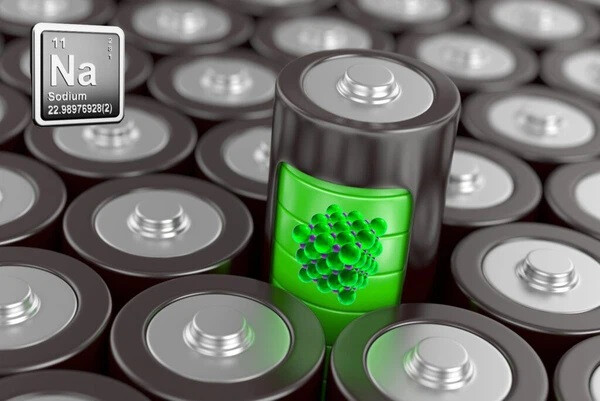
A warning has been sounded that South Korea is significantly lagging behind China in the field of sodium batteries, which are emerging as a core in the next-generation battery market. While 82 companies in China are preparing for mass production of sodium batteries, only one company in South Korea is doing so. It is pointed out that while China has made astronomical investments for the commercialization of sodium batteries, a gap in technology and infrastructure is widening for South Korea.
At the 'High-Performance Sodium Battery Development Status Seminar' hosted by the Korea Future Technology Education Institute at the FKI Tower in Yeouido, Seoul on the 11th, Ha Young-kyun, CEO of Energy11, emphasized the future growth potential of sodium batteries, raising a sense of crisis in the domestic industry. CEO Ha, whose company Energy11 is the only one in Korea to enter the mass production stage while overseeing the sodium battery project led by the Ministry of Trade, Industry and Energy, predicted, "By 2035, sodium batteries will largely replace lithium iron phosphate (LFP) batteries and account for nearly half of the energy storage system (ESS) market share," and added, "The price could also drop to a quarter of LFP batteries."
Why are sodium batteries gaining attention?
Sodium batteries have overwhelming advantages over lithium batteries in terms of lower cost and abundant resources. Lithium is concentrated in specific regions and has high price volatility, whereas sodium is abundantly present on Earth, ensuring high supply chain stability. Furthermore, sodium batteries are considered relatively safer from the fire risk problems that lithium batteries face.
Recently, Chinese battery companies have been accelerating the development of sodium battery technology. In particular, CATL unveiled a sodium battery in April, showcasing an energy density of 175Wh/kg, which is similar to existing LFP batteries. CEO Ha emphasized, "China is on the verge of developing sodium batteries with a level of 200Wh/kg," and "The fate of sodium batteries and the Korean battery industry depends on the success of technology development." This suggests that sodium batteries have the potential to go beyond mere low-cost options and enter the high-performance domain, showing their potential to shake up the market.
South Korea, widening gap with China... Urgent need for government support and talent nurturing
Lee Dong-wook, Director of Future Technology at EcoPro BM, predicted, "When dry process and bipolar technology are commercialized in 2028, the commercialization of sodium batteries is highly likely to accelerate rapidly." He further pointed out, "Before that, a lot of industry interest and government support are needed."
Currently, analysis shows that South Korea has at least two to three times fewer sodium battery research personnel than China. The significant difference in R&D expenditure is also a concern, with worries that the technology gap will widen further. Director Lee emphasized, "It is difficult to secure sufficient research time due to regulations such as the 52-hour work week," and "Measures to narrow the gap with China are urgently needed."
In fact, China, under government leadership, is accelerating sodium battery R&D by investing enormous capital and human resources. In addition to CATL, major battery companies such as BYD and Ningde Times have announced roadmaps for the commercialization of sodium batteries, engaging in fierce competition to secure market leadership. They are already conducting tests to apply sodium batteries to various applications such as electric vehicles, ESS, and small appliances, and some products have already been released to the market.
South Korea began researching sodium batteries in the early 2000s, but investment has been relatively insufficient due to its focus on the lithium-ion battery market. Although the government and companies are belatedly recognizing the importance of sodium batteries, there is a strong call for more aggressive investment and policy support to catch up with the already widened gap.
Experts unanimously agree that sodium batteries will be a game-changer in the future ESS market and have the potential to replace LFP batteries in the electric vehicle market. Now is the time for South Korea to concentrate all its capabilities to avoid losing leadership in the next-generation battery market. Only with expanded government R&D support, establishment of talent nurturing programs, and aggressive investments from companies can South Korea narrow the gap with China and secure competitiveness in the global sodium battery market.
[Copyright (c) Global Economic Times. All Rights Reserved.]