![[등록] 2026-09-01 15:48:31](/support/_updata/banner2/tl181982910_6749.png)


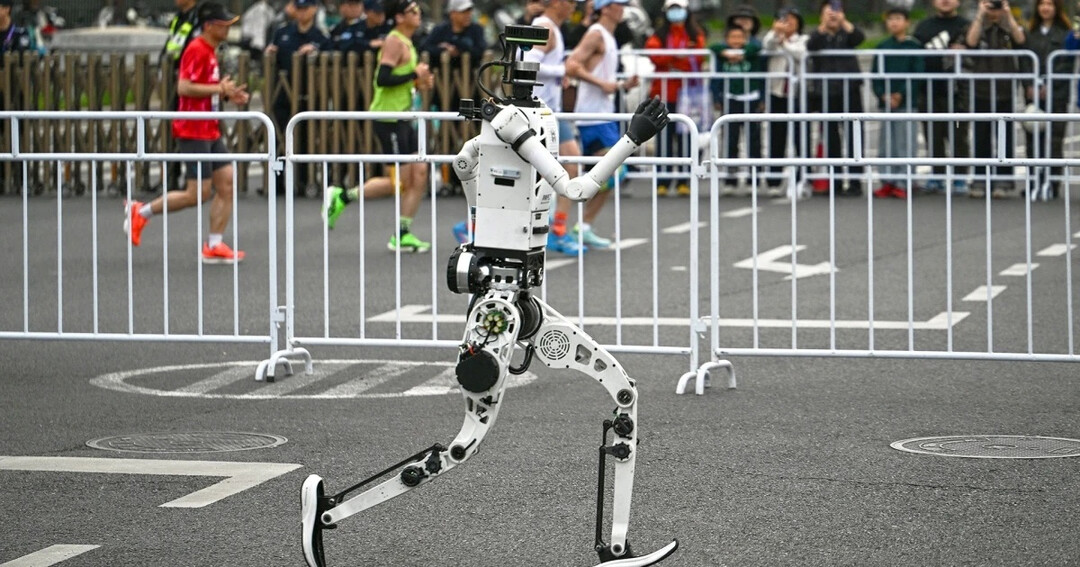
SEOUL — The global humanoid robotics industry, previously dominated by a fierce tripartite competition among South Korea, the United States, and China, has entered a dramatic turning point. Europe has officially thrown its hat into the ring with a monumental financial milestone, disrupting the established geopolitical balance of advanced automation.
Germany-based NEURA Robotics recently announced a successful Series C investment round totaling $1.4 billion (approximately KRW 2.1 trillion). Company executives hailed the funding as "the largest single capital raise in the history of full-stack robotics enterprises." This massive influx of capital not only elevates Europe’s technological standing but also transforms the global humanoid market from an American-Chinese-Korean duopoly-plus-one into a truly multilateral battlefield.
The blockbusting investment round drew participation from an unprecedented coalition of global tech titans and industrial heavyweights, including NVIDIA, Amazon, Qualcomm, Bosch, and Schaeffler, alongside institutional backing from the European Investment Bank (EIB). Analysts note that the participation of premium U.S. chipmakers and e-commerce giants, alongside Europe’s premier automotive component manufacturers, signals deep cross-continental confidence in European engineering.
Europe’s Strategic Blueprint: The 'Neuraverse' and Mass Production
NEURA Robotics plans to deploy the newly secured $1.4 billion to accelerate the construction of "Neuraverse," its proprietary cloud-based robot platform. The Neuraverse aims to establish a seamless ecosystem connecting humans, robots, and real-time data, allowing machines to continuously learn from human behavior and environment-specific feedback loop mechanisms.
Furthermore, the company is expanding "NEURA Gym," a state-of-the-art physical training facility designed for cognitive robots to learn real-world tasks through reinforcement learning under simulated and real environmental constraints. Crucially, NEURA Robotics has announced that its vertically integrated production system will become fully operational this year. The company has laid down an ambitious roadmap to achieve a manufacturing capacity of millions of humanoid units by 2030, a clear signal that Europe is targeting mass commoditization rather than mere laboratory experimentation.
The American Pioneers: Tesla and Boston Dynamics Focus on Commercialization
As Europe accelerates, the United States continues to leverage its first-mover advantage, led by Tesla and Boston Dynamics. Tesla is rapidly positioning its humanoid robot, "Optimus," as the crown jewel of its next-generation growth engine.
Tesla Chief Executive Officer Elon Musk has repeatedly emphasized to shareholders that the Optimus program could eventually eclipse the financial value of Tesla’s core automotive business. Moving beyond theoretical promises, Tesla has already deployed pilot fleets of Optimus robots within its own gigafactories. These units are undergoing rigorous validation trials, performing highly repetitive, ergonomically hazardous logistics and assembly tasks, which provides Tesla with the critical operational data required to optimize the robot before initiating mass-market assembly.
Simultaneously, Boston Dynamics—the pioneering robotics firm acquired by South Korea's Hyundai Motor Group—is aggressively targeting the industrial sector with its newly unveiled, next-generation fully electric "Atlas" humanoid. Abandoning its legacy hydraulic systems, the all-electric Atlas boasts unprecedented range of motion, strength, and structural reliability suited for harsh factory floors.
Hyundai Motor Group has mapped out a strategic timeline to integrate the electric Atlas into its core global production bases, including its highly automated smart factories, by 2028. Recent industry intelligence reveals that Hyundai has commenced evaluating domestic auto-parts suppliers in South Korea to explore the localized sourcing of specialized humanoid components, such as high-torque actuators, precision gears, and sensory modules. This indicates that Hyundai is actively building a robust commercial supply chain to support the robot's long-term deployment.
China’s Aggressive Pursuit: Aggressive Capital and Internal Scale
While Western firms focus on elite engineering, China is mounting an aggressive counter-offensive powered by unparalleled state subsidies, supply chain integration, and a massive domestic market.
In a move that shook the industry, Chinese electric vehicle (EV) powerhouse BYD officially formalized its entry into the humanoid robotics sector. Stella Li, Executive Vice President of BYD, confirmed in a recent media briefing that the company is deep in the development phase of its own humanoid units. Crucially, Li hinted that BYD intends to utilize its sprawling, nationwide network of automotive dealerships to distribute and service these robots, presenting an immediate structural advantage in commercial scaling. BYD has been aggressively hoarding talent for this mission, dramatically expanding its robotics research and development workforce since early 2024.
Concurrently, a specialized cluster of Chinese robotics firms—including Unitree Robotics, UBTECH Robotics, and Agibot—are spearheading a hyper-competitive race toward mass production. Blessed with deep government backing and immediate access to Shenzhen's world-class hardware ecosystem, these companies are aiming to commoditize humanoids. Industrial experts project that Chinese players will leverage aggressive pricing strategies to drastically lower the financial barrier to entry, threatening to undercut Western counterparts and accelerate the widespread proliferation of robots in small-to-medium enterprises.
The Paradigm Shift: From Athletic Agility to Industrial Yield
With four distinct global power blocs now active, industry analysts point out that the benchmark for success in the humanoid market has fundamentally shifted. The era of "technology demonstration"—where victory was measured by a robot’s ability to perform backflips, navigate obstacle courses, or mimic human gaits in controlled laboratory settings—is officially over. The new metric of dominance centers squarely on "mass manufacturing capability" and "operational yield."
The core competition now revolves around how quickly a humanoid robot can be deployed into an unstructured, real-world factory or warehouse, how rapidly its artificial intelligence can adapt to new tasks via simulation-to-real (Sim2Real) learning, and whether the hardware can operate reliably across multi-shift factory cycles without breaking down.
Reflecting this industry-wide pragmatism, South Korean automotive leadership emphasized the urgency of transitioning from research to revenue. Min-woo Park, the President and Head of the Advanced Vehicle Platform (AVP) Division at Hyundai Motor and Kia, stated in an interview with the HMG Journal:
"Over the past several years, we have diligently focused on securing core proprietary technologies and perfecting our developmental maturity. However, we have now arrived at a critical juncture where definitive strategic choices must be executed. We must now pool our collective institutional capabilities toward a singular objective: transitioning our technological prowess into tangible, high-yield commercial business outcomes."
As Germany's NEURA Robotics injects unprecedented capital into the European ecosystem, the humanoid race has transformed into a high-stakes geopolitical marathon. With America holding the software edge, China commanding the hardware supply chain, South Korea anchoring industrial application, and Europe scaling up full-stack ecosystems, the race to automate the global workforce has entered its most volatile and competitive chapter yet.
[Copyright (c) Global Economic Times. All Rights Reserved.]