![[등록] 2026-09-01 15:48:31](/support/_updata/banner2/tl181982910_6749.png)


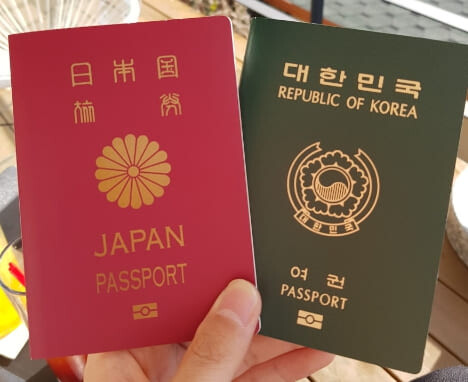
A recent analysis suggests that if Korea and Japan were to unify their tourist visa systems, South Korea alone could see an additional influx of up to 1.84 million foreign tourists. This is the core finding of the "Economic Impact Analysis of Korea-Japan Tourism Cooperation" report, released by the Korea Chamber of Commerce and Industry (KCCI) on July 29th. The report emphasizes that a so-called "Korea-Japan Schengen Treaty" would guarantee the free movement of people and goods between the two nations, thereby generating immense economic added value.
Economic Ripple Effects of a Korea-Japan Schengen Treaty
The KCCI report states that significant economic effects are anticipated from the additional tourists entering South Korea if the Korea-Japan tourist visa system is unified. Specifically, tourism revenue is projected to increase by up to $1.85 billion (approximately 2.6 trillion Korean Won), with a production inducement effect of 6.5 trillion Korean Won and an employment inducement effect of 43,000 jobs.
Considering that the average expenditure per overseas tourist was approximately $1,323.8 (1.8418 million Korean Won) last year, the economic ripple effect of 1.84 million additional tourists is substantial. Their spending, distributed across various sectors such as food and beverages ($470), accommodation ($304), cultural services ($160), and medical services ($50), is expected to have a positive impact on the overall domestic economy.
Why is Tourist Visa Unification Necessary?
Currently, foreign tourists wishing to visit Korea and Japan face the inconvenience of obtaining separate visas for each country. This system is disadvantageous for attracting tourists, especially when compared to regions like Europe's Schengen Area or certain Southeast Asian country blocs, where a single visa allows free movement across multiple nations.
Tourist visa unification would alleviate this inconvenience, promoting convenience for tourists by allowing them to travel freely between both countries with a single visa. This would be particularly attractive to long-haul travelers from North America and Europe, beyond Asia. It is evident that the ability to visit two attractive destinations, Korea and Japan, with a single visa application would positively influence travel decisions.
Strategic Approaches for Synergistic Effects
Beyond mere visa unification, the report emphasizes the importance of developing tourism products that integrate the cultural strengths and cutting-edge digital technologies of both nations. Combining unique cultural content, such as Korea's K-Culture (K-Pop, K-Drama, etc.) and Japan's traditional culture and animation, could offer attractive options for tourists worldwide. Furthermore, building smart tourism systems utilizing the digital capabilities of both countries would provide tourists with more convenient and immersive experiences. For instance, this could involve a unified mobile app offering tourism information for both countries, linked reservation and payment systems, and real-time translation services.
The analysis also points out that both Korea and Japan, being manufacturing-centric economies, have historically had relatively limited investment and resource allocation in the tourism industry. However, with intensifying competition in the global tourism market, it is crucial for both countries to establish more effective strategies for attracting foreign tourists.
Real-world Examples and Implications of Visa Unification
There are numerous successful global examples of countries attracting tourists through visa unification. The most prominent is the Schengen Agreement, signed in 1985. This agreement eliminated border control procedures among member states in Europe, significantly enhancing the convenience of European travel and driving explosive growth in the European tourism market.
Southeast Asian countries have also actively utilized visa exemption or single-visa systems to boost tourism. For example, relatively free movement is guaranteed among ASEAN member states, significantly contributing to attracting intra-regional tourists.
In the case of Korea and Japan, their geographical proximity and simultaneous cultural similarities and differences make the potential for a "Korea-Japan Schengen Treaty" very high. The demand from tourists wishing to visit both countries is already sufficient, and visa unification would serve as a powerful catalyst to convert this latent demand into actual visits.
Challenges and Outlook
Naturally, for Korea-Japan tourist visa unification to proceed smoothly, political and diplomatic cooperation between the two countries is essential. Joint efforts are also required to resolve technical issues related to visa system integration and to address immigration control and security concerns.
However, if these challenges are overcome and Korea-Japan tourist visa unification is successfully achieved, both countries could secure unrivaled competitiveness in the global tourism market, extending beyond Asia. This is expected to be a crucial opportunity not only to increase tourist numbers but also to vitalize cultural exchange and enhance mutual understanding. It is hoped that close cooperation between the governments and tourism industries of both countries will lead to the realization of a "Korea-Japan Schengen Treaty."
[Copyright (c) Global Economic Times. All Rights Reserved.]