• 2026.03.22 (Sun)
  • All articles
  • LOGIN
  • JOIN
Global Economic Times
fashionrunwayshow2026
  • Synthesis
  • World
  • Business
  • Industry
  • ICT
  • Distribution Economy
  • Well+Being
  • Travel
  • Eco-News
  • Education
  • Korean Wave News
  • Opinion
  • Arts&Culture
  • Sports
  • People & Life
    • International Student Report
    • With Ambassador
  • Column
    • Cho Kijo Column
    • Cherry Garden Story
    • Ko Yong-chul Column
    • Kim Seul-Ong Column
    • Lee Yeon-sil Column
  • Photo News
  • New Book Guide
MENU
 
Home > Business

Uzbekistan and Turkmenistan Forge New Economic Era with Landmark Free Trade Agreement

KO YONG-CHUL Reporter / Updated : 2025-03-16 16:04:17
  • -
  • +
  • Print

TASHKENT/ASHGABAT – March 7, 2025 – In a significant stride towards regional economic integration, the free trade agreement between Uzbekistan and Turkmenistan officially took effect on February 25, 2025, marking a pivotal moment in the bilateral relations of these Central Asian neighbors. The agreement, which eliminates customs duties on a vast array of goods, aims to catalyze trade, stimulate investment, and foster deeper economic cooperation.

The announcement, released by Uzbekistan's Ministry of Investments, Industry, and Trade, followed the completion of all necessary legal procedures for the Protocol on Exceptions to the Free Trade Regime, initially signed on July 16, 2024, and subsequently ratified by Uzbek President Shavkat Mirziyoyev on January 27, 2025.

Eliminating Barriers, Boosting Trade

The cornerstone of the agreement is the removal of tariffs on key Uzbek exports to Turkmenistan, including cement (previously 100%), textiles (50%), furniture (50%), glass containers (50%), water heating boilers (15%), plastic and polypropylene products (10%), sausages and meat products ($2 per kg), and cottonseed oil ($1 per kg). These tariff reductions are expected to significantly enhance the competitiveness of Uzbek products in the Turkmen market.

"This agreement is a testament to our commitment to strengthening economic ties with our neighbors," stated a spokesperson from Uzbekistan's Ministry of Investments, Industry, and Trade. "By removing trade barriers, we are creating new opportunities for businesses in both countries to thrive."

Trade Dynamics and Economic Impact

The agreement builds upon existing trade momentum. According to data from TurkmenPortal, the trade turnover between Uzbekistan and Turkmenistan saw a 23% increase in the first quarter of 2024, reaching $455 million. Notably, Turkmen exports to Uzbekistan surged by 36%, reaching $407 million. However, Turkmen imports from Uzbekistan declined by 30% during the January-May 2023 to 2024 period, dropping from $69.2 million to $48 million, highlighting some trade imbalances that both countries will need to address.

Economists anticipate that the free trade agreement will stimulate industrial cooperation across various sectors, including construction, agriculture, and manufacturing. The Uzbek government is actively working to support businesses in leveraging the benefits of the new trade framework.

Strengthening Bilateral Ties and Regional Implications

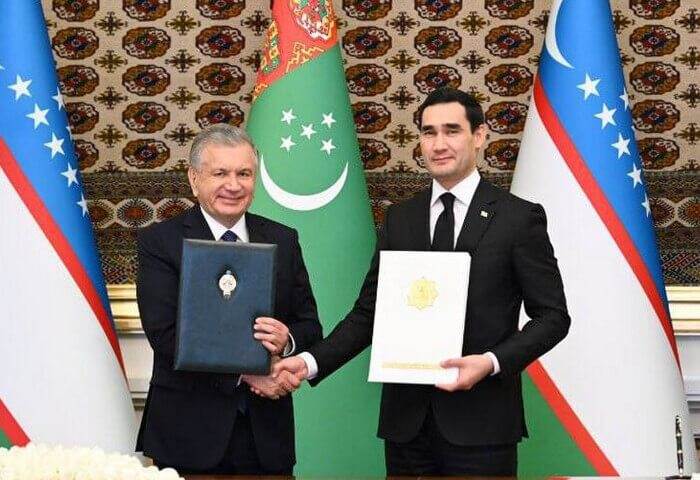
Beyond economics, the agreement signifies a deepening of political and diplomatic ties. Recent high-level meetings between Presidents Shavkat Mirziyoyev and Serdar Berdimuhamedov have underscored the commitment to enhancing cooperation across multiple fronts.

"This agreement is more than just an economic pact; it reflects a shared vision for regional prosperity and stability," said a political analyst specializing in Central Asian affairs. "It sets a precedent for further economic integration in the region."

The success of this agreement could potentially inspire similar free trade agreements among other Central Asian nations, fostering greater regional economic cohesion. However, challenges such as infrastructure development, logistical hurdles, and the need for harmonized regulatory frameworks remain.

Looking Ahead

As Uzbekistan and Turkmenistan embark on this new chapter of economic cooperation, the focus will be on ensuring the effective implementation of the agreement and addressing any emerging challenges. The governments of both nations are committed to fostering a conducive environment for businesses to flourish, ultimately contributing to the economic well-being of their citizens and the broader Central Asian region.

[Copyright (c) Global Economic Times. All Rights Reserved.]

  • #globaleconomictimes
  • #글로벌이코노믹타임즈
  • #한국
  • #중기청
  • #재외동포청
  • #외교부
  • #micorea
  • #mykorea
  • #newsk
  • #nammidonganews
  • #singaporenewsk
KO YONG-CHUL Reporter
Reporter Page

Popular articles

  • Ko Sang-goo, President of World Federation of Korean Associations, Elected as First Private Sector Chair of World Korean Community Leaders Convention

  • Revised and Expanded Edition of ‘Failure of Negotiations with North Korea: Truth and Solutions’ Published

  • Commentary That Douses the Joy of Victory: A Twisted Perspective

I like it
Share
  • Facebook
  • X
  • Kakaotalk
  • LINE
  • BAND
  • NAVER
  • https://www.globaleconomictimes.kr/article/1065596579884695 Copy URL copied.
Comments >

Comments 0

Weekly Hot Issue

  • Coway Clinches Top Honor at "Water Taste Awards" for 7th Consecutive Year
  • HP Targets Korea as Strategic Hub for 'Edge AI' Expansion, Seeking Startup Partnerships
  • Pearl Abyss’s 'Crimson Desert' Shatters Records with 2 Million Copies Sold on Day One
  • "BTS Over Books?" Indian Academies Issue Emergency Notices as Students Plot Mass Absences for Comeback Live
  • Naver to Shut Down Men's Fashion Service 'MR.' to Launch Expanded AI-Driven Fashion Platform
  • JBNU and SKKU Researchers Achieve Breakthrough in "Dream Material" MXene, Setting New World Records in Performance

Most Viewed

1
An Open Letter to BTS On the Eve of a Historic Performance
2
From Industrial Capital to Tourism Mecca... Ulsan Makes a Bold Move with ‘Experiential Content’ in 2026
3
Ko Sang-goo, President of World Federation of Korean Associations, Elected as First Private Sector Chair of World Korean Community Leaders Convention
4
It is Time for BTS’s Fandom, ARMY, to Step Forward
5
Korean Stock Market Plunges: Circuit Breaker and Sidecar Triggered Amid Geopolitical Crisis
광고문의
임시1
임시3
임시2

Hot Issue

Vishay Unveils Ultra-Compact 0404 RGB LED with Independent Chip Control for Enhanced Color Precision

Coway Clinches Top Honor at "Water Taste Awards" for 7th Consecutive Year

AI Medical Ecosystem in Focus: KIMES 2026 Opens in Seoul as Global Healthcare Hub

Netanyahu Declares Decisive Blow to Iran’s Nuclear and Missile Programs, Signals Early End to War

Let’s recycle the old blankets in Jeju Island’s closet instead of incinerating them.

Global Economic Times
korocamia@naver.com
CEO : LEE YEON-SIL
Publisher : KO YONG-CHUL
Registration number : Seoul, A55681
Registration Date : 2024-10-24
Youth Protection Manager: KO YONG-CHUL
Singapore Headquarters
5A Woodlands Road #11-34 The Tennery. S'677728
Korean Branch
Phone : +82(0)10 4724 5264
#304, 6 Nonhyeon-ro 111-gil, Gangnam-gu, Seoul
Copyright © Global Economic Times All Rights Reserved
  • 에이펙2025
  • APEC2025가이드북TV
  • 독도는우리땅
Search
Category
  • All articles
  • Synthesis
  • World
  • Business
  • Industry
  • ICT
  • Distribution Economy
  • Well+Being
  • Travel
  • Eco-News
  • Education
  • Korean Wave News
  • Opinion
  • Arts&Culture
  • Sports
  • People & Life 
    • 전체
    • International Student Report
    • With Ambassador
  • Column 
    • 전체
    • Cho Kijo Column
    • Cherry Garden Story
    • Ko Yong-chul Column
    • Kim Seul-Ong Column
    • Lee Yeon-sil Column
  • Photo News
  • New Book Guide
  • Multicultural News
  • Jobs & Workers