• 2026.05.08 (Fri)
  • All articles
  • LOGIN
  • JOIN
Global Economic Times
fashionrunwayshow2026
  • Synthesis
  • World
  • Business
  • Industry
  • ICT
  • Distribution Economy
  • Well+Being
  • Travel
  • Eco-News
  • Education
  • Korean Wave News
  • Opinion
  • Arts&Culture
  • Sports
  • People & Life
    • International Student Report
    • With Ambassador
  • Column
    • Cho Kijo Column
    • Cherry Garden Story
    • Ko Yong-chul Column
    • Kim Seul-Ong Column
    • Lee Yeon-sil Column
  • Photo News
  • New Book Guide
MENU
 
Home > Business

South Korea's Growing List of Malicious Landlords

Hwang Sujin Reporter / Updated : 2025-01-02 16:38:31
  • -
  • +
  • Print

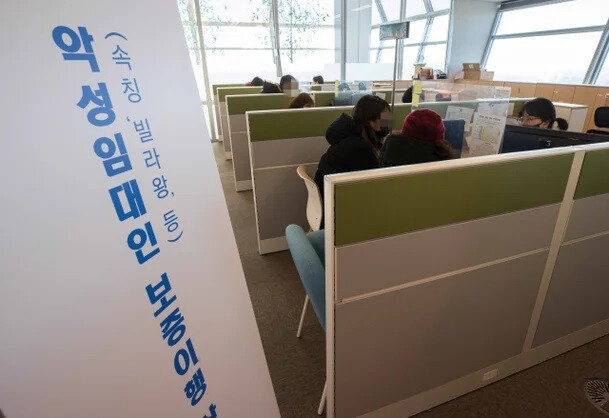
A recent tally has revealed that a staggering 1,177 individuals and corporations (including 1,128 individuals and 49 corporations) have been publicly named as "malicious landlords" for repeatedly failing to return tenants' security deposits. The total amount of security deposits withheld by these landlords amounts to a staggering 1.9 trillion won ($1.4 billion).

Since December 2023, the South Korean government has been publicly disclosing the names, ages, addresses, outstanding rental deposit debts, and default periods of landlords who have habitually failed to return security deposits, as part of its efforts to prevent rental scams.

On average, each of these landlords has failed to return 1.61 billion won in security deposits. Ten landlords alone have withheld over 30 billion won each. The most significant case involves a 51-year-old individual residing in Nam-gu district, Ulsan, who owes a staggering 862 billion won in unpaid security deposits.

A geographical analysis of these malicious landlords reveals a concentration in areas with high rates of rental fraud. Bucheon City in Gyeonggi Province has the highest number of malicious landlords with 63 individuals, followed by Gangseo-gu in Seoul with 53, Michuhol-gu in Incheon with 48, and Bupyeong-gu in Incheon with 34.

The average age of these malicious landlords is 47. Individuals in their 50s account for the largest group at 23.2% (273 individuals), followed by those in their 30s (21.8%), 40s (18.9%), 60s (17.1%), 20s (10.4%), and 70s (3.7%). The youngest malicious landlord is a 19-year-old residing in Gangseo-gu, Seoul, who has failed to return 5.7 billion won in security deposits. The oldest is an 85-year-old living in Paju, Gyeonggi Province, who owes 3.6 billion won.

While there were only 126 malicious landlords on the public list six months after its launch, the number has skyrocketed to 1,177 as of late last year, indicating a growing trend of landlords withholding security deposits. The Housing & Urban Guarantee Corporation (HUG) reported that rental deposit insurance claims reached a record high of 4.2587 trillion won and 19,803 cases from January to November last year, representing a 7.4% increase compared to the same period in the previous year.

[Copyright (c) Global Economic Times. All Rights Reserved.]

  • #globaleconomictimes
  • #seoulkorea
  • #periodicoeconomico
  • #글로벌이코노믹타임즈
  • #GET
  • #GETtv
  • #대한민국
  • #중기청
  • #재외동포청
  • #외교부
  • #micorea
  • #my
Hwang Sujin Reporter

Popular articles

  • BYD Hits 10,000-Unit Milestone in South Korea Within One Year, Eyes Exclusive "10,000 Club" Entry

  • South Korean Financial Groups Surpass ₩4,000 Trillion in Total Assets; Net Profit Hits ₩26.7 Trillion Amid Stock Market Rally

  • Generative AI Use Triples Among Seoul Citizens, but Digital Divide Persists for Seniors

I like it
Share
  • Facebook
  • X
  • Kakaotalk
  • LINE
  • BAND
  • NAVER
  • https://www.globaleconomictimes.kr/article/1065598618626282 Copy URL copied.
Comments >

Comments 0

Weekly Hot Issue

  • Celltrion’s Zymfentra Sees Explosive 300% Growth, Hits Record Quarterly Prescriptions in the U.S.
  • BMW Korea Ignites May with Exclusive 9-Model Online Limited Edition Lineup
  • Hyundai Mobis Completes Independent EV 'Heart' Lineup: A Major Leap Toward Global Leadership in Power Electric Systems
  • OpenAI Redefines Human-AI Interaction with ‘GPT-Realtime-2’ and New Suite of Live Voice Models
  • Tensions Flare in Strait of Hormuz: U.S.-Iran Clashes Threaten Fragile Truce
  • UAE Sovereign Wealth Giants Descend on Seoul to Forge Strategic AI Alliance

Most Viewed

1
Iran Imposes Transit Fees on Strait of Hormuz Amid Escalating Maritime Tensions
2
Korea and Vietnam Forge Strategic Partnership in Science, Technology, and Innovation
3
80% of Enterprises Hit by 'AI Agent Anomalies': SailPoint Calls for Integrated Identity Governance
4
Kurly Abandons 'All-Paper' Packaging Strategy Amid Rising Cost Pressures
5
University of Utah Asia Campus Hosts ‘2026 Film Festival,’ Showcasing Student Cinematic Excellence
광고문의
임시1
임시3
임시2

Hot Issue

Tensions Flare in Strait of Hormuz: U.S.-Iran Clashes Threaten Fragile Truce

Tesla Model Y Becomes First to Pass Grueling New U.S. Autonomous Safety Tests

U.S. Trade Court Strikes Down Trump’s ‘Global 10% Tariff,’ Citing Executive Overreach

Hyundai Motor Group Bets $700 Million on Mexico Amid Trade Policy Volatility

Fashion Runway Show 2026

Global Economic Times
korocamia@naver.com
CEO : LEE YEON-SIL
Publisher : KO YONG-CHUL
Registration number : Seoul, A55681
Registration Date : 2024-10-24
Youth Protection Manager: KO YONG-CHUL
Singapore Headquarters
5A Woodlands Road #11-34 The Tennery. S'677728
Korean Branch
Phone : +82(0)10 4724 5264
#304, 6 Nonhyeon-ro 111-gil, Gangnam-gu, Seoul
Copyright © Global Economic Times All Rights Reserved
  • 에이펙2025
  • APEC2025가이드북TV
  • 반달곰 프로젝트
Search
Category
  • All articles
  • Synthesis
  • World
  • Business
  • Industry
  • ICT
  • Distribution Economy
  • Well+Being
  • Travel
  • Eco-News
  • Education
  • Korean Wave News
  • Opinion
  • Arts&Culture
  • Sports
  • People & Life 
    • 전체
    • International Student Report
    • With Ambassador
  • Column 
    • 전체
    • Cho Kijo Column
    • Cherry Garden Story
    • Ko Yong-chul Column
    • Kim Seul-Ong Column
    • Lee Yeon-sil Column
  • Photo News
  • New Book Guide
  • Multicultural News
  • Jobs & Workers