![[등록] 2026-09-01 15:48:31](/support/_updata/banner2/tl181982910_6749.png)


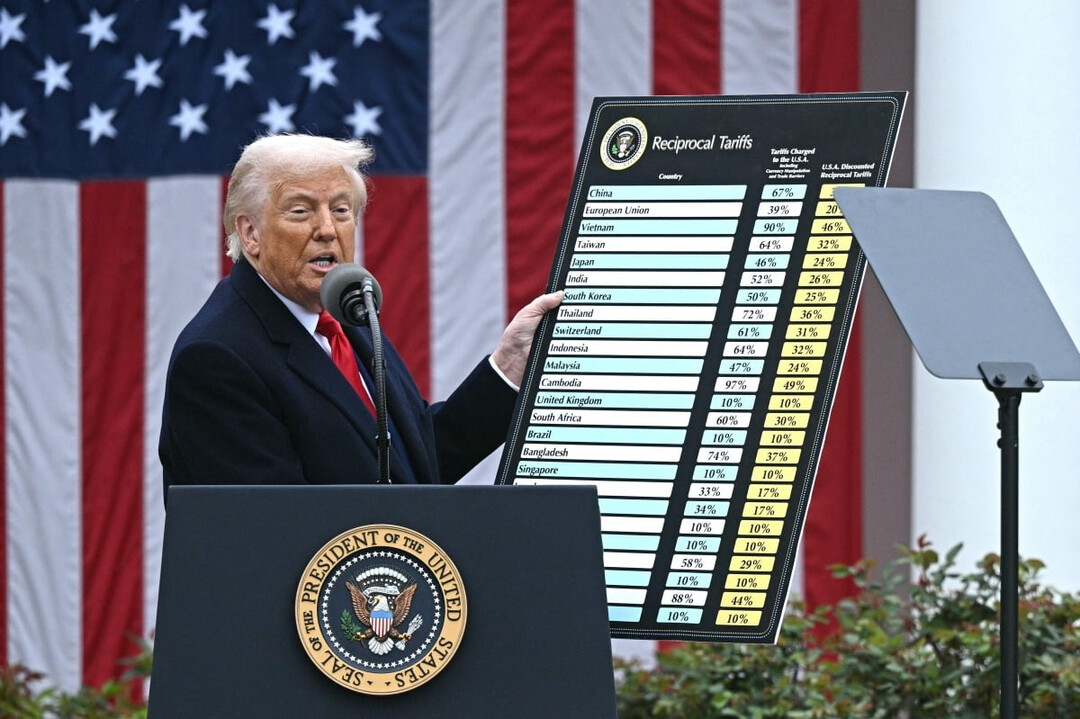
Cheonan, South Korea - The United States Trade Representative (USTR) has unveiled the methodology behind the Trump administration's calculation of reciprocal tariffs by country, revealing a seemingly simplistic approach that has drawn sharp criticism for being arbitrary and lacking economic basis. The formula essentially divides the U.S. trade deficit with a specific country by the total value of imports from that country.
According to the USTR's website, this method was adopted due to the "complexity or impossibility" of calculating the impact of numerous tariffs, regulations, taxes, and other policies on trade deficits. The stated goal is to determine a reciprocal tariff rate that would theoretically eliminate the bilateral trade deficit for the United States.
Applying this formula, the USTR indicated that South Korea could face a reciprocal tariff rate of approximately 26%. This figure is derived from South Korea's $66 billion trade surplus with the U.S. in the past year, divided by its $131.5 billion in exports to the U.S., resulting in roughly 50%. The USTR then applied an approximate 50% "discount rate" to arrive at the 26% figure, seemingly based on the assertion that South Korea imposes a 50% tariff on U.S. goods – a claim disputed by Seoul.
A similar calculation was applied to the European Union (EU), which recorded a $235.6 billion trade surplus with the U.S. on $605.8 billion worth of exports. This yields a tariff rate of 39%, and the USTR subsequently levied a reciprocal tariff of around 20% on the EU.
However, the methodology has been met with widespread skepticism. The concept of reciprocal tariffs traditionally involves matching the actual tariffs imposed by a trading partner. Linking reciprocal tariffs directly to the trade deficit lacks established economic rationale. Critics suggest that the USTR's lean staff of around 200 may have resorted to this "flawed method" due to the impracticality of analyzing the intricate tariff structures across numerous product categories and countries.
The South Korean government has expressed bewilderment at the 26% reciprocal tariff rate proposed by the U.S. Under the existing Korea-U.S. Free Trade Agreement (KORUS FTA), the average tariff rate imposed by South Korea on U.S. goods is a mere 0.79%. A representative from South Korea's Ministry of Economy and Finance stated on Thursday, "The 26% tariff rate was unexpected and considered quite high. We will examine the basis of this calculation and continue negotiations with the U.S. based on our findings."
The International Finance Center in Seoul echoed these concerns in a briefing, noting that "this tariff rate was calculated using a method unrelated to the actual tariff rates between the two countries." They further speculated that the "questionable method of calculating the figures could be a strategy to set an initial burdensome tariff rate to use as leverage in future negotiations, or it could genuinely aim to reduce the goods deficit in trade with major countries."
Ian Bremmer, President of political risk consulting firm Eurasia Group, also weighed in on the issue via social media. After explaining Trump's reciprocal tariff calculation method, he commented, "This explains why the tariffs being levied on the US look fictional. Unbelievably dumb."
The development raises concerns about the future of international trade relations and the potential for escalating trade tensions based on what many perceive as an unsound and overly simplistic approach to tariff policy. Negotiations between South Korea and the United States are expected to continue as Seoul seeks clarity and a more equitable basis for determining tariff rates.
[Copyright (c) Global Economic Times. All Rights Reserved.]