• 2026.03.22 (Sun)
  • All articles
  • LOGIN
  • JOIN
Global Economic Times
fashionrunwayshow2026
  • Synthesis
  • World
  • Business
  • Industry
  • ICT
  • Distribution Economy
  • Well+Being
  • Travel
  • Eco-News
  • Education
  • Korean Wave News
  • Opinion
  • Arts&Culture
  • Sports
  • People & Life
    • International Student Report
    • With Ambassador
  • Column
    • Cho Kijo Column
    • Cherry Garden Story
    • Ko Yong-chul Column
    • Kim Seul-Ong Column
    • Lee Yeon-sil Column
  • Photo News
  • New Book Guide
MENU
 
Home > Distribution Economy

Trump's "Car Tariff Bomb" Threatens South Korean Economy

KO YONG-CHUL Reporter / Updated : 2025-03-31 18:02:51
  • -
  • +
  • Print

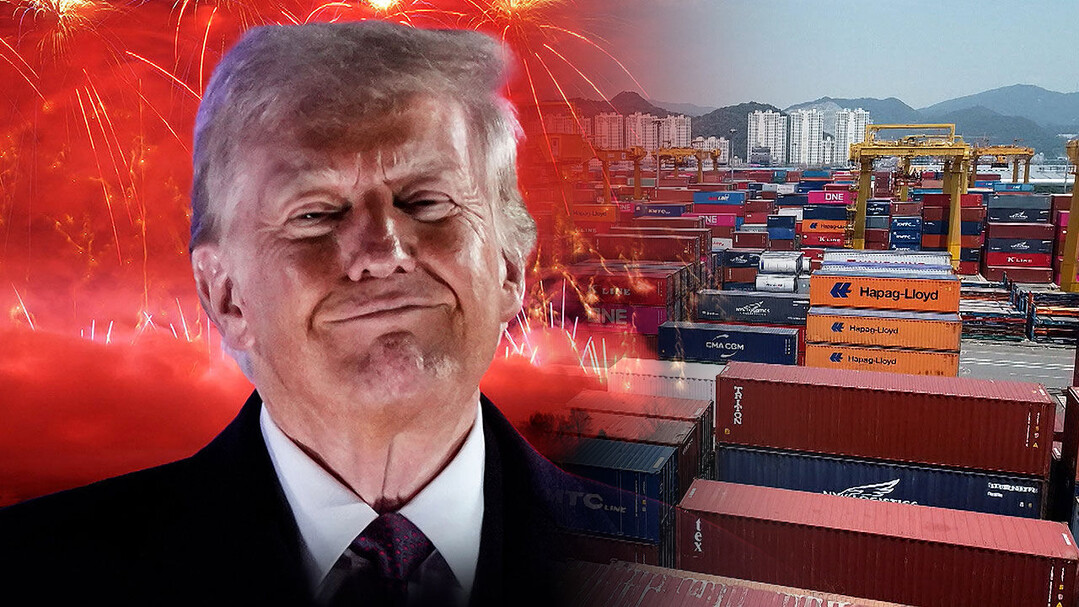
Seoul, South Korea - A significant economic shockwave is emanating from the United States as President Donald Trump announced the imposition of a 25% tariff on imported automobiles. The move, effective from April 3rd according to a signed executive order, has sent alarm bells ringing in South Korea, where the automotive industry is the leading exporter to the US.   

President Trump stated that the tariffs would "massively grow the American auto industry" and anticipates an annual increase of $100 billion in tax revenue. However, for South Korea, this policy represents a direct hit to a crucial sector of its economy.   

Automobiles constitute South Korea's top export to the United States, accounting for a substantial 27% ($34.74 billion) of all goods shipped across the Pacific last year. This figure also represents approximately half of South Korea's total global automotive exports ($70.79 billion).

The potential impact is stark. A recent report by the IBK Economic Research Institute forecasts an 18.59% year-on-year decline in South Korea's automobile exports to the US if the 25% tariff is implemented.

The repercussions are already being felt beyond trade figures. Shares of major South Korean automakers Hyundai and Kia have experienced significant drops on the stock market since the tariff announcement.   

Concerns are mounting about the broader impact on South Korea's economic growth. Capital Economics, a UK-based analysis firm, recently downgraded its 2025 growth forecast for South Korea from 1.0% to 0.9%. This marks the first instance of a major global institution projecting a sub-1% growth rate for the nation. Standard & Poor's (S&P) also revised its forecast downwards, from 2.0% to 1.2%, citing the looming tariffs and increased political uncertainty surrounding the impeachment trial of President Yoon Suk-yeol.

Furthermore, analysts predict potential job losses in South Korea as domestic automakers shift production towards the US to circumvent the tariffs. Hyundai Motor Group Chairman Chung Euisun's recent announcement of approximately ₩31 trillion in US investments, including an expansion of the "Metaplant America" to a 500,000-unit capacity, is seen as a preemptive measure against the anticipated tariffs. Experts estimate that this could lead to a reduction of 330,000 units in domestic production and threaten around 20,000 jobs in South Korea. Fears are growing that other key industries might follow this trend, leading to a phenomenon of "industrial hollowing-out."

The South Korean government's response has drawn criticism for its perceived lack of urgency. While the Ministry of Trade, Industry and Energy convened an emergency meeting, a comprehensive countermeasure plan is not expected until April. This delay has been questioned, given that the possibility of increased US auto tariffs has been a known concern for some time.

In contrast, other nations potentially affected by the tariffs are actively engaging with the US. Mexico's Economy Minister is reportedly in discussions with the US Secretary of Commerce to ensure tariff exemptions for Mexican-produced auto parts. Japan's Prime Minister Kishida Fumio has also instructed his foreign minister to persistently negotiate for Japan's exclusion from the tariffs.   

As the US tariff deadline approaches, there is increasing pressure on the South Korean government to exert all possible diplomatic efforts to persuade the Trump administration. Additionally, addressing the potential domestic job losses resulting from increased US investment will be a critical challenge for Seoul in the coming months. The "tariff bomb" from Washington has ignited concerns that the crisis could extend beyond the automotive sector and impact the entire South Korean economy.

[Copyright (c) Global Economic Times. All Rights Reserved.]
  • #globaleconomictimes
  • #한국
  • #중기청
  • #재외동포청
  • #외교부
  • #micorea
  • #mykorea
  • #newsk
  • #nammidonganews
  • #singaporenewsk
  • #타이완포스트
  • #김포공항
KO YONG-CHUL Reporter
Reporter Page

Popular articles

  • Ko Sang-goo, President of World Federation of Korean Associations, Elected as First Private Sector Chair of World Korean Community Leaders Convention

  • Revised and Expanded Edition of ‘Failure of Negotiations with North Korea: Truth and Solutions’ Published

  • Commentary That Douses the Joy of Victory: A Twisted Perspective

I like it
Share
  • Facebook
  • X
  • Kakaotalk
  • LINE
  • BAND
  • NAVER
  • https://www.globaleconomictimes.kr/article/1065603645289048 Copy URL copied.
Comments >

Comments 0

Weekly Hot Issue

  • Coway Clinches Top Honor at "Water Taste Awards" for 7th Consecutive Year
  • HP Targets Korea as Strategic Hub for 'Edge AI' Expansion, Seeking Startup Partnerships
  • Pearl Abyss’s 'Crimson Desert' Shatters Records with 2 Million Copies Sold on Day One
  • "BTS Over Books?" Indian Academies Issue Emergency Notices as Students Plot Mass Absences for Comeback Live
  • Naver to Shut Down Men's Fashion Service 'MR.' to Launch Expanded AI-Driven Fashion Platform
  • JBNU and SKKU Researchers Achieve Breakthrough in "Dream Material" MXene, Setting New World Records in Performance

Most Viewed

1
An Open Letter to BTS On the Eve of a Historic Performance
2
From Industrial Capital to Tourism Mecca... Ulsan Makes a Bold Move with ‘Experiential Content’ in 2026
3
Ko Sang-goo, President of World Federation of Korean Associations, Elected as First Private Sector Chair of World Korean Community Leaders Convention
4
It is Time for BTS’s Fandom, ARMY, to Step Forward
5
Korean Stock Market Plunges: Circuit Breaker and Sidecar Triggered Amid Geopolitical Crisis
광고문의
임시1
임시3
임시2

Hot Issue

Vishay Unveils Ultra-Compact 0404 RGB LED with Independent Chip Control for Enhanced Color Precision

Coway Clinches Top Honor at "Water Taste Awards" for 7th Consecutive Year

AI Medical Ecosystem in Focus: KIMES 2026 Opens in Seoul as Global Healthcare Hub

Netanyahu Declares Decisive Blow to Iran’s Nuclear and Missile Programs, Signals Early End to War

Let’s recycle the old blankets in Jeju Island’s closet instead of incinerating them.

Global Economic Times
korocamia@naver.com
CEO : LEE YEON-SIL
Publisher : KO YONG-CHUL
Registration number : Seoul, A55681
Registration Date : 2024-10-24
Youth Protection Manager: KO YONG-CHUL
Singapore Headquarters
5A Woodlands Road #11-34 The Tennery. S'677728
Korean Branch
Phone : +82(0)10 4724 5264
#304, 6 Nonhyeon-ro 111-gil, Gangnam-gu, Seoul
Copyright © Global Economic Times All Rights Reserved
  • 에이펙2025
  • APEC2025가이드북TV
  • 독도는우리땅
Search
Category
  • All articles
  • Synthesis
  • World
  • Business
  • Industry
  • ICT
  • Distribution Economy
  • Well+Being
  • Travel
  • Eco-News
  • Education
  • Korean Wave News
  • Opinion
  • Arts&Culture
  • Sports
  • People & Life 
    • 전체
    • International Student Report
    • With Ambassador
  • Column 
    • 전체
    • Cho Kijo Column
    • Cherry Garden Story
    • Ko Yong-chul Column
    • Kim Seul-Ong Column
    • Lee Yeon-sil Column
  • Photo News
  • New Book Guide
  • Multicultural News
  • Jobs & Workers