![[등록] 2026-09-01 15:48:31](/support/_updata/banner2/tl181982910_6749.png)


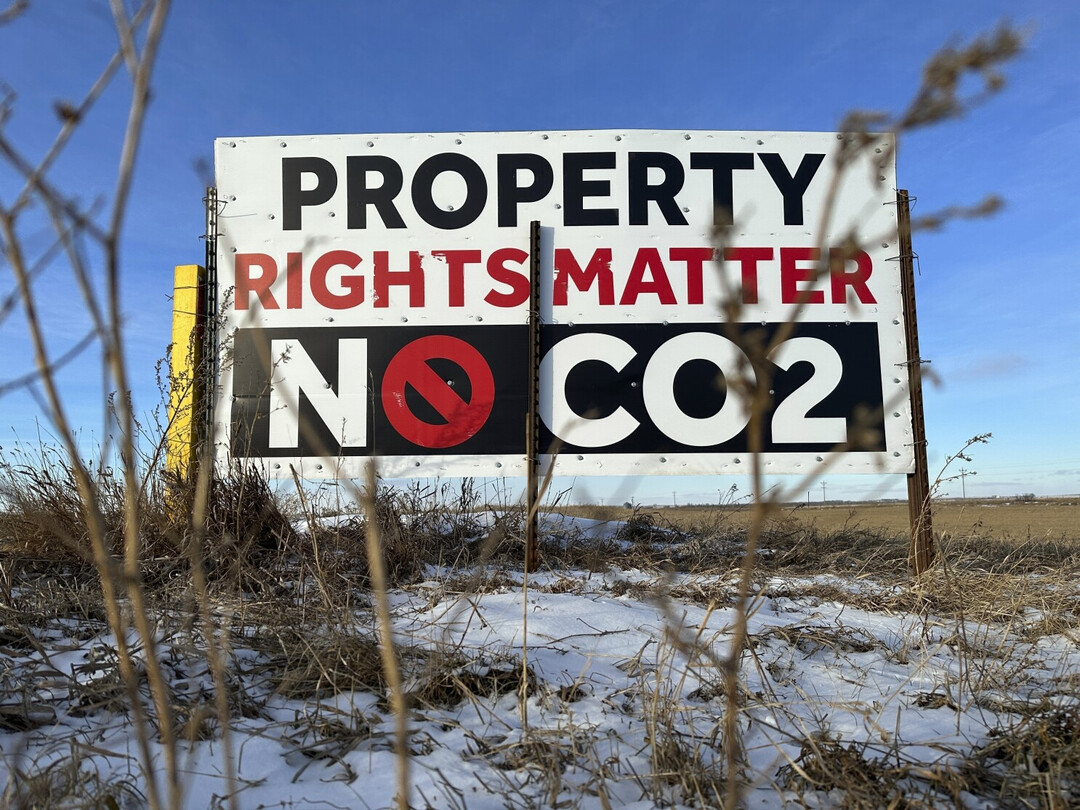
Pierre, South Dakota – The South Dakota Public Utilities Commission (PUC) on Thursday rejected a request from Summit Carbon Solutions to pause the permitting process for its proposed carbon capture pipeline. Instead, the PUC directed the company to submit a plan by its next meeting outlining how (or if) it can proceed with the project under the state’s new law restricting the use of eminent domain.
During the meeting, the PUC voted 3-0 against Summit’s motion to stay its application.
“What are we doing here? That’s the question that keeps running through my mind,” stated Commissioner Chris Nelson.
The $9 billion pipeline project aims to transport carbon dioxide emissions captured from ethanol plants across five states to underground storage in North Dakota, with some of the carbon potentially being used for enhanced oil recovery in older wells. The project is part of a broader federal push to reduce greenhouse gas emissions and could be eligible for federal tax credits related to carbon sequestration.
Summit has been seeking a permit to build its pipeline through South Dakota since 2022. However, the project faced a significant hurdle in March when the state legislature passed a new law prohibiting the use of eminent domain for such projects. Eminent domain is a legal authority that allows the government to take private property for public use, provided just compensation is paid to the landowner, as determined by the courts.
Summit had previously utilized this authority to survey land and secure access from landowners who did not voluntarily agree to easement agreements.
“If they can’t even build it, what are we doing here?” questioned Brian Jorde, an attorney representing landowners opposed to the project.
Commissioner Nelson introduced a motion to deny the permit, arguing that the proposed route could not be legally constructed under the new law, citing affidavits from dozens of landowners who have refused access. However, his motion failed in a 2-1 vote, with other commissioners arguing that Summit should be given more time.
Brett Koenecke, an attorney for Summit, stated that the company needed more time to evaluate its options but declined to answer directly when pressed by Commissioner Nelson on whether Summit planned to file a legal challenge against the eminent domain ban.
The Commission is scheduled to revisit the issue at its meeting on April 22nd.
Meanwhile, Summit has already received permits in North Dakota, Minnesota, and Iowa, although some of these permits are facing legal challenges. Nebraska does not have a permitting process for such projects.
Background Information:
Carbon Capture and Storage (CCS): A technology that involves capturing carbon dioxide emissions from sources like power plants and 1 industrial facilities and storing them deep underground or in the ocean to reduce the amount of CO2 released into the atmosphere, helping to mitigate global warming.
U.S. Carbon Capture Policy: The U.S. government offers various policies and incentives to encourage the development and commercialization of carbon capture technology. Notably, the Inflation Reduction Act expanded tax credits for carbon capture projects.
Carbon Capture and Utilization (CCU): Instead of storing captured CO2 underground, CCU involves converting it into useful products such as chemicals, building materials, and fuels. Summit’s pipeline project also considers utilizing some captured carbon for Enhanced Oil Recovery (EOR).
Eminent Domain Controversy: While eminent domain for public projects can be necessary, it often leads to opposition and legal disputes with landowners whose property rights are affected. Summit’s pipeline project has faced conflict with local residents over the potential use of eminent domain.
Situation in Other States: Summit’s carbon capture pipeline project faces similar regulatory and legal challenges in other states. In Iowa, which has extensive agricultural land, landowner opposition has been particularly strong, leading to lawsuits. Nebraska’s lack of a permitting process requires Summit to negotiate individually with landowners, posing its own set of challenges.
[Copyright (c) Global Economic Times. All Rights Reserved.]