

SEOUL — Several village bus companies in Seoul, which receive tens of billions of won in annual taxpayer subsidies to offset operating deficits, have been found to have lent massive sums of corporate funds to their own executives, shareholders, and affiliates, raising serious concerns over financial mismanagement and lack of oversight.
According to municipal data covering the past four years (2022–2025), 18 out of Seoul’s 140 village bus operators—roughly 13 percent—reported holding at least 1 billion won ($720,000) in loans receivable. The combined total of these loans across the flagged firms surged from 25.5 billion won in 2022 to 36.1 billion won in 2025, with the average loan per company climbing to 2.4 billion won. Notably, five operators—Nodeul, Subin, Seoae, Seocho, and Gangdong—maintained loan balances exceeding 1 billion won for four consecutive years, suggesting that these outflows were not mere short-term liquidity measures.
Ballooning Loans and Capital Impairment While private companies are legally permitted to issue loans, analysts point out that the scale of lending among these transit operators is disproportionate to their total assets, undermining their financial stability and increasing their reliance on public funds. Excluding one outlier with substantial real estate holdings, the remaining 14 companies on the 2025 list held 31.79 billion won in loans—accounting for 65 percent of their combined total assets of 48.91 billion won.
In an extreme case, Nodeul Transport reported 3.83 billion won in loans against total assets of just 294 million won. Because loans are counted as assets on a balance sheet, the discrepancy indicates that the company wrote off most of the loans as uncollectible bad debt, eroding its equity to the point of capital impairment. Furthermore, four of the top five lenders in 2025—including Samha, Shinheung, Nodeul, and Kyungsung—received a combined 2.28 billion won in municipal subsidies that same year.
Blind Spots in Financial Oversight
The Seoul Metropolitan Government provides over 40 billion won annually to village bus operators—reaching 41.2 billion won across 97 companies in 2025—to cover losses incurred from operating in transit-underserved areas and participating in the city's integrated transfer system. However, because most village bus firms are small-scale private entities, they are exempt from mandatory public disclosure of external audits.
A May 2026 policy study commissioned by the city highlighted severe blind spots in accounting transparency. The number of operators skipping external audits jumped from seven in 2023 to 38 in 2025. Even among audited firms, 77 percent relied on a single accounting firm, raising questions about audit independence, while reports frequently omitted key revenue and expense details. The study also noted that several deficit-ridden operators spent excessively on corporate vehicles and entertainment—averaging 11.91 million won per company in 2025—or issued dividends to shareholders despite carrying heavy debt.
"Without guaranteed accounting transparency, claims of financial hardship remain entirely one-sided," said Kim Sang-chul, policy committee chair at the Public Transport Network. "This lending crisis exposes how parts of the industry treat subsidized bus companies like personal piggy banks."
Pushback Amid Fare Hike Demands
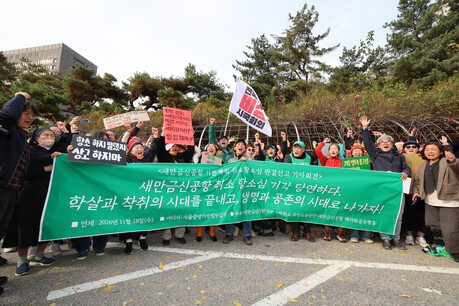
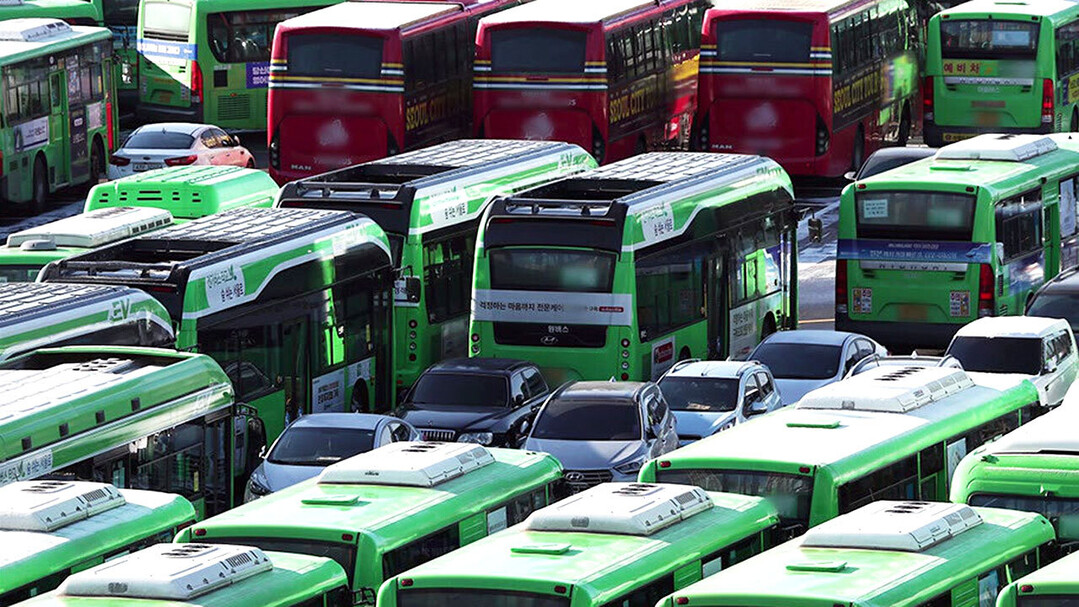
The revelations come at a sensitive time, as the Seoul Village Bus Transport Association has been aggressively lobbying the city for a fare hike—from 1,200 won to 1,700 won—and expanded subsidies. In September 2026, operators staged a protest surrounding Seoul City Hall with their buses, arguing that the integrated transit transfer system causes 100 billion won in collective annual losses.
Addressing the controversy, the association maintained that corporate lending and public subsidies are strictly separate matters. "Village bus operators are private businesses," an association representative stated. "Legally permissible lending should not be conflated with municipal subsidies meant to cover transit deficits."
Seoul officials acknowledged legal limitations in supervising private enterprises but pledged tighter controls. "While there are statutory constraints on regulating private firms, we will strengthen oversight within allowable bounds," said Yeo Jang-kwon, head of Seoul’s Transportation Bureau, during a November 2026 administrative audit. The city plans to introduce external accounting consulting for operators this year and is reviewing whether to penalize excessive corporate lending when evaluating subsidy allocations.
[Copyright (c) Global Economic Times. All Rights Reserved.]