

SEOUL — As South Korea’s benchmark stock market prepares for a potential breather from its heavy reliance on semiconductor giants, market strategists are pointing toward electrical and electronic component makers as the next likely engines of growth for 2027.
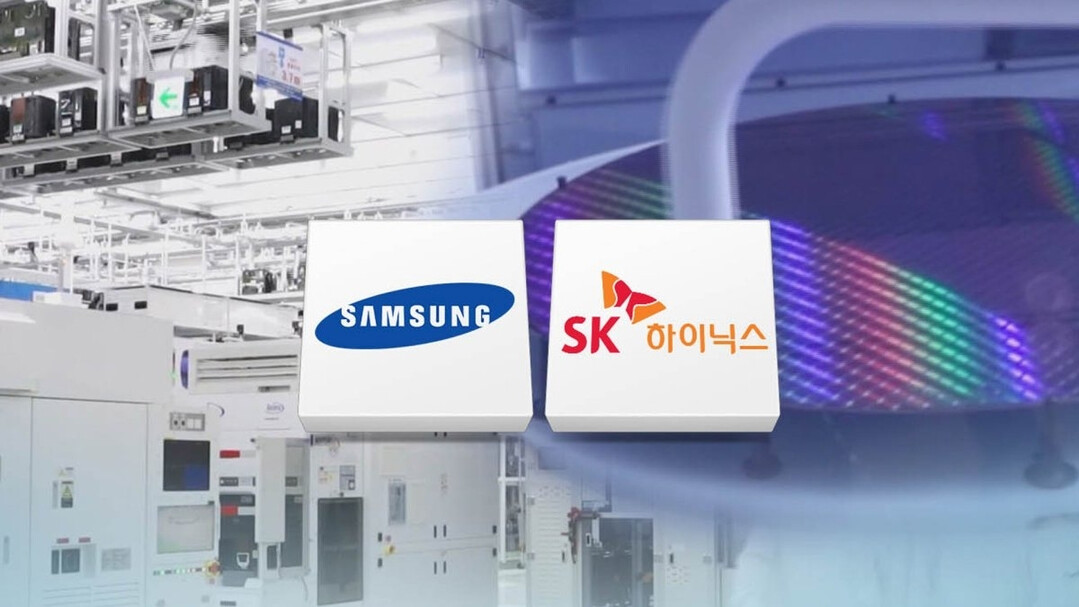
For much of 2026, domestic equities were steered by the heavyweight chipmaking duo of Samsung Electronics and SK Hynix—colloquially dubbed "Sam-Jeon-Nix" by local investors. However, a recent quantitative strategy report by Hana Securities suggests that a cooling period in the chip sector could trigger a broader rotation into undervalued large-cap stocks, specifically highlighting LS ELECTRIC and Samsung Electro-Mechanics as top contenders.
The Multi-Factor Rebound Formula
In screening South Korean companies with a market capitalization exceeding 5 trillion won, Hana Securities analyst Lee Kyung-soo identified three critical catalysts that historically precede strong outperformance once market volatility and sector concentration peak: rising earnings estimates, light institutional ownership, and steady retail accumulation.
Both LS ELECTRIC and Samsung Electro-Mechanics have suffered steep sell-offs over the past three months, dropping 43.3% and 45.5%, respectively. Despite the downturn, consensus operating profit forecasts over the past month jumped 11.4% for LS ELECTRIC and 21.6% for Samsung Electro-Mechanics. Coupled with strong retail net buying—particularly in Samsung Electro-Mechanics, where individual inflows reached 2.31% of its market cap—and significant room for institutional funds to rebuild positions, both firms stand out as prime candidates for a turnaround.
Other major conglomerates making Hana Securities' top-10 watchlist include Doosan, which saw the sharpest upward earnings revision at 28.9%, alongside Samsung SDI (up 16.1%), Hyundai Motor, S-Oil, GS, LS, EcoPro, and Samsung C&T.
Historical Precedent and Foreign Flows
Data compiled by the brokerage underscores why chasing pure price momentum often fails after market volatility subsides, succeeding in only a third of historical cases. By contrast, portfolios combining earnings upgrades with under-owned institutional positioning delivered positive returns across all 24 historical periods following peaks in volatility and chip-sector dominance.
Furthermore, historical trends show that when the combined market-cap dominance of Samsung Electronics and SK Hynix recedes by at least 0.5 percentage points in a given month, South Korea’s 3rd- through 10th-largest stocks outperform the broader KOSPI index by an average of 1.2 percentage points—a pattern observed roughly two-thirds of the time.
Meanwhile, foreign capital outflows appear to be stabilizing. Between January and November, overseas investors offloaded roughly 219.5 trillion won in KOSPI shares, with 85.2% of those sales concentrated in Samsung Electronics and SK Hynix, largely driven by U.S. fund diversification rules under the MSCI 25% cap. Hana Securities noted that this technical selling pressure peaked in May and effectively neutralized by November. Going forward, the brokerage expects foreign investors to prioritize long-term earnings durability over short-term profit spikes—a shift that could further reward fundamentally sound large-caps outside the memory chip space.
[Copyright (c) Global Economic Times. All Rights Reserved.]