• 2026.11.12 (Thu)
  • All articles
  • LOGIN
  • JOIN
Global Economic Times
[등록] 2026-09-01 15:48:31
  • Synthesis
  • World
  • Business
  • Industry
  • ICT
  • Distribution Economy
  • Well+Being
    • Pet Life
    • Halal Horizon
  • Travel
  • Eco-News
  • Education
  • Korean Wave News
  • Opinion
  • Arts&Culture
  • Sports
  • People & Life
    • International Student Report
    • With Ambassador
  • Column
    • Cho Kijo Column
    • Cherry Garden Story
    • Ko Yong-chul Column
    • Kim Bong-seon's Photo Column
    • Kim Seul-Ong Column
    • Lee Yeon-sil Column
  • Photo News
  • New Book Guide
MENU
 
Home > ICT

Baidu Accelerates Tech Autonomy with New AI Chip Strategy and Multi-Accelerator Node

Eugenio Rodolfo Sanabria Reporter / Updated : 2026-11-12 19:56:48
  • -
  • +
  • Print

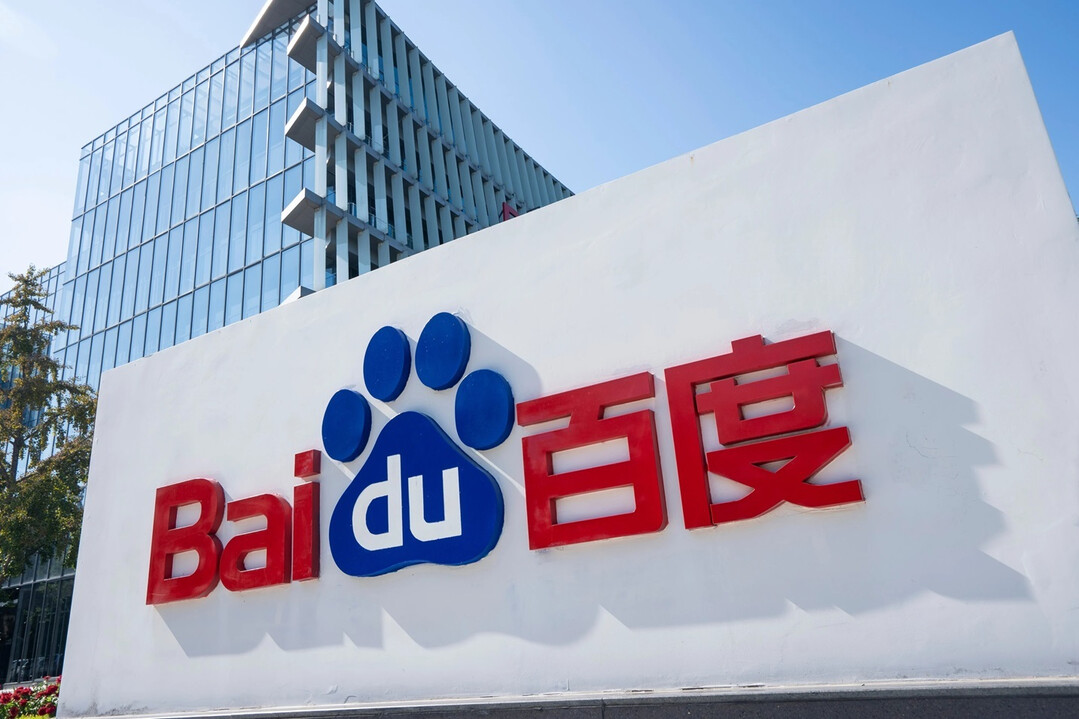
BEIJING — In a major push to bolster domestic technological independence amidst tightening foreign trade controls, Chinese tech titan Baidu has revealed an ambitious roadmap for proprietary artificial intelligence hardware and advanced inference architectures.

During its flagship annual technology conference held in Beijing, Baidu executives shifted the industry spotlight toward operational efficiency. Company leadership emphasized that the future growth engine of the semiconductor market is transitioning away from massive training workloads and toward real-time inference, fueled heavily by the proliferation of autonomous AI agents.

Scaling Up with the "Tianchi 1024" System

The centerpiece of Baidu’s hardware announcements was the introduction of the "Tianchi 1024" supernode infrastructure, slated for commercial rollout in 2027. Designed to link 1,024 dedicated AI accelerators into a unified computational fabric, the upcoming system promises a threefold boost in both data transmission bandwidth and inference performance, alongside a 2.5-fold increase in training efficiency compared to preceding architectures.

Industry analysts note that interconnect latency remains a primary bottleneck when clustering thousands of independent chips. To counter this, Baidu’s new framework leverages advanced high-speed networking and optical communication protocols to maintain high throughput across its accelerator arrays.

Complementing the 2027 supernode timeline, Baidu outlined a steady cadence of silicon innovation. Following the deployment of its cost-optimized M100 chip earlier this year, the company plans to introduce the high-throughput M300 processor next year, followed by an entirely redesigned "N Architecture" product line scheduled for 2028.

Expanding Model Ecosystems and Cost Reduction

Beyond silicon, Baidu is actively shaping the software and platform layer. The company officially showcased "CiyuanSu," a curated B2B marketplace for AI models designed to streamline procurement while enforcing rigorous quality checks, performance verification, and supplier credit grading. Within a month of its debut, the platform reportedly surpassed 50 million daily model calls and 700 billion processed tokens.

Baidu also highlighted the latest iterations of its foundational technology, including the ERNIE 5.5 large language model and two specialized application engines: a Deep Thinking Model optimized for ultra-low latency web search inference, and a Micro-Expression Model aimed at hyper-realistic digital avatar and video synthesis. According to corporate figures, these specialized models have lowered cloud inference expenditures by over 30 percent and halved digital video production costs.

Redefining the Corporate Workforce

Addressing the broader societal impact, Baidu’s leadership framed the AI transition not just as an IT upgrade, but as a fundamental "organizational revolution." As generative workflows and AI agents dismantle traditional departmental silos, enterprise structures are expected to transition from static job descriptions to fluid, task-oriented ecosystems.

Baidu reported internal validation of this shift, noting that active daily internal AI agents have multiplied sixfold over the past year to 37,000 units, handling over one million weekly tasks. Furthermore, the company’s multi-step digital assistant tool, "Baidu Dazi," has seen its single-pass verification rate for complex workflows climb from 54.6% to 88.2%, signaling a maturing capability for autonomous business execution.

[Copyright (c) Global Economic Times. All Rights Reserved.]

  • #Cherry Garden
  • #HalalFood
  • #Halal
  • #Petlife
  • #Halalhorizone
  • #Hormuz Impasse
  • #Joseon
  • #globaleconomictimes
  • #micore
Eugenio Rodolfo Sanabria Reporter

Popular articles

  • Nearly 900 Schools Temporarily Closed as 'Flu' Epidemic Sweeps Japan

  • AI Companies Rush to Go Public, But Face Sudden Brakes Amid Cooling Investor Sentiment

  • Singapore and Brunei Sign Landmark MOU on Mutual Recognition of Halal Certificates

I like it
Share
  • Facebook
  • X
  • Kakaotalk
  • LINE
  • BAND
  • NAVER
  • https://www.globaleconomictimes.kr/article/1065610542028824 Copy URL copied.
Comments >

Comments 0

Weekly Hot Issue

  • Chungnam’s Confucian Institute Forges Ties with China’s Shandong through Cultural Diplomacy
  • Chungnam Province Accelerates High-Tech Mega-Project Construction Through Fast-Track Administrative Reform
  • South Korea-Ethiopia Youth Unite for Peace and Coexistence in Addis Ababa
  • Jeonbuk Research Institute Hosts Expert Seminar on AI-Driven Agricultural Drainage Management to Counter Climate Crisis
  • Weak Yen Boosts Profits for Japanese Automakers Despite Declining Unit Sales
  • The Rise of Japan’s ‘NISA Poverty’: Why Gen Z and Millennials Are Living on Bare Minimums for Stocks

Most Viewed

1
South Korea and Ethiopia Sign Trilateral MOU to Introduce Liquid-Based Cytology (LBC) Technology for Cervical Cancer Diagnosis
2
US Army Conducts Rare Temporary Burial Drills to Prepare for Worst-Case Large-Scale War Scenarios
3
From Kim Whanki to Pokémon Cards... Seoul Auction Opens the Floodgates
4
Meeting Christmas Early!… Busan Dessert Sales Event "Daldal The Market" Held
5
World Citizens are Flying Directly to Busan... The Era of 4 Million Foreigners is Just Around the Corner
체리가든 스토리
nutri huevos
로타리
동포저널

Hot Issue

Samsung Electronics Marks 15-Year Milestone in Top-Tier Shared Growth Excellence

COP31: Developing Nations Demand Action and Finance Over Mere Words

Alibaba’s Chip Unit T-Head Files for Hong Kong IPO as China Pushes Tech Independence

Fashion Runway Show 2026

Let’s recycle the old blankets in Jeju Island’s closet instead of incinerating them.

Global Economic Times
korocamia@naver.com
CEO : LEE YEON-SIL
Publisher : KO YONG-CHUL
Registration number : Seoul, A55681
Registration Date : 2024-10-24
Youth Protection Manager: KO YONG-CHUL
Singapore Headquarters
5A Woodlands Road #11-34 The Tennery. S'677728
Korean Branch
Phone : +82(0)10 4724 5264
#304, 6 Nonhyeon-ro 111-gil, Gangnam-gu, Seoul
Copyright © Global Economic Times All Rights Reserved
  • News K
  • 반달곰 프로젝트
  • 광고문의
Search
Category
  • All articles
  • Synthesis
  • World
  • Business
  • Industry
  • ICT
  • Distribution Economy
  • Well+Being 
    • 전체
    • Pet Life
    • Halal Horizon
  • Travel
  • Eco-News
  • Education
  • Korean Wave News
  • Opinion
  • Arts&Culture
  • Sports
  • People & Life 
    • 전체
    • International Student Report
    • With Ambassador
  • Column 
    • 전체
    • Cho Kijo Column
    • Cherry Garden Story
    • Ko Yong-chul Column
    • Kim Bong-seon's Photo Column
    • Kim Seul-Ong Column
    • Lee Yeon-sil Column
  • Photo News
  • New Book Guide
  • Overseas Koreans
  • Multicultural News