![[등록] 2026-09-01 15:48:31](/support/_updata/banner2/tl181982910_6749.png)


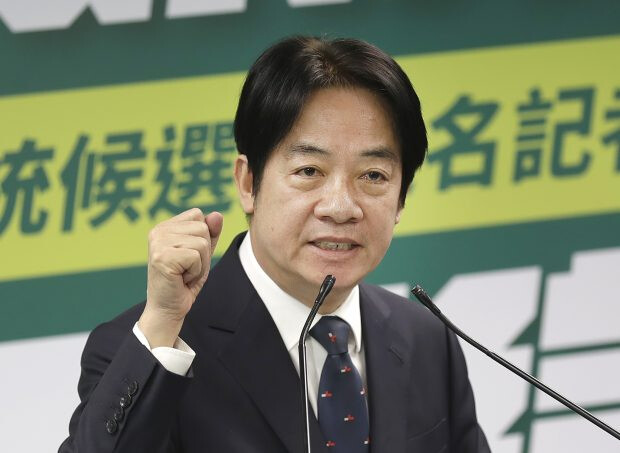
TAIPEI, March 19, 2025 – Taiwan’s military will conduct this year’s Han Kuang exercises based on a hypothetical scenario of a Chinese invasion in 2027, marking the first time a specific year has been designated for such drills, according to a report submitted by the Taiwanese Ministry of National Defense to the legislature, as cited by China Times on March 19. Sources familiar with the matter revealed this development, fueling speculation that the move is intended to justify an increase in defense spending.
The Han Kuang exercises, held annually since 1984, simulate a Chinese military invasion to test Taiwan’s defensive capabilities and ability to repel an attack. The mention of “2027” as the hypothetical invasion year is unprecedented and has drawn significant attention.
The “2027 invasion theory” emerged around the time of Chinese President Xi Jinping’s confirmation of a third term at the 20th National Congress of the Communist Party in October 2022, primarily through U.S. media reports. Analysts speculated that Xi might aim to achieve the “unification” of Taiwan by 2027—the final year of his third term—as a legacy-defining accomplishment to bolster his prolonged leadership. Around that time, Xi intensified rhetoric, stating that “the use of force to unify Taiwan cannot be ruled out,” heightening tensions across the Taiwan Strait. Russia’s invasion of Ukraine in February 2022 further amplified concerns about the plausibility of the 2027 scenario, though some dismissed it as premature, citing weak evidence for such a specific timeline.
Since Xi’s third term began, however, the 2027 invasion theory has lost traction. China’s sluggish economy and Xi’s sweeping anti-corruption purge within the military—targeting high-ranking officials like former Defense Ministers Li Shangfu and Wei Fenghe—have weakened its armed forces. The crackdown, which expanded to defense industries this year, is expected to take years to recover from, casting doubt on China’s near-term military readiness.
Analysts suggest that Taiwan’s decision to highlight the 2027 scenario may not reflect an imminent threat but rather serves as a pretext to justify defense budget hikes under pressure from the incoming U.S. administration of President Donald Trump. Taiwan’s defense spending increases have long been a contentious issue domestically.
On March 18, the Taiwanese Ministry of National Defense released its “2025 Quadrennial Defense Review,” proposing a special budget to raise defense spending to 3% of GDP. This falls far short of the 5% target floated in U.S. political circles and is a fraction of the 10% Trump has reportedly demanded. Even the modest 3% goal is viewed as burdensome in Taiwan, where the opposition-dominated legislature cut equipment procurement funding by 3% in January and froze NT$90 billion in project funds. Critics, particularly from opposition parties, argue that the government is overspending on unnecessary weapons, even in the face of a potential Chinese invasion.
Public support for increased defense spending exists due to heightened Chinese military activity in the Taiwan Strait since President Lai Ching-te, an advocate of Taiwanese independence, took office. However, the pace and scale of the proposed increases remain divisive. Raising defense budgets further would likely require cuts to welfare and infrastructure—key priorities of Lai’s ruling Democratic Progressive Party (DPP)—potentially jeopardizing its prospects in next year’s local elections.
The Lai administration faces a delicate balancing act: demonstrating commitment to bolstering defenses to appease the U.S. while managing domestic backlash. Trump has repeatedly criticized Taiwan, accusing it of “stealing” America’s semiconductor industry and “free-riding” on U.S. security guarantees, adding pressure on Taipei to act.
Jang Young-hee, a research fellow at Chungnam National University’s Institute of Peace and Security Studies, commented, “For the Taiwanese government, justifying defense budget increases requires an external threat assessment or crisis warning. Admitting that the hikes stem from Trump’s coercion rather than a genuine threat would put the DPP in an awkward position.” She noted that while China continues to escalate military pressure, President Lai’s lack of effort to engage Beijing in dialogue has further strained Taiwan’s military burden.
As cross-strait tensions simmer and U.S. expectations loom large, Taiwan’s invocation of a 2027 invasion scenario underscores the complex interplay of domestic politics, international alliances, and regional security dynamics.
[Copyright (c) Global Economic Times. All Rights Reserved.]