![[등록] 2026-09-01 15:48:31](/support/_updata/banner2/tl181982910_6749.png)


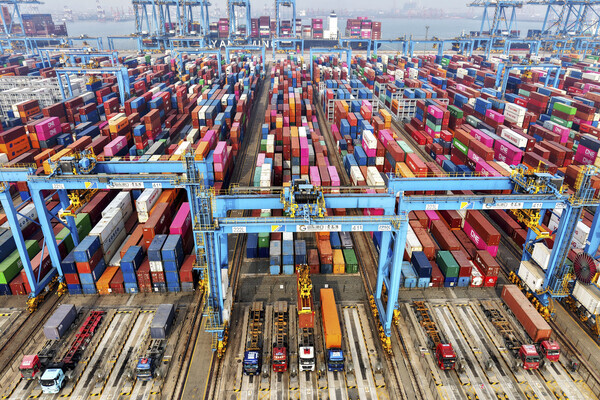
The possibility of President Donald Trump's re-election, along with heightened tariff barriers, is being identified as a major cause of the rampant trade fraud within the United States. Concerns are growing as "tariff reduction" proposals via email and social media (SNS) are surging, exposing businesses to the temptation of tax evasion. This is not merely an individual company issue but is recognized as a serious crime that undermines fair competition and negatively impacts national tax revenue.
Chinese Shipping Companies' Overt Temptation to Evade Taxes
The U.S. daily New York Times (NYT) reported on the 27th (local time), citing industry and government officials, that there has been a surge in approaches to U.S. companies offering to "reduce tariffs." According to the NYT, these proposals primarily originate from Chinese shipping companies. They are actively sending messages to U.S. apparel companies and auto parts manufacturers, overtly suggesting that by paying a certain fee, they can "help avoid high tariffs" or "standardize tariffs to a 10% cap."
The problem is that these shipping companies are exploiting the difficulties faced by companies subject to high tariffs, effectively encouraging tax evasion. Typical methods include: 'undervaluation,' where products are declared at a value lower than their actual worth; and 'origin fraud,' where product information is falsely stated as being made from materials subject to lower tariffs. Additionally, 'transshipment,' where products are sent to countries with lower tariffs for transshipment, is also frequently used. While these loopholes existed even before the Trump administration, analysis suggests that customs fraud has escalated to another level as President Trump raised tariffs to levels unseen in the past century.
Damages to Honest Businesses and Industry Anger
The prevalence of these illegal "tricks" is causing enormous losses for businesses that honestly pay their tariffs. As the fair competitive environment is undermined, a paradoxical situation arises where companies that reduce costs through illegal means gain an advantage in the market.
David Rasheed, chairman of the American auto parts company 'PLUS,' urged strong action from authorities, stating, "If we don't do anything, those who try to cheat will continue to win." Leslie Jordan, who has operated an apparel manufacturing company in the U.S. for 40 years, pointed out the widespread nature of fraudulent practices in the industry, strongly criticizing, "Both China and the U.S. are encouraging opportunistic fraudsters, and many honest businesses are at a disadvantage in competition." These voices demonstrate that trade fraud goes beyond individual corporate ethics, threatening the overall health of the industrial ecosystem.
Government's Will to Crack Down and the Role of Congress Emerge
The U.S. Department of Justice announced this month that trade and customs fraud would be a new priority for the Trump administration, foreshadowing a concentrated crackdown. This is interpreted as a declaration of the government's strong will to respond to trade fraud. U.S. Customs and Border Protection (CBP) is also making multifaceted efforts, including using artificial intelligence (AI) and data analysis technology to detect illegal transactions and strengthening inspections and screenings at borders.
However, the industry points out that the current scale of trade fraud far exceeds the government's enforcement capabilities. Consequently, the argument that Congress should step in and establish more robust and comprehensive countermeasures is gaining traction. They argue that Congress should amend relevant laws to strengthen criminal penalties for trade crimes and allocate more budget to the government for tracking tariff fraud. Brad Mueller, Vice President of Charlotte Pipe and Foundry, a U.S. pipe manufacturer, emphasized, "Congress needs to take more comprehensive action," to prevent President Trump from acting recklessly and then having to clean up the mess later.
The Shadow of Protectionism: Tariff Barriers and Trade Fraud
This surge in trade fraud clearly illustrates the side effects that strengthened protectionism can bring. High tariffs imposed under the guise of protecting specific industries and increasing domestic jobs may be effective in the short term, but in the long run, they can induce illegal evasion attempts and disrupt the international trade order. This also serves as an example of the limitations and challenges of tariff policy in an era of complex global supply chains.
Furthermore, this situation demonstrates the potential for digital technology advancements to be exploited for criminal purposes. Beyond easy access via email and SNS, digital technologies are making trade fraud more sophisticated and widespread by exploiting complex international logistics systems to launder origins or forge product information. Therefore, there is a raised necessity for governments and businesses to increase awareness of these new forms of threats and invest more in building technological defense systems.
Ultimately, solving the trade fraud problem requires more than just strengthening enforcement; it demands a fundamental re-evaluation of tariff policies and enhanced international cooperation. At a time when protectionism is spreading, the wisdom and efforts of the international community to maintain a transparent and fair global trade system are more desperately needed than ever.
[Copyright (c) Global Economic Times. All Rights Reserved.]