• 2026.03.22 (Sun)
  • All articles
  • LOGIN
  • JOIN
Global Economic Times
fashionrunwayshow2026
  • Synthesis
  • World
  • Business
  • Industry
  • ICT
  • Distribution Economy
  • Well+Being
  • Travel
  • Eco-News
  • Education
  • Korean Wave News
  • Opinion
  • Arts&Culture
  • Sports
  • People & Life
    • International Student Report
    • With Ambassador
  • Column
    • Cho Kijo Column
    • Cherry Garden Story
    • Ko Yong-chul Column
    • Kim Seul-Ong Column
    • Lee Yeon-sil Column
  • Photo News
  • New Book Guide
MENU
 
Home > World

U.S. Navy Bans Use of Chinese AI Chatbot Amid Security Concerns

Sharon Yoon Correspondent / Updated : 2025-01-29 22:56:11
  • -
  • +
  • Print

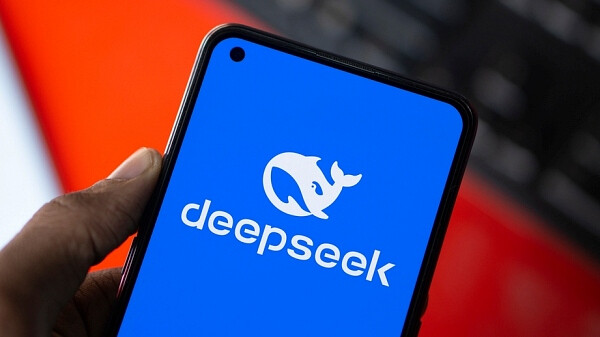
San Francisco, CA – The U.S. Navy has issued a directive prohibiting its personnel from using a generative AI chatbot developed by Chinese startup DeepSeek, citing security and ethical concerns. In an email sent to its staff on January 24th, the Navy emphasized that the use of DeepSeek's AI in any form is strictly forbidden.

The decision comes on the heels of DeepSeek's recent release of its powerful inference AI model, R1, which is seen as a formidable competitor to OpenAI's technology. R1 is open-source, making it accessible to AI developers worldwide. DeepSeek's app has already surpassed OpenAI's ChatGPT in download rankings on the U.S. App Store, and industry experts have praised its performance and inference capabilities.

The emergence of DeepSeek has sent shockwaves through the U.S. financial markets. On January 27th, the stocks of AI chip manufacturers Nvidia and Broadcom plummeted by 17%, wiping out a combined $800 billion in market capitalization. The Nasdaq Composite index also declined by 3.1%. These market reactions were driven by concerns that AI could be developed at a much lower cost than previously anticipated.

DeepSeek revealed late last year that it had developed its large language model (LLM) in just two months at a cost of less than $6 million, a fraction of what companies like OpenAI, Anthropic, and Google have spent.

U.S. President Donald Trump described DeepSeek's rise as a "wake-up call" for American technology companies. David Sacks, the Trump administration's AI and cryptocurrency czar, tweeted about DeepSeek's R1, stating that "the AI race is heating up" and urging the U.S. to remain vigilant despite its confidence.

IT news outlet The Information reported that Meta has established four "war rooms" within its generative AI division to counter DeepSeek.

The Navy's decision to ban DeepSeek reflects growing concerns about the security implications of AI developed by foreign adversaries. As the global race for AI supremacy intensifies, the U.S. government is taking steps to protect sensitive information and maintain its technological edge.

[Copyright (c) Global Economic Times. All Rights Reserved.]

Sharon Yoon Correspondent

Popular articles

  • The $100 Oil Threshold: Wall Street Braces for a Paradigm Shift as Middle East Conflict Drags On

  • The $12.8 Million Dispute: Who Owns the Abandoned Lottery Ticket?

  • 24-Day Miracle: California’s First Fully 3D-Printed Home Completed

I like it
Share
  • Facebook
  • X
  • Kakaotalk
  • LINE
  • BAND
  • NAVER
  • https://www.globaleconomictimes.kr/article/1065621269801644 Copy URL copied.
Comments >

Comments 0

Weekly Hot Issue

  • Coway Clinches Top Honor at "Water Taste Awards" for 7th Consecutive Year
  • HP Targets Korea as Strategic Hub for 'Edge AI' Expansion, Seeking Startup Partnerships
  • Pearl Abyss’s 'Crimson Desert' Shatters Records with 2 Million Copies Sold on Day One
  • "BTS Over Books?" Indian Academies Issue Emergency Notices as Students Plot Mass Absences for Comeback Live
  • Naver to Shut Down Men's Fashion Service 'MR.' to Launch Expanded AI-Driven Fashion Platform
  • JBNU and SKKU Researchers Achieve Breakthrough in "Dream Material" MXene, Setting New World Records in Performance

Most Viewed

1
An Open Letter to BTS On the Eve of a Historic Performance
2
From Industrial Capital to Tourism Mecca... Ulsan Makes a Bold Move with ‘Experiential Content’ in 2026
3
Ko Sang-goo, President of World Federation of Korean Associations, Elected as First Private Sector Chair of World Korean Community Leaders Convention
4
It is Time for BTS’s Fandom, ARMY, to Step Forward
5
Korean Stock Market Plunges: Circuit Breaker and Sidecar Triggered Amid Geopolitical Crisis
광고문의
임시1
임시3
임시2

Hot Issue

Vishay Unveils Ultra-Compact 0404 RGB LED with Independent Chip Control for Enhanced Color Precision

Coway Clinches Top Honor at "Water Taste Awards" for 7th Consecutive Year

AI Medical Ecosystem in Focus: KIMES 2026 Opens in Seoul as Global Healthcare Hub

Netanyahu Declares Decisive Blow to Iran’s Nuclear and Missile Programs, Signals Early End to War

Let’s recycle the old blankets in Jeju Island’s closet instead of incinerating them.

Global Economic Times
korocamia@naver.com
CEO : LEE YEON-SIL
Publisher : KO YONG-CHUL
Registration number : Seoul, A55681
Registration Date : 2024-10-24
Youth Protection Manager: KO YONG-CHUL
Singapore Headquarters
5A Woodlands Road #11-34 The Tennery. S'677728
Korean Branch
Phone : +82(0)10 4724 5264
#304, 6 Nonhyeon-ro 111-gil, Gangnam-gu, Seoul
Copyright © Global Economic Times All Rights Reserved
  • 에이펙2025
  • APEC2025가이드북TV
  • 독도는우리땅
Search
Category
  • All articles
  • Synthesis
  • World
  • Business
  • Industry
  • ICT
  • Distribution Economy
  • Well+Being
  • Travel
  • Eco-News
  • Education
  • Korean Wave News
  • Opinion
  • Arts&Culture
  • Sports
  • People & Life 
    • 전체
    • International Student Report
    • With Ambassador
  • Column 
    • 전체
    • Cho Kijo Column
    • Cherry Garden Story
    • Ko Yong-chul Column
    • Kim Seul-Ong Column
    • Lee Yeon-sil Column
  • Photo News
  • New Book Guide
  • Multicultural News
  • Jobs & Workers