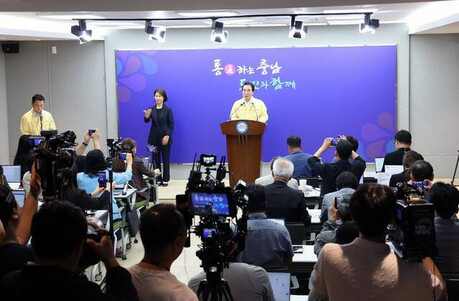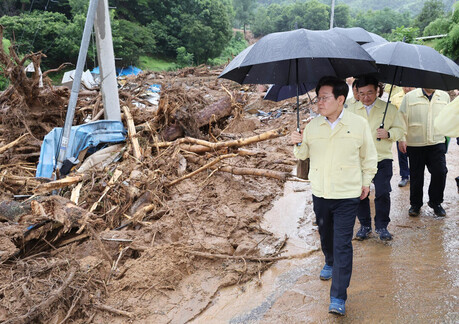


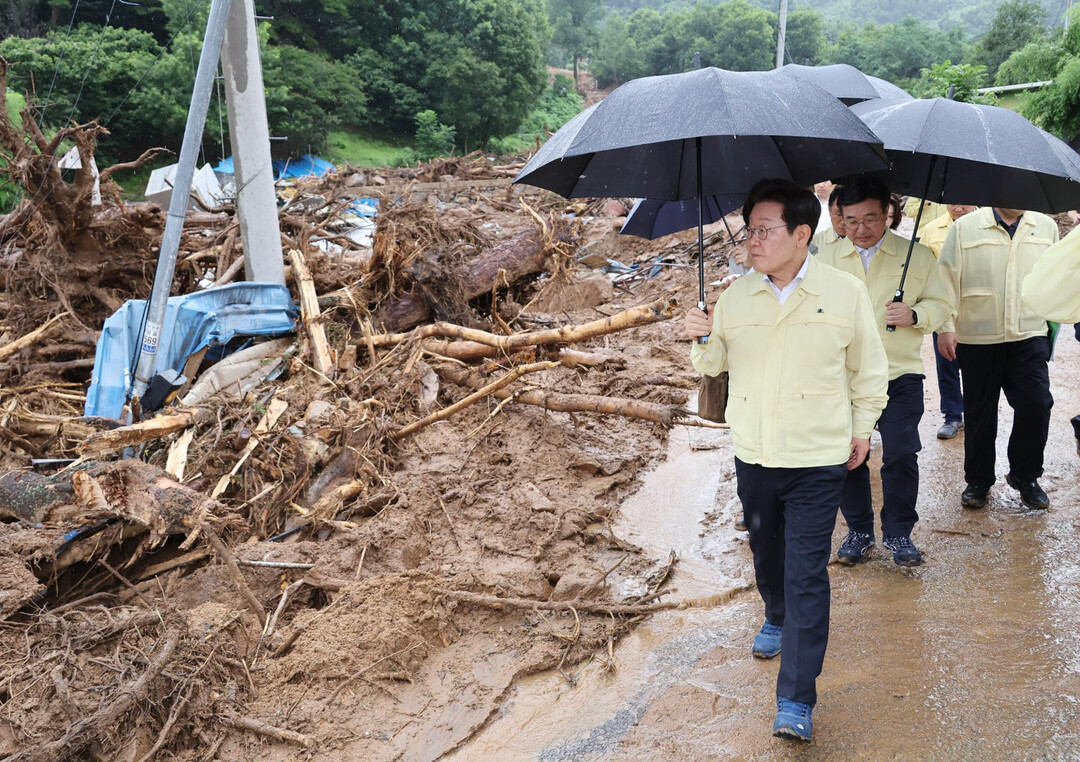
On August 21, President Lee Jae-myung announced the declaration of Geoje City and specific regions within Tongyeong City—namely Sanyang-eup and Bongpyeong-dong—as "Special Disaster Zones" in response to the massive destruction wrought by unprecedented heavy rainfall earlier this week. The announcement was made through a written briefing by Kang Yoo-jung, the Senior Spokesperson for the Blue House.
The region had been battered by intense precipitation from August 15 to 18, with meteorological data indicating historic levels of rainfall: Geoje recorded 956.1 mm and Tongyeong 766.9 mm. The resulting deluge triggered severe landslides, road collapses, and widespread flooding that submerged residential homes, schools, and traditional markets, leading to significant loss of life and property.
Robust Government Support and Recovery Measures
The designation as a Special Disaster Zone under South Korean law triggers a comprehensive suite of government-led relief efforts. According to official guidelines, this status enables the central government to shoulder a significant portion of the recovery costs that would otherwise fall on the local municipal budgets.
For the residents directly impacted by the disaster, the declaration provides a critical safety net. Benefits include:
Financial Relief: Deferment of national and local tax payments.
Utility Assistance: Exemptions or reductions for public utility costs, including health insurance premiums, electricity, and telecommunications fees.
Recovery Grants: Additional fiscal support to accelerate the restoration of critical public infrastructure and individual livelihoods.
A Coordinated National Response
During the briefing, Senior Spokesperson Kang stated, "The government is mobilizing all available personnel and administrative resources to ensure swift damage assessment and expedite the restoration process."
The administration also signaled that this declaration is not the final word. Officials are currently conducting precise investigations into other areas in the southern region that suffered from the same weather system. Should these areas meet the government's rigorous criteria for damage, the administration is prepared to review and potentially add them to the list of Special Disaster Zones.
This decisive action comes on the heels of the first meeting of the "National Sovereignty Government's Anti-Corruption Policy Council," held at the Blue House earlier that day. President Lee’s swift move to address the crisis underscores the current administration’s commitment to prioritizing public welfare and maintaining a rapid-response posture against the increasingly frequent and severe climate-related disasters facing the Korean Peninsula.
As the recovery efforts begin, the Ministry of the Interior and Safety is working closely with local authorities to assess the long-term needs of the affected populations, ensuring that the aid is not only immediate but sustainable for those whose lives have been upended by this extraordinary meteorological event.
[Copyright (c) Global Economic Times. All Rights Reserved.]