• 2026.05.08 (Fri)
  • All articles
  • LOGIN
  • JOIN
Global Economic Times
fashionrunwayshow2026
  • Synthesis
  • World
  • Business
  • Industry
  • ICT
  • Distribution Economy
  • Well+Being
  • Travel
  • Eco-News
  • Education
  • Korean Wave News
  • Opinion
  • Arts&Culture
  • Sports
  • People & Life
    • International Student Report
    • With Ambassador
  • Column
    • Cho Kijo Column
    • Cherry Garden Story
    • Ko Yong-chul Column
    • Kim Seul-Ong Column
    • Lee Yeon-sil Column
  • Photo News
  • New Book Guide
MENU
 
Home > World

Mexican Peso Continues to Weaken Against the US Dollar

Eugenio Rodolfo Sanabria Reporter / Updated : 2024-12-25 00:20:45
  • -
  • +
  • Print


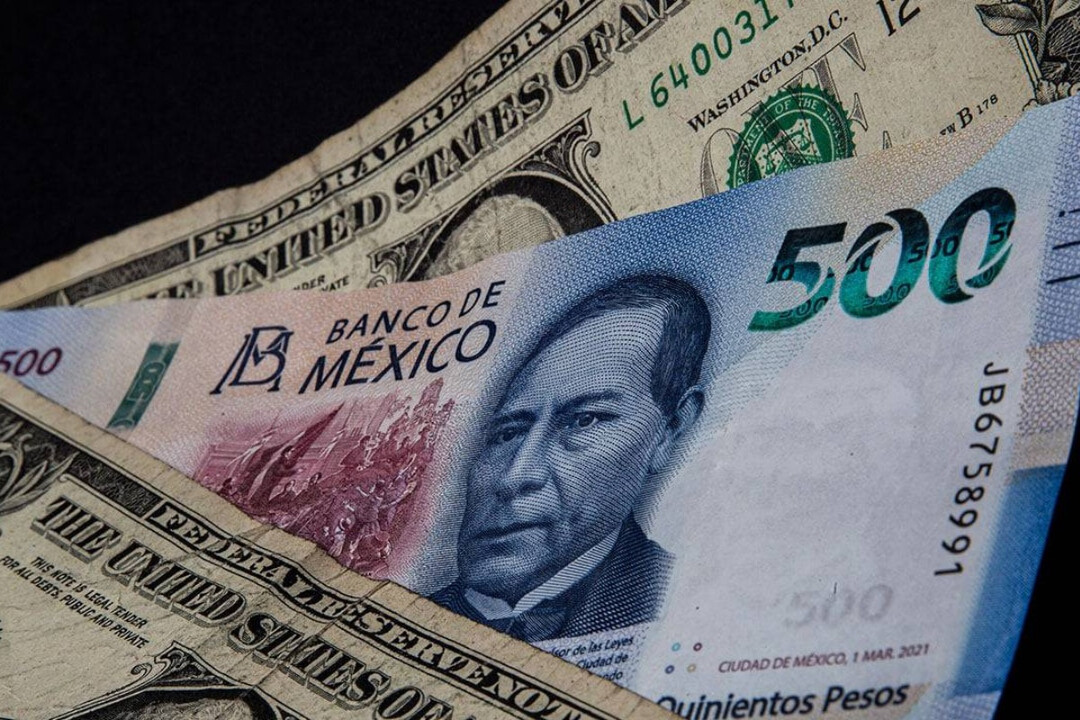
Mexico City – The Mexican peso has been steadily losing ground against the US dollar for several weeks, with no signs of recovery in sight. In October, the exchange rate reached a historic high of 20 pesos per dollar.

Current Exchange Rates

As of today, the Mexican peso is trading at the following rates in major Mexican banks:

Afirme: Buying at 19.40 pesos, selling at 21.00 pesos.
Banco Azteca: Buying at 19.30 pesos, selling at 20.86 pesos.
Banorte: Buying at 19.00 pesos, selling at 20.50 pesos.
BBVA Bancomer: Buying at 19.53 pesos, selling at 20.67 pesos.
Banamex: Buying at 19.76 pesos, selling at 20.87 pesos.
Inbursa: Buying at 19.60 pesos, selling at 20.60 pesos.
Factors Influencing the Dollar's Value

Several factors are contributing to the peso's depreciation against the dollar. These include:

Supply and Demand: The fundamental economic principle of supply and demand plays a crucial role in the foreign exchange market. When the demand for dollars exceeds its supply, its price tends to rise. Conversely, an excess supply can lead to a decrease in the dollar's value.
Interest Rates: Interest rates set by central banks significantly impact exchange rates. Higher interest rates on dollar-denominated assets attract investors, increasing demand for the dollar and pushing up its value. Conversely, lower interest rates can have the opposite effect.
Inflation: Inflation rates can weaken a currency. A country with a higher inflation rate typically sees its currency depreciate against currencies of countries with lower inflation, such as the US dollar.
Economic and Political Stability: The perceived economic and political stability of a country can influence its currency's value. Countries with stable economies tend to attract foreign investment, boosting demand for their currency and strengthening it.

Impact on the Mexican Economy

The weakening peso can have both positive and negative consequences for the Mexican economy. A weaker peso can make Mexican exports more competitive on the global market, potentially boosting economic growth. However, it can also lead to higher prices for imported goods, increasing inflation and reducing consumers' purchasing power.

[Copyright (c) Global Economic Times. All Rights Reserved.]

  • #globaleconomictimes
  • #koyongchul
  • #cherrylee
  • #seoulkorea
  • #periodicoeconomico
  • #글로벌이코노믹타임즈
  • #GET
  • #GETtv
  • #liderdel
Eugenio Rodolfo Sanabria Reporter

Popular articles

  • South Korean OTAs Pivot to Inbound and Domestic Tourism Amid Middle East Conflict Despite Record 2025 Earnings

  • Trump Warns Iran Against Hormuz Tolls as "Joint Venture" Talk Recedes

  • Vance Leaves Islamabad Talks, Citing Iranian Negotiators' Lack of Authority: "The Ball is in Their Court"

I like it
Share
  • Facebook
  • X
  • Kakaotalk
  • LINE
  • BAND
  • NAVER
  • https://www.globaleconomictimes.kr/article/1065539970074061 Copy URL copied.
Comments >

Comments 0

Weekly Hot Issue

  • Samsung Electronics Shifts Strategy in China: Moving from Hardware Sales to Platform-Based Business
  • Banking War 2.0: South Korean Banks Race to Transition into 'AI-First' Institutions
  • Tesla Model Y Becomes First to Pass Grueling New U.S. Autonomous Safety Tests
  • Celltrion’s Zymfentra Sees Explosive 300% Growth, Hits Record Quarterly Prescriptions in the U.S.
  • BMW Korea Ignites May with Exclusive 9-Model Online Limited Edition Lineup
  • Hyundai Mobis Completes Independent EV 'Heart' Lineup: A Major Leap Toward Global Leadership in Power Electric Systems

Most Viewed

1
Iran Imposes Transit Fees on Strait of Hormuz Amid Escalating Maritime Tensions
2
Korea and Vietnam Forge Strategic Partnership in Science, Technology, and Innovation
3
80% of Enterprises Hit by 'AI Agent Anomalies': SailPoint Calls for Integrated Identity Governance
4
Kurly Abandons 'All-Paper' Packaging Strategy Amid Rising Cost Pressures
5
University of Utah Asia Campus Hosts ‘2026 Film Festival,’ Showcasing Student Cinematic Excellence
광고문의
임시1
임시3
임시2

Hot Issue

Tensions Flare in Strait of Hormuz: U.S.-Iran Clashes Threaten Fragile Truce

Tesla Model Y Becomes First to Pass Grueling New U.S. Autonomous Safety Tests

U.S. Trade Court Strikes Down Trump’s ‘Global 10% Tariff,’ Citing Executive Overreach

Hyundai Motor Group Bets $700 Million on Mexico Amid Trade Policy Volatility

Fashion Runway Show 2026

Global Economic Times
korocamia@naver.com
CEO : LEE YEON-SIL
Publisher : KO YONG-CHUL
Registration number : Seoul, A55681
Registration Date : 2024-10-24
Youth Protection Manager: KO YONG-CHUL
Singapore Headquarters
5A Woodlands Road #11-34 The Tennery. S'677728
Korean Branch
Phone : +82(0)10 4724 5264
#304, 6 Nonhyeon-ro 111-gil, Gangnam-gu, Seoul
Copyright © Global Economic Times All Rights Reserved
  • 에이펙2025
  • APEC2025가이드북TV
  • 반달곰 프로젝트
Search
Category
  • All articles
  • Synthesis
  • World
  • Business
  • Industry
  • ICT
  • Distribution Economy
  • Well+Being
  • Travel
  • Eco-News
  • Education
  • Korean Wave News
  • Opinion
  • Arts&Culture
  • Sports
  • People & Life 
    • 전체
    • International Student Report
    • With Ambassador
  • Column 
    • 전체
    • Cho Kijo Column
    • Cherry Garden Story
    • Ko Yong-chul Column
    • Kim Seul-Ong Column
    • Lee Yeon-sil Column
  • Photo News
  • New Book Guide
  • Multicultural News
  • Jobs & Workers