![[등록] 2026-09-01 15:48:31](/support/_updata/banner2/tl181982910_6749.png)


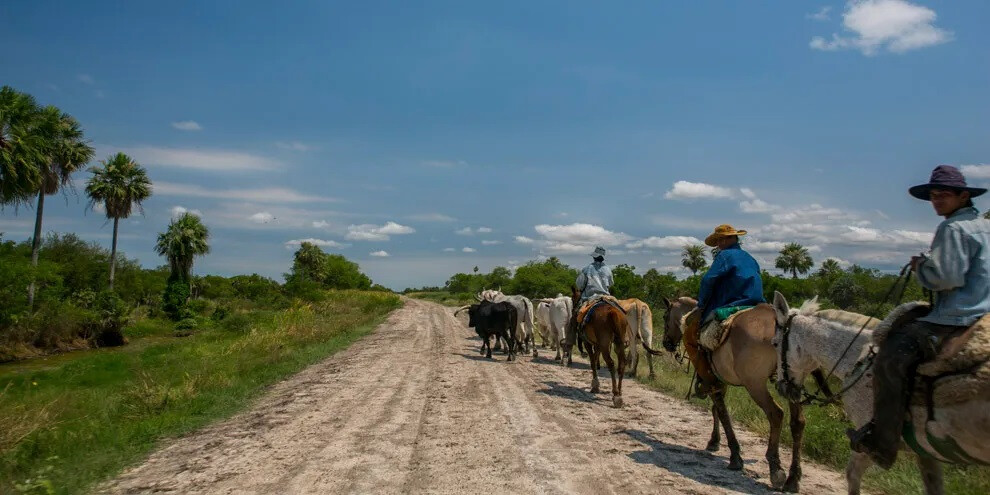
Today, June 12, 2025, marks the 90th anniversary of the signing of the Chaco War Peace Protocol, which brought an end to three years of bloody conflict between Paraguay and Bolivia in 1935. We commemorate the sacrifice and dedication of countless young lives. The Chaco War was more than just a border dispute; it was a desperate struggle to defend Paraguay's identity and sovereignty. The true way to honor these heroic sacrifices is to establish and implement national policies that ensure the Chaco region becomes a land of genuine development, employment, and a home for all.
When the peace protocol was signed 90 years ago, historians recorded soldiers from both nations embracing each other on the battlefield, sharing their joy. This war, which raged from September 9, 1932, to June 12, 1935, was so fierce that it is recorded as the most significant war in 20th-century South America. In Paraguay, 36,000 young people sacrificed their lives to defend their homeland.
Today, surviving veterans are enduring a difficult old age, plagued by advanced age and illness. In their name, and in the name of the countless others who fell on the battlefield, we must admit that the nation has been far too negligent regarding their courage and sacrifice. Paraguay can never fully repay the debt it owes to the defenders of the Chaco. However, the government must at least acknowledge that for decades, it has neglected this war-torn land where 36,000 young people lost their lives.
In Paraguay, where a single party has been in power for 90 years, the failure to even properly establish safe and always-passable roads in the Chaco region demonstrates that one-time commemorative events, empty speeches, and fleeting patriotic sentiments are insufficient. Even the temporary surge of patriotism felt when listening to the national anthem, "13 Tuyutí," pales in comparison to this reality.
Commemorating peace in the Chaco must be a daily endeavor. As a nation capable of living peacefully without serious domestic or international conflicts, we possess the potential for peaceful development. It is, above all, the responsibility of authorities and institutions to honor the spilled blood and sacrifices of countless young people. This means establishing national policies that protect our sovereignty not from foreign invasion, but from the growing threats of drug trafficking and organized crime, which are becoming increasingly powerful and jeopardizing our sovereignty.
Furthermore, there is an urgent need for public policies that re-evaluate and protect the Chaco, rather than simply viewing it as an object of exploitation. It is time to change the mindset inherited from the Stroessner dictatorship, which asserted that "only foreigners can develop the Chaco." The Chaco should not belong solely to a few large landowners who have fenced off communities, isolated them, and exploited the indigenous people who have lived in the region for generations.
In the 21st century, it is unacceptable that indigenous peoples in Paraguay are drinking brackish water from puddles, threatening their health with unsanitary water. This is due to the state's absence, which results in a lack of access to drinking water and public health benefits. Indigenous and other communities suffer systematic isolation during droughts and floods. Recently, dozens of farm laborers were abandoned and then rescued. This exploitation stems from the state's failure to protect its workers.
The Chaco must become a space for development and a homeland for all, without excluding indigenous peoples. It must be a land of labor where Paraguayans can find dignified jobs and justice. This land, where countless compatriots sacrificed their lives, must not become merely a privileged route for drug trafficking or a lawless zone claimed only by those with the most money. The Chaco must return to those who need land to build their homes.
[Copyright (c) Global Economic Times. All Rights Reserved.]