• 2026.03.22 (Sun)
  • All articles
  • LOGIN
  • JOIN
Global Economic Times
fashionrunwayshow2026
  • Synthesis
  • World
  • Business
  • Industry
  • ICT
  • Distribution Economy
  • Well+Being
  • Travel
  • Eco-News
  • Education
  • Korean Wave News
  • Opinion
  • Arts&Culture
  • Sports
  • People & Life
    • International Student Report
    • With Ambassador
  • Column
    • Cho Kijo Column
    • Cherry Garden Story
    • Ko Yong-chul Column
    • Kim Seul-Ong Column
    • Lee Yeon-sil Column
  • Photo News
  • New Book Guide
MENU
 
Home > Well+Being

Long-term Exposure to Cell Phone Radiation Shows No Link to Cancer, Joint Study Finds

Desk / Updated : 2026-02-03 16:56:37
  • -
  • +
  • Print


(C) Scientific American

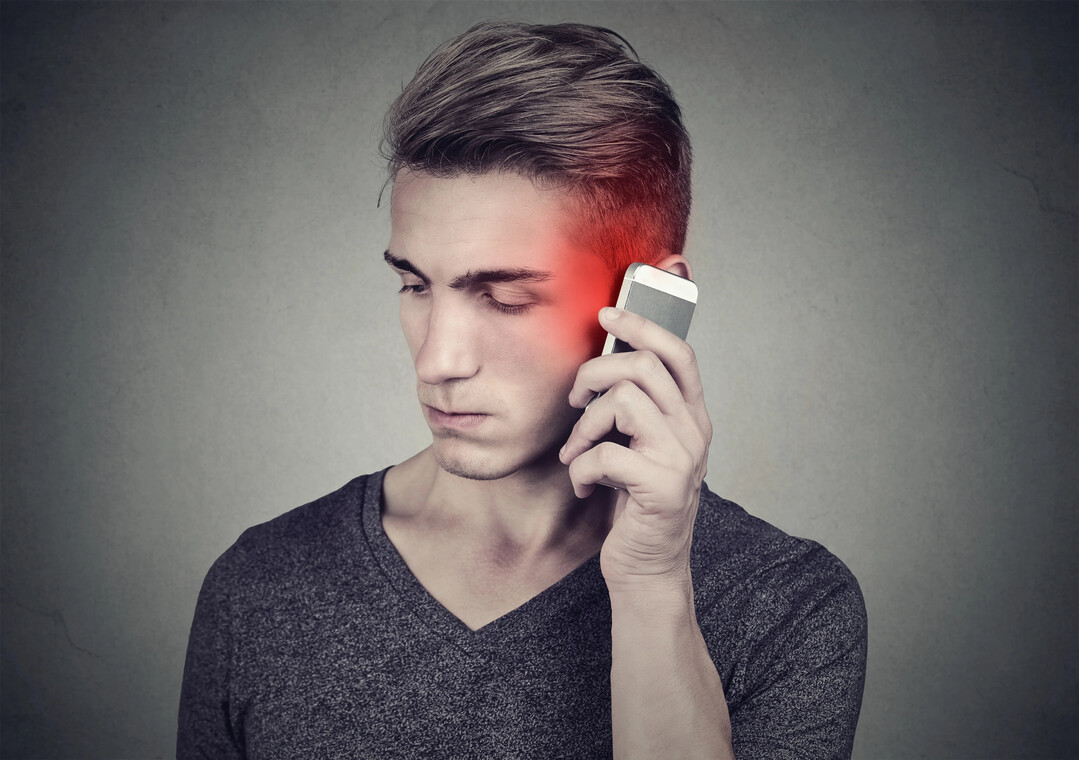
DAEJEON, South Korea — In a landmark international study aimed at addressing long-standing public health concerns, researchers have concluded that long-term exposure to radiofrequency (RF) electromagnetic fields from mobile phones does not increase the risk of developing tumors.

The Electronics and Telecommunications Research Institute (ETRI) announced on Tuesday the results of a large-scale, four-year joint animal study conducted with Japanese researchers. The findings indicate no significant correlation between prolonged cell phone radiation exposure and the occurrence of brain or heart tumors.

Challenging Previous Findings
The study was launched in 2019 to verify controversial findings reported in 2018 by the U.S. National Toxicology Program (NTP). The NTP study had previously suggested an increase in brain and heart tumors among male rats exposed to high levels of 900MHz CDMA radiation.

To ensure scientific rigor, ETRI and their Japanese counterparts established the world’s first integrated cross-border data system for toxicity research. Both nations utilized identical experimental conditions, including the same animal species, feed, and ETRI-designed radiation exposure chambers, following OECD toxicity testing guidelines.

Rigorous Experimental Design
The experiment divided male rats into three groups:

RF Exposure Group: Subjected to 900MHz CDMA radiation at an intensity of 4W/kg (a level used as a baseline for human safety standards).
Sham Group: Placed in the same environment without radiation exposure.
Cage Control Group: Kept in standard laboratory conditions.
The subjects were monitored throughout their entire life cycle—104 weeks—starting from the early stages of pregnancy. This duration is roughly equivalent to a human living to old age while constantly using a mobile device.

Consistent Global Results
The results from both Korea and Japan were remarkably consistent. In the South Korean trials, the incidence of tumors in all groups fell within the range of natural occurrence. No statistically significant differences were found in the heart, brain, or adrenal glands between the exposed and sham groups.

While the Japanese trials showed a slightly higher survival rate in the radiation-exposed group, they similarly found no evidence that radiation triggered or accelerated tumor growth.

"This study is significant because it failed to replicate the tumor increases reported by the NTP at exposure levels that form the basis of our current safety standards," said Professor Ahn Young-hwan of Ajou University School of Medicine. "It should help alleviate excessive public anxiety regarding cell phone radiation."

Looking Toward 5G
The findings are expected to serve as a critical reference for the International Agency for Research on Cancer (IARC) when it re-evaluates the carcinogenicity of RF electromagnetic fields in the future.

Moon Jung-ik, head of the Radio Environment Monitoring Research Section at ETRI, emphasized that the work isn't over. "Having established a standardized protocol for international joint animal studies, we plan to pursue follow-up research to scientifically investigate the effects of complex environments where 4G and 5G coexist."

[Copyright (c) Global Economic Times. All Rights Reserved.]

  • #Globaleconomictimes
  • #Korea
  • #Seoul
  • #Samsung
  • #LG
  • #Bitcoin
  • #Meta
  • #Business
  • #Economic
  • #The Woori Bank
  • #Elon Musk
  • #C
Desk
Desk

Popular articles

  • The Coronation of a New Queen: Kim Gil-li Clinches Double Gold, While a Tearful Farewell Marks the End of an Era

  • US House Probes Coupang Over ‘Discriminatory’ Korean Regulations: Potential Catalyst for Section 301 Investigation?

  • South Korea’s Bakery Giants Slash Prices as Government Ramps Up Pressure on Food Inflation

I like it
Share
  • Facebook
  • X
  • Kakaotalk
  • LINE
  • BAND
  • NAVER
  • https://www.globaleconomictimes.kr/article/1065599668603376 Copy URL copied.
Comments >

Comments 0

Weekly Hot Issue

  • Coway Clinches Top Honor at "Water Taste Awards" for 7th Consecutive Year
  • HP Targets Korea as Strategic Hub for 'Edge AI' Expansion, Seeking Startup Partnerships
  • Pearl Abyss’s 'Crimson Desert' Shatters Records with 2 Million Copies Sold on Day One
  • "BTS Over Books?" Indian Academies Issue Emergency Notices as Students Plot Mass Absences for Comeback Live
  • Naver to Shut Down Men's Fashion Service 'MR.' to Launch Expanded AI-Driven Fashion Platform
  • JBNU and SKKU Researchers Achieve Breakthrough in "Dream Material" MXene, Setting New World Records in Performance

Most Viewed

1
An Open Letter to BTS On the Eve of a Historic Performance
2
From Industrial Capital to Tourism Mecca... Ulsan Makes a Bold Move with ‘Experiential Content’ in 2026
3
Ko Sang-goo, President of World Federation of Korean Associations, Elected as First Private Sector Chair of World Korean Community Leaders Convention
4
It is Time for BTS’s Fandom, ARMY, to Step Forward
5
Korean Stock Market Plunges: Circuit Breaker and Sidecar Triggered Amid Geopolitical Crisis
광고문의
임시1
임시3
임시2

Hot Issue

Vishay Unveils Ultra-Compact 0404 RGB LED with Independent Chip Control for Enhanced Color Precision

Coway Clinches Top Honor at "Water Taste Awards" for 7th Consecutive Year

AI Medical Ecosystem in Focus: KIMES 2026 Opens in Seoul as Global Healthcare Hub

Netanyahu Declares Decisive Blow to Iran’s Nuclear and Missile Programs, Signals Early End to War

Let’s recycle the old blankets in Jeju Island’s closet instead of incinerating them.

Global Economic Times
korocamia@naver.com
CEO : LEE YEON-SIL
Publisher : KO YONG-CHUL
Registration number : Seoul, A55681
Registration Date : 2024-10-24
Youth Protection Manager: KO YONG-CHUL
Singapore Headquarters
5A Woodlands Road #11-34 The Tennery. S'677728
Korean Branch
Phone : +82(0)10 4724 5264
#304, 6 Nonhyeon-ro 111-gil, Gangnam-gu, Seoul
Copyright © Global Economic Times All Rights Reserved
  • 에이펙2025
  • APEC2025가이드북TV
  • 독도는우리땅
Search
Category
  • All articles
  • Synthesis
  • World
  • Business
  • Industry
  • ICT
  • Distribution Economy
  • Well+Being
  • Travel
  • Eco-News
  • Education
  • Korean Wave News
  • Opinion
  • Arts&Culture
  • Sports
  • People & Life 
    • 전체
    • International Student Report
    • With Ambassador
  • Column 
    • 전체
    • Cho Kijo Column
    • Cherry Garden Story
    • Ko Yong-chul Column
    • Kim Seul-Ong Column
    • Lee Yeon-sil Column
  • Photo News
  • New Book Guide
  • Multicultural News
  • Jobs & Workers