• 2026.08.12 (Wed)
  • All articles
  • LOGIN
  • JOIN
Global Economic Times
fashionrunwayshow2026
  • Synthesis
  • World
  • Business
  • Industry
  • ICT
  • Distribution Economy
  • Well+Being
  • Travel
  • Eco-News
  • Education
  • Korean Wave News
  • Opinion
  • Arts&Culture
  • Sports
  • People & Life
    • International Student Report
    • With Ambassador
  • Column
    • Cho Kijo Column
    • Cherry Garden Story
    • Ko Yong-chul Column
    • Kim Seul-Ong Column
    • Lee Yeon-sil Column
  • Photo News
  • New Book Guide
MENU
 
Home > Synthesis

"Submit Your Chat History": Professors Grapple with AI Integration in Universities

Hee Chan Kim Reporter / Updated : 2026-01-06 03:52:42
  • -
  • +
  • Print


(C) South China Morning Post

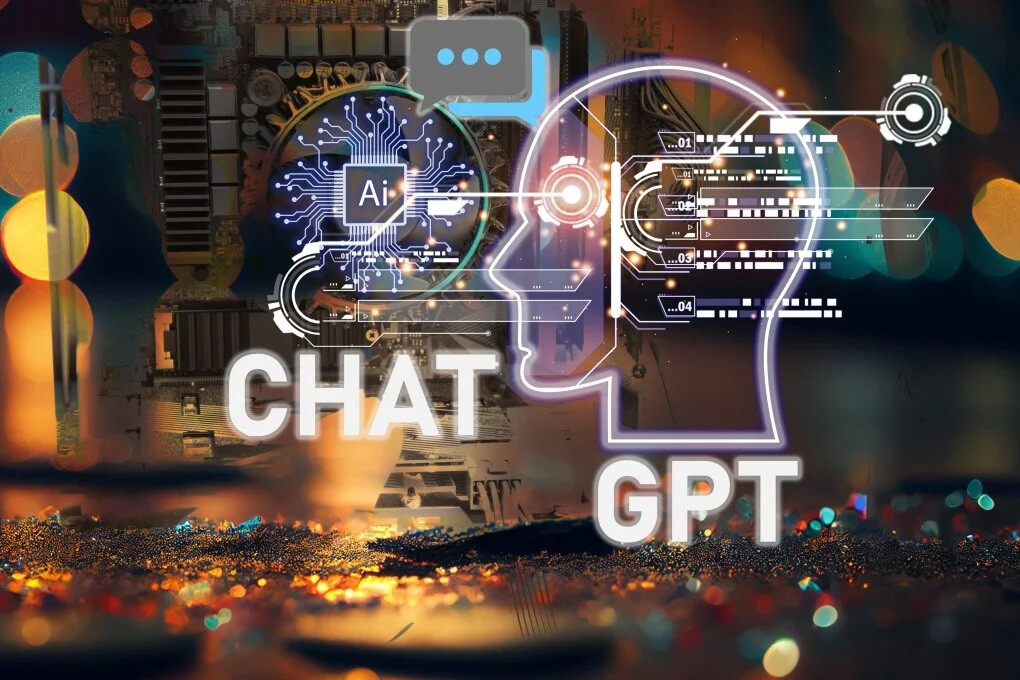
DAEGU, South Korea — On university campuses, the use of generative AI such as ChatGPT and Gemini has transitioned from a novel trend to an everyday essential. As the academic world wraps up the 2025 winter semester, a new dilemma is surfacing for faculty: how to balance the undeniable utility of AI with the preservation of critical thinking and academic integrity.

The "New Normal" on Campus
"To be honest, it feels like 10 out of 10 students use AI for their assignments," says Student A, a senior at Kyungpook National University. "I use both ChatGPT and Gemini to cross-verify data. It’s been the standard since 2023."

This sentiment is echoed across regional universities. Students report using AI for everything from brainstorming exam questions to drafting entire reports. In response, some professors have adopted a "if you can't beat them, join them" approach. A junior at Yeungnam University noted that younger faculty members now require students to submit their full AI chat logs alongside their essays. This allows instructors to verify whether the AI was used as a research assistant or if the student simply "copy-pasted" the output.

The Struggle for Evaluation and Ethics
Despite these creative solutions, the academic community faces significant hurdles. While AI can streamline research, there are growing concerns over "AI dependency," which may lead to a decline in analytical skills.

"In the corporate world, AI literacy is now a requirement, so banning it would be counter-intuitive," explained an Economics professor in Daegu. "However, in large lecture halls, it is difficult to implement alternative assessments like team debates or oral presentations to verify a student's true understanding."

Furthermore, the "AI arms race" is complicating grading. Professors admit that while basic AI patterns are easy to spot, high-end paid models produce sophisticated work that is nearly indistinguishable from human writing, creating an uneven playing field based on a student’s ability to pay for premium services.

The Path Forward: Hybrid Assessment
Global education experts suggest that the solution lies in a "Hybrid Evaluation" model. This involves bifurcating assessments into two categories:

AI-Excluded Proctored Exams: Traditional in-person tests to measure fundamental knowledge and raw reasoning.
AI-Integrated Projects: Assignments where students are judged on their ability to prompt, critique, and refine AI-generated content.

Kim Myung-joo, Director of the AI Safety Institute, emphasizes the importance of "Critical AI Literacy." He argues that the focus of modern education should shift toward teaching students how to skeptically review and edit AI outputs rather than accepting them as absolute truths.

As AI continues to evolve, South Korean universities are at a crossroads, tasked with redefining what it means to be "intelligent" in an age where answers are only a prompt away.

[Copyright (c) Global Economic Times. All Rights Reserved.]
  • #Globaleconomictimes
  • #Korea
  • #Seoul
  • #Samsung
  • #LG
  • #Bitcoin
  • #Meta
  • #Business
  • #Economic
  • #The Woori Bank
  • #Elon Musk
  • #C
Hee Chan Kim Reporter

Popular articles

  • South Korea’s Science Journalists to Explore AI Transformation and Obesity Treatments at 2026 Annual Conference

  • KOSPI’s Drop to 6,000 Level Presents Buying Opportunity; Recovery to 9,300 Within Reach This Year, Says Daeshin Securities

  • South Korea Launches Pan-Government 'One Health' Council to Combat Complex Infectious Disease Threats

I like it
Share
  • Facebook
  • X
  • Kakaotalk
  • LINE
  • BAND
  • NAVER
  • https://www.globaleconomictimes.kr/article/1065552676593433 Copy URL copied.
Comments >

Comments 0

Weekly Hot Issue

  • Riot Games Hosts Largest-Ever TFT Festival at The Hyundai Seoul to Launch 'Sylvan Secrets' Set
  • MINISTRY OF EMPLOYMENT AND LABOR DIRECTS IMMEDIATE EXPANSION OF REST FACILITIES AT GIMPO AIRPORT AFTER UNANNOUNCED HEATWAVE INSPECTION
  • XAVIS Secures Contract to Supply Advanced X-Ray Inspection Systems to European Lines of Global Food Sauce Brand
  • Emma Expands Collaboration with Interior Design Experts to Present Sleep Space Solutions
  • Trump Criticizes U.S. Congressional AI Regulations as Threat to Tech Industry
  • Memory Chips Become Dominant Force in Global Semiconductor Industry, Expected to Account for 60% of Total Market This Year

Most Viewed

1
Planting Hope: Ethiopia’s Green Legacy and the Power of National Transformation
2
Japan Estimated to Have Spent ¥6–7 Trillion in Fresh Yen-Buying Intervention as US Joint Action Hints Emerge
3
The 16th Ethiopia-gil World Festival & Meskel Festival
4
South Korea’s July Exports Hit Record $98.9 Billion as Semiconductor Supercycle Powers Surge
5
Lube Base Oil Emerges as Export Lifesaver for South Korean Refiners Amid Middle East Conflict
광고문의
임시1
임시3
임시2

Hot Issue

MINISTRY OF EMPLOYMENT AND LABOR DIRECTS IMMEDIATE EXPANSION OF REST FACILITIES AT GIMPO AIRPORT AFTER UNANNOUNCED HEATWAVE INSPECTION

Riot Games Hosts Largest-Ever TFT Festival at The Hyundai Seoul to Launch 'Sylvan Secrets' Set

Nable Communications Secures 5G Private Network Upgrade Deal with LG Uplus

Ansan City Pay-as-You-Throw Trash Bag Abandoned in Japan Sparks Controversy in Kamikochi

Fashion Runway Show 2026

Global Economic Times
korocamia@naver.com
CEO : LEE YEON-SIL
Publisher : KO YONG-CHUL
Registration number : Seoul, A55681
Registration Date : 2024-10-24
Youth Protection Manager: KO YONG-CHUL
Singapore Headquarters
5A Woodlands Road #11-34 The Tennery. S'677728
Korean Branch
Phone : +82(0)10 4724 5264
#304, 6 Nonhyeon-ro 111-gil, Gangnam-gu, Seoul
Copyright © Global Economic Times All Rights Reserved
  • 향기네무료급식
  • BCB부천방송
  • 반달곰 프로젝트
Search
Category
  • All articles
  • Synthesis
  • World
  • Business
  • Industry
  • ICT
  • Distribution Economy
  • Well+Being
  • Travel
  • Eco-News
  • Education
  • Korean Wave News
  • Opinion
  • Arts&Culture
  • Sports
  • People & Life 
    • 전체
    • International Student Report
    • With Ambassador
  • Column 
    • 전체
    • Cho Kijo Column
    • Cherry Garden Story
    • Ko Yong-chul Column
    • Kim Seul-Ong Column
    • Lee Yeon-sil Column
  • Photo News
  • New Book Guide
  • Multicultural News
  • Jobs & Workers