• 2026.11.28 (Sat)
  • All articles
  • LOGIN
  • JOIN
Global Economic Times
한인동포뉴스(상단)
  • Synthesis
  • World
  • Business
  • Industry
  • ICT
  • Distribution Economy
  • Well+Being
    • Pet Life
    • Halal Horizon
  • Travel
  • Eco-News
  • Education
  • Korean Wave News
  • Opinion
  • Arts&Culture
  • Sports
  • People & Life
    • International Student Report
    • With Ambassador
  • Column
    • Cho Kijo Column
    • Cherry Garden Story
    • Ko Yong-chul Column
    • Kim Bong-seon's Photo Column
    • Kim Seul-Ong Column
    • Lee Yeon-sil Column
    • Professor Lee Soo-young’s Life Essays
  • Photo News
  • New Book Guide
MENU
 
Home > Industry

South Korea Moves to Mandate Domestic Chips in Security Infrastructure and Launch Strategic Export Fund

Hee Chan Kim Reporter / Updated : 2026-11-28 04:09:05
  • -
  • +
  • Print


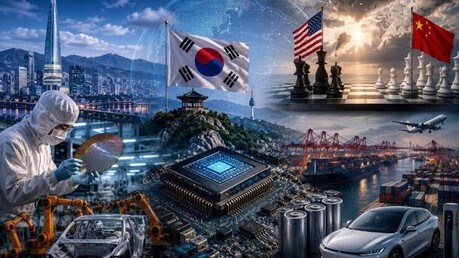
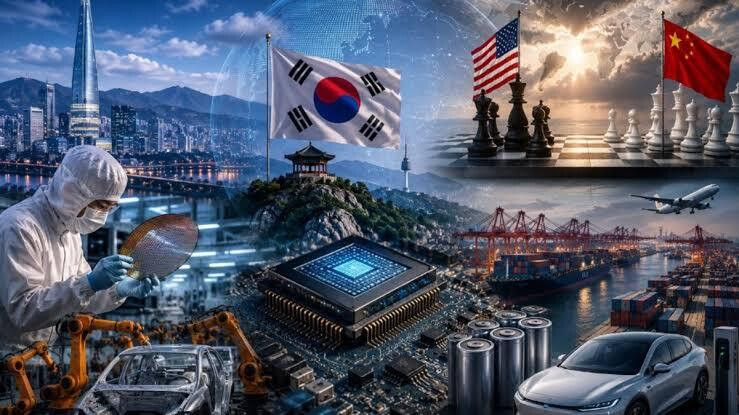
SEOUL — South Korea is rolling out a comprehensive industrial blueprint designed to bolster its technological self-reliance and export competitiveness across eight core strategic sectors, anchored by mandatory local semiconductor procurement for critical security infrastructure and a new state-backed export finance fund.

Following a policy briefing with the Strategic Economic Advisory Council—a public-private task force established in April—the Ministry of Economy and Finance announced plans to revise the Special Act on Semiconductors. Under the proposed amendment, government agencies and operators of national security infrastructure will be legally required to prioritize domestically manufactured chips.

To further fortify the local chip supply chain, the government will ramp up funding for mass-production research and development in semiconductor materials, parts, and equipment (MPE). Echoing recommendations from the advisory council, authorities are also reviewing plans to build a joint public-private testing fabrication plant to help local suppliers validate their technologies under real-world manufacturing conditions, alongside new incentives to drive domestic chip adoption in AI data centers and scale up local power semiconductor production.

"Navigating the intensifying rivalry between the United States and China requires us to maximize our existing industrial advantages while aggressively cultivating strategic technologies where falling behind is not an option," Deputy Prime Minister and Finance Minister Lee Hyung-il said during the briefing. He noted that policymakers will focus on three pillars: foundational AI infrastructure (semiconductors and energy), AI-accelerated sectors (biotech, space, quantum, and defense), and emerging AI-driven industries (robotics and AI agent commerce).

Beyond semiconductors, the policy roadmap outlines targeted public-sector initiatives to spark early market demand across the remaining strategic sectors:

AI & Robotics: Authorities plan to deploy AI-powered robotics across public services first, backed by newly established safety evaluation protocols and industry standards. Council Chair Park Young-sun noted that establishing "security and trust" through predictable regulations will be vital for mainstream AI adoption next year.
Biotech & Healthcare: The government will build a digital medical data exchange network to integrate patient-centric health records nationwide and back AI-driven drug discovery.
Space & Quantum Security: Public procurement will be leveraged to stimulate the commercial space sector, including purchasing private small launch vehicles and satellite life-extension services. Meanwhile, the public sector will adopt next-generation cryptography, such as homomorphic encryption, and tighten software supply chain security.
Energy & Defense: Policymakers aim to clarify clean hydrogen certification rules to reduce regulatory uncertainty, while helping defense exporters expand beyond hardware sales into lucrative maintenance, repair, and overhaul (MRO) contracts.

To support global expansion across these industries, Seoul will establish a dedicated Strategic Export Finance Fund. The fund will provide financial backing for mega-scale overseas contracts and expand capital investments for small and medium-sized exporters.

Minister Lee confirmed that the ministry will coordinate with relevant government bodies to update regulatory frameworks and incorporate the council's proposals into the upcoming annual economic policy roadmap.

[Copyright (c) Global Economic Times. All Rights Reserved.]
  • #Cherry Garden
  • #HalalFood
  • #Halal
  • #Petlife
  • #Cats
  • #Dogs
  • #Halalhorizone
  • #Hormuz Impasse
  • #Joseon
  • #globaleconomicti
Hee Chan Kim Reporter

Popular articles

  • Andong Launches Inaugural Heritage Film Festival to Blend Local Culture with CinemaA nine-day celebration kicks off on November 7, featuring independent films, cultural exhibitions, and policy forums.

  • How about a World Heritage Kimchi-making trip this weekend? The Pyeongchang Alpine Kimchi Festival runs until November 16.

  • Busan City to Host Industrial Site Investment Briefing for Global Investors Participating in the "2026 Invest Korea Summit"

I like it
Share
  • Facebook
  • X
  • Kakaotalk
  • LINE
  • BAND
  • NAVER
  • https://www.globaleconomictimes.kr/article/1065553669061613 Copy URL copied.
Comments >

Comments 0

Weekly Hot Issue

  • Myanmar’s President Defies Landmark UN Court Ruling on Rohingya Genocide
  • North Korean Hackers Begin Laundering Billions Stolen from Binance
  • Trump Dismisses Security Concerns Over Nvidia CEO’s Return, Citing "Great Deal of Information"
  • UN Tribunal Rules UNRWA Wrongfully Terminated Staff Over Unverified Israeli Claims
  • Man in His 20s Sentenced to 3 Years in Prison and Detained in Court for Illegally Filming Junior Soldier’s Body and Distributing It in Group Chat
  • Government Pushes to Recommend Limiting Consecutive Night Shifts to 3 Days or Less; Early-Morning Delivery Excluded

Most Viewed

1
Exercise Beats Diet in Extending Lifespan, Major Review Finds
2
Memory Chip Rout Deepens as Wall Street Questions AI Spending and DRAM Pricing
3
South Korean Burger Chain Lotteria Expands Singapore Footprint with Halal Certification and New Teriyaki Lineup
4
AI Semiconductor Stocks Plummet: Philadelphia Index Drops 5.28% and Micron Plunges 7.59% Amid Executive Shakeup and Export Restrictions
5
"Stay Out, Get Paid, or Have Police Stay With You": Shenzhen Imposes Strict Security Ahead of APEC Summit
체리가든 스토리
nutri huevos
로타리
동포저널

Hot Issue

GOP Fractures Over Trump Tariffs as Inflation Concerns Mount Post-Midterms

South Korea Moves to Mandate Domestic Chips in Security Infrastructure and Launch Strategic Export Fund

Experts Urge Focus on AI Infrastructure, Cautious Asset Allocation Ahead of 2027

Fashion Runway Show 2026

Let’s recycle the old blankets in Jeju Island’s closet instead of incinerating them.

Global Economic Times
korocamia@naver.com
CEO : LEE YEON-SIL
Publisher & Editor : KO YONG-CHUL
Registration number : Seoul, A55681
Registration Date : 2024-10-24
Youth Protection Manager: KO YONG-CHUL
Singapore Headquarters
5A Woodlands Road #11-34 The Tennery. S'677728
Korean Branch
Phone : +82(0)10 4724 5264
#304, 6 Nonhyeon-ro 111-gil, Gangnam-gu, Seoul
Copyright © Global Economic Times All Rights Reserved
  • News K
  • 반달곰 프로젝트
  • 광고문의
Search
Category
  • All articles
  • Synthesis
  • World
  • Business
  • Industry
  • ICT
  • Distribution Economy
  • Well+Being 
    • 전체
    • Pet Life
    • Halal Horizon
  • Travel
  • Eco-News
  • Education
  • Korean Wave News
  • Opinion
  • Arts&Culture
  • Sports
  • People & Life 
    • 전체
    • International Student Report
    • With Ambassador
  • Column 
    • 전체
    • Cho Kijo Column
    • Cherry Garden Story
    • Ko Yong-chul Column
    • Kim Bong-seon's Photo Column
    • Kim Seul-Ong Column
    • Lee Yeon-sil Column
    • Professor Lee Soo-young’s Life Essays
  • Photo News
  • New Book Guide
  • Overseas Koreans
  • Multicultural News