
![[등록] 2026-09-01 15:48:31](/support/_updata/banner2/tl181982910_6749.png)


(C) CNBC
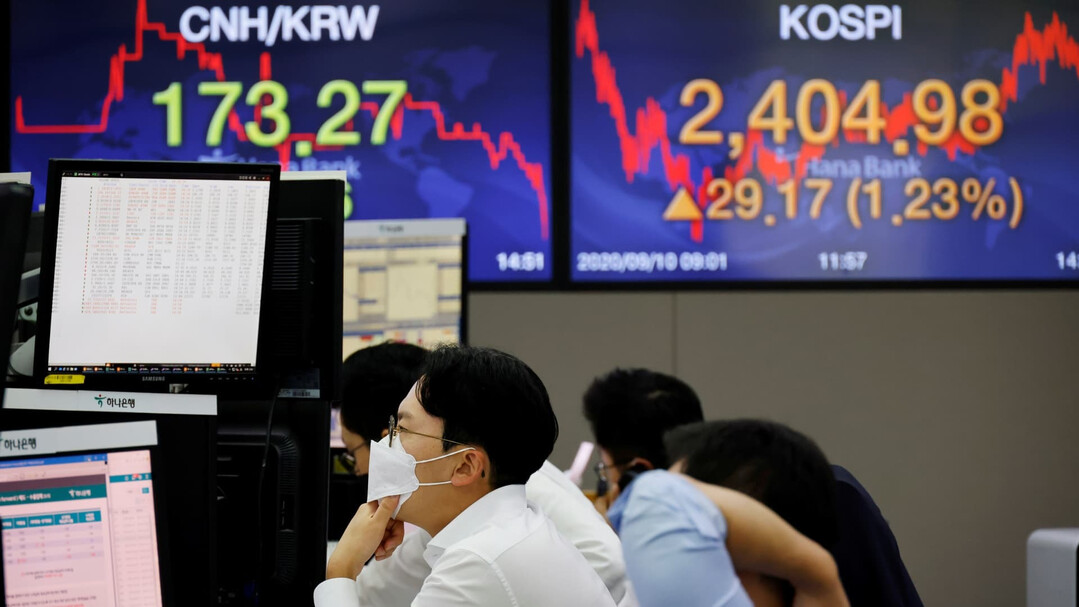
SEOUL — Foreign investors’ ownership in the South Korean stock market has reached its highest level in nearly six years, fueled by a powerful rally in the benchmark KOSPI. While semiconductor stocks led the charge late last year, capital is now shifting toward a new trio of favorites: Shipbuilding, Defense, and Nuclear Energy.
Key Statistics
According to the Korea Exchange (KRX), as of January 7, 2026, the total market capitalization of the KOSPI stood at ₩3,759.7 trillion. Foreign holdings accounted for ₩1,398 trillion, or 37.18% of the total. This marks the highest ratio since April 2020 (37.34%).
The Strategic Shift: From Semiconductors to 'SHN'
The investment landscape is seeing a notable transition. In the second half of last year, foreign capital was heavily concentrated in the tech sector, but the focus has recently pivoted to the "SHN" (Shipbuilding, Defense, and Nuclear) sectors.
Shipbuilding & Nuclear: Driven by expectations of massive international contract wins.
Defense: Buoyed by rising geopolitical tensions, specifically regarding Greenland under the Trump administration.
Drivers Behind the New Favorites
Market analysts point to several catalysts driving the popularity of the Shipbuilding, Defense, and Nuclear Power sectors:
Shipbuilding & Nuclear: Expectations for large-scale international contract wins.
Defense: Increased geopolitical tensions, including discussions regarding Greenland involving U.S. President Donald Trump, have fueled demand for defense stocks.
Top Individual Stocks (Net Purchase)
Since the first trading day of 2026 (Jan 2–23), the most sought-after stocks by foreign investors were:
Hanwha Ocean (942.6 billion won)
Doosan Enerbility (829.3 billion won)
NAVER (529.8 billion won)
HD Hyundai Heavy Industries (519.7 billion won)
Celltrion (513.9 billion won)
Hanwha Aerospace (385.1 billion won)
The "KOSPI Bull Market" is being sustained by deep-pocketed foreign investors. While they previously bet on a semiconductor recovery via Samsung, their current appetite has shifted toward heavy industries and infrastructure, reflecting a global demand for energy security and defense readiness.
[Copyright (c) Global Economic Times. All Rights Reserved.]














