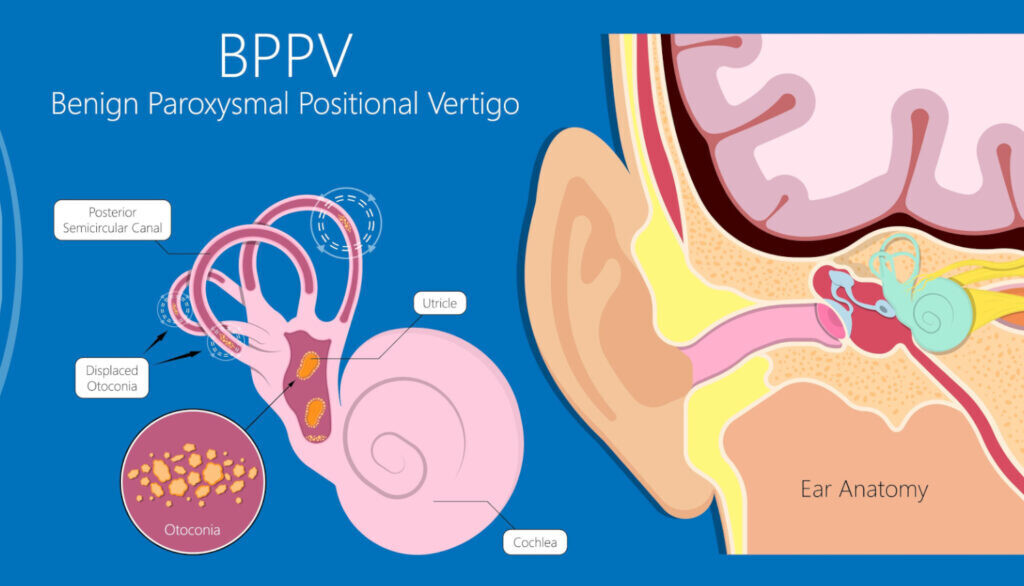
If you experience a sudden spinning sensation the moment you sit up in bed, you might brush it off as mere fatigue or mild anemia. However, if this intense, brief dizziness is triggered specifically by turning your head or changing your posture, it could be a sign of a common inner ear condition known as Benign Paroxysmal Positional Vertigo (BPPV).
BPPV is one of the most frequent causes of vertigo. While it is widely prevalent, it can affect people of all ages, including younger populations. Typically, the episodes last anywhere from a few seconds to a minute, rarely exceeding several minutes. Yet, a short duration does not mean weak intensity. The spinning sensation can be severe, often accompanied by nausea, vomiting, and a sudden loss of balance that carries a risk of falls.
What Causes BPPV?
Inside the inner ear's vestibular system lie tiny calcium carbonate crystals called otoconia, which help the brain sense head movements and maintain balance. When these crystals dislodge from their original position and drift into the semicircular canals, they send false signals to the brain regarding rotational movement, triggering acute vertigo.
The most telling clue of BPPV is its dependency on posture changes—such as rolling over in bed, lying down, looking up, or bending over. Crucially, BPPV generally does not cause ear pain, hearing loss, or ringing in the ears (tinnitus).
Diagnosis and Treatment: The Epley Maneuver Over Medication
Many people mistake recurring dizziness for simple exhaustion or iron deficiency. However, self-diagnosing based on symptoms alone can delay accurate medical care.
Diagnosing BPPV involves evaluating the patient's positional triggers and observing involuntary eye movements, known as nystagmus. This allows specialists to determine precisely which ear and which semicircular canal are affected.
The cornerstone of BPPV treatment is the canalith repositioning procedure (commonly known as the Epley maneuver). By systematically guiding the patient through a series of specific head and body positions, a clinician maneuvers the stray crystals back to where they belong.
While many patients experience significant relief after just one or two sessions, others may require multiple treatments or experience mild residual imbalance afterward. Medication serves primarily as a supportive tool to ease secondary symptoms like nausea and dizziness. Experts strongly advise against attempting repositioning maneuvers at home by watching online videos, as a precise professional diagnosis is critical.
When to Seek Immediate Medical Attention
Not all dizziness stems from BPPV, and underlying causes dictate vastly different treatment approaches and urgencies.
Patients should seek immediate medical evaluation if they experience:
-Sudden, unprecedented, and severe vertigo
-Inability to stand or walk steadily
-Neurological signs such as slurred speech, sudden limb weakness, severe headaches, or altered consciousness
If recurring positional dizziness disrupts your daily life or puts you at risk of falling, do not wait for it to disappear on its own. Seeking timely professional diagnosis and care is the safest path to recovery.
[Copyright (c) Global Economic Times. All Rights Reserved.]