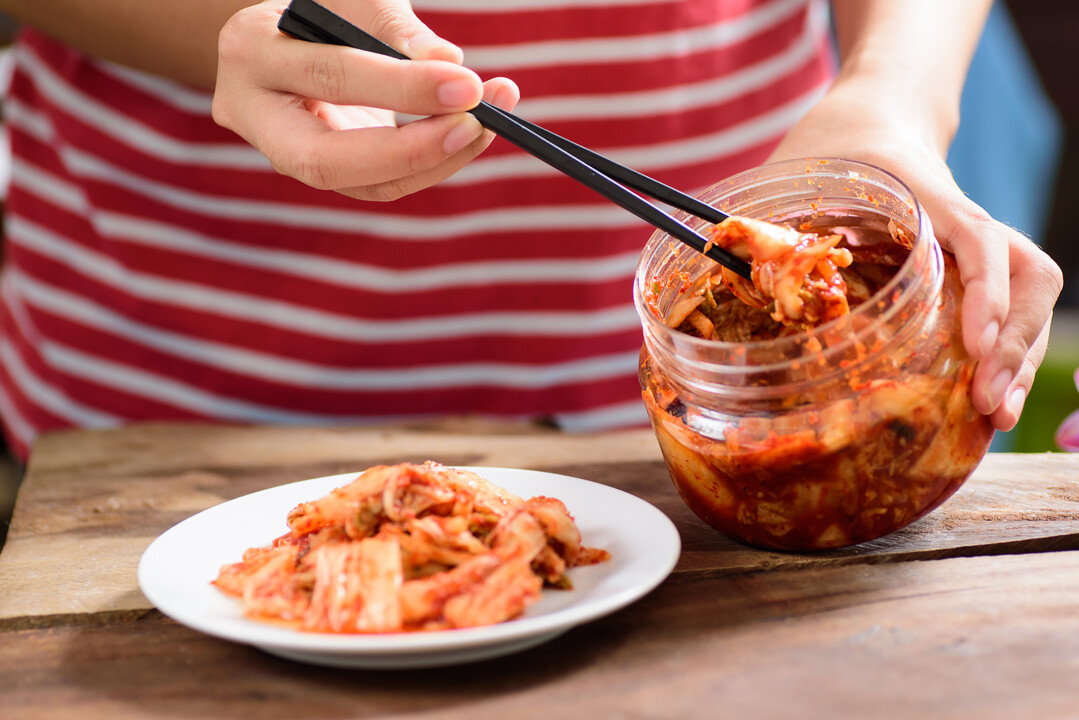
A recent study indicates that consuming traditional Korean kimchi may contribute to better cholesterol management. Specifically, researchers found that individuals who consume between 50g and 100g of baechu (napa cabbage) kimchi daily have a lower likelihood of developing certain lipid abnormalities compared to those who eat smaller amounts.
A research team led by Professor Shin Sang-ah from the Department of Food and Nutrition at Chung-Ang University analyzed health data from 4,666 Korean adults aged 40 to 69 (1,930 men and 2,736 women) to investigate the connection between kimchi consumption and dyslipidemia. Dyslipidemia refers to a condition where blood cholesterol or triglyceride levels fall outside the normal range. Utilizing data from the Ansan-Anseong cohort, the team tracked participants' intake of various types of kimchi—such as baechu kimchi, kkakdugi (radished kimchi), nabak kimchi, and dongchimi—and monitored subsequent occurrences of dyslipidemia.
The findings revealed that men who consumed 50g to 100g of baechu kimchi per day had a roughly 39% lower risk of developing hypercholesterolemia compared to those who consumed less than 50g daily. Hypercholesterolemia, characterized by abnormally high total blood cholesterol levels, is a major risk factor for cardiovascular diseases.
Among women, the study highlighted a positive correlation with High-Density Lipoprotein (HDL) cholesterol, often referred to as "good cholesterol." HDL helps transport excess cholesterol from the bloodstream back to the liver for elimination. Women who ate 50g to 100g of baechu kimchi daily experienced an approximately 20% lower risk of their HDL cholesterol dropping to excessively low levels, compared to those consuming less than 50g. Those who consumed 150g or more daily also saw a similar risk reduction of about 22%.
Experts suggest that probiotics and various bioactive compounds found in kimchi may play a role in these outcomes. Kimchi is rich in beneficial lactic acid bacteria such as Lactobacillus, Weissella, and Leuconostoc, which some studies indicate may influence intestinal cholesterol absorption and lipid metabolism. However, the researchers noted that the study did not directly verify the precise mechanisms of these bacteria.
Notably, kimchi consumption did not uniformly improve all lipid markers. There was no statistically significant association found for Low-Density Lipoprotein (LDL) cholesterol—known as "bad cholesterol"—or triglycerides in either men or women, nor was there a significant difference in overall dyslipidemia risk. Furthermore, the data showed no clear trend of health benefits increasing proportionally with higher kimchi consumption.
The research team concluded that regular intake of baechu kimchi may help lower the risk of certain cholesterol-related issues. Nevertheless, because this was an observational study examining correlations, it cannot be definitively concluded that kimchi directly caused the improvements in cholesterol levels. Additionally, experts advise against indiscriminately increasing kimchi intake due to its sodium content. Individuals, particularly those with hypertension or cardiovascular conditions, should carefully monitor their total daily sodium intake across all foods.
[Copyright (c) Global Economic Times. All Rights Reserved.]