![[등록] 2026-09-01 15:48:31](/support/_updata/banner2/tl181982910_6749.png)


SEOUL — South Korea’s export engine has ignored the escalating geopolitical friction in the Middle East to deliver a record-shattering performance in March. Driven by an unprecedented "supercycle" in the semiconductor sector, the nation’s monthly exports surpassed the $80 billion mark for the first time in history, signaling a tectonic shift in the global technology supply chain.
According to data released by the Ministry of Trade, Industry and Energy (MOTIE) on Wednesday, March exports reached $86.13 billion, a staggering 48.3% increase compared to the same period last year. This figure obliterates the previous record of $69.5 billion set in December 2025, effectively skipping the $70 billion milestone entirely to land deep in $80 billion territory.
The $30 Billion Semiconductor Milestone
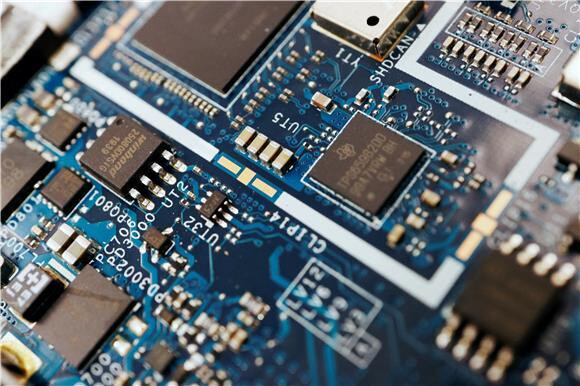
At the heart of this explosive growth is the semiconductor industry. Chip exports skyrocketed by 151.4% year-on-year to reach $32.83 billion. This marks the first time in South Korean history that monthly semiconductor exports have crossed the $30 billion threshold.
The primary catalyst is the insatiable global demand for Artificial Intelligence (AI). As tech giants scramble to build out AI inference services, the prices of high-performance memory have reached astronomical levels. The industry’s shift toward DDR5 and high-capacity NAND flash has redefined profit margins:
DDR5 (16Gb): Prices surged from $4.25 last year to $31.00 this March.
NAND (128Gb): Prices rose from $2.51 to $17.73 over the same period.
"While some voice concerns about a potential cooling in AI demand, the current momentum remains unshakable," said Kang Gam-chan, Director General for Trade and Investment at MOTIE. "We expect this positive trend to persist at least through the first half of the year."
Geopolitical Headwinds and Regional Shifts
The stellar performance comes despite a grim backdrop in the Middle East. While total trade flourished, exports to the Middle East plummeted by 49.1% to a mere $900 million, hampered by severe logistical bottlenecks and maritime risks caused by the ongoing conflict.
Conversely, the "Big Two" markets—the United States and China—showed robust recovery. Exports to China surged 64%, while shipments to the U.S. grew by 47.1%, fueled largely by chips and high-end computer peripherals, which saw a 189.2% increase.
The "Concentration Risk" Debate
Despite the celebratory atmosphere, economists are flagging the growing "semiconductor dependency" as a structural vulnerability. Semiconductors now account for 38.1% of South Korea’s total export portfolio—a record high that dwarfs the 20% range seen during the 2018 supercycle.
Critics argue that the South Korean economy is becoming a "one-trick pony." While the AI boom provides a temporary cushion, any correction in the volatile chip market could lead to a hard landing for the national economy.
"Relying solely on the semiconductor cycle is a high-stakes gamble," warned Kim Hyun-dong, a professor of Business Administration at Pai Chai University. "To ensure long-term stability, there must be a concerted policy effort to foster competitiveness in diverse sectors like biotechnology, secondary batteries, and AI software, rather than just the hardware that powers them."
A 14-Month Surplus Streak
On the import side, energy costs fell as crude oil and gas imports dropped by 5.2% and 19.0%, respectively, partly due to strategic shifts in sourcing amidst the Middle East crisis. This resulted in a massive trade surplus of $25.74 billion, extending Korea's winning streak to 14 consecutive months of trade surpluses.
As the second quarter begins, the focus shifts to whether Korea can maintain this velocity. With the world watching the evolution of AI and the stability of global shipping lanes, the "Silicon Shield" of South Korea remains the country's strongest—and perhaps most precarious—economic asset.
[Copyright (c) Global Economic Times. All Rights Reserved.]