![[등록] 2026-09-01 15:48:31](/support/_updata/banner2/tl181982910_6749.png)


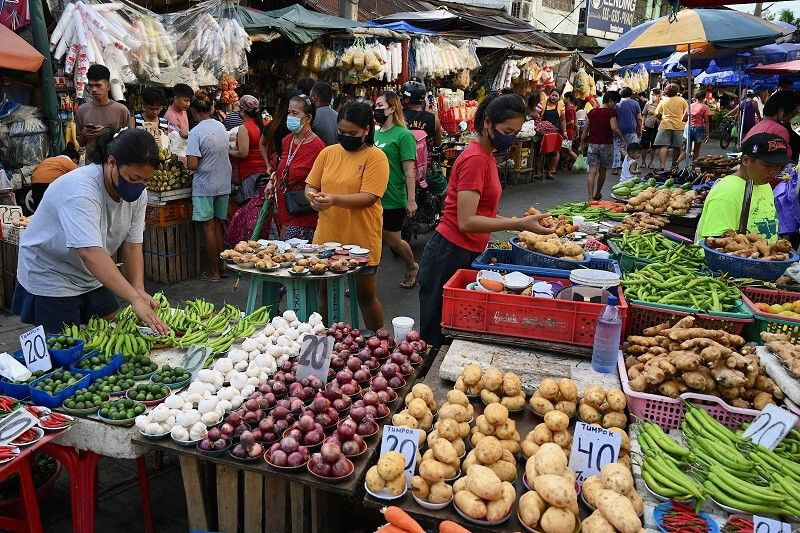
MANILA, Philippines – The Philippines' April consumer price index (CPI) inflation rate is expected to have slightly increased despite lower oil and food prices, influenced by higher electricity rates and public transportation fares.
A survey of 10 economists conducted by the Philippine Daily Inquirer yielded a median CPI forecast of 1.9% for April. This is slightly higher than the 1.8% CPI inflation recorded in March.
The Bangko Sentral ng Pilipinas (BSP) also projected a similar range of 1.3% to 2.1%. These forecasts suggest that the April CPI, which the Philippine Statistics Authority (PSA) will release on May 6, will remain within the BSP's target range of 2% to 4%.
Emilio Neri Jr., lead economist at Bank of the Philippine Islands (BPI), identified higher electricity rates due to increased summer cooling demand as a primary driver of April's inflationary pressures. He also pointed to the fare increase for the Light Rail Transit Line 1 (LRT-1) in Manila as a contributing factor.
However, Neri explained that these cost increases were partially offset by lower prices for major food items such as rice, vegetables, and fish, as well as declines in oil and liquefied petroleum gas (LPG) prices. He anticipates April inflation to have eased to 1.6%.
"The continued disinflation from lower prices across major food items, particularly rice, vegetables, and fish, coupled with the sustained decline in oil and LPG prices, drove inflation lower," he said. He added, "This was combined with the sharp increase in electricity rates and the ₱5 to ₱10 hike in LRT-1 fares, which affects around half a million commuters in Metro Manila, partially offsetting the downward pressure on prices."
Nicholas Mapa, senior economist at Metropolitan Bank & Trust Co. (Metrobank), echoed a similar view. He forecasts the April CPI at 1.9%, noting that "lower rice prices and slower increases in vegetable prices should help temper inflation, as should transport costs." However, he added that "higher electricity prices may offset some of that downward pressure."
If inflation remains at a stable level, the BSP will have more room to ease its monetary policy. This could help support economic growth at a time of heightened global uncertainty due to US tariff impositions.
The BSP resumed its monetary easing in April by cutting its benchmark interest rate by 25 basis points, bringing it down to 5.5%. This decision followed US President Donald Trump's wavering stance on imposing "reciprocal" tariffs.
Meanwhile, BSP Governor Eli Remolona hinted at the possibility of further rate cuts, suggesting that the monetary easing cycle could end within the year.
Analysts at China Bank Research said, "Should inflation continue to settle at or near the low end of the BSP's target range, this could provide scope for another policy rate cut at the BSP's monetary policy meeting in June." They project the April CPI at 1.6%.
While the Philippine economy has shown robust growth recently, the global economic slowdown and rising geopolitical tensions pose downside risks to growth. In particular, the potential for further US interest rate hikes warrants close monitoring due to its potential to weaken the Philippine peso and trigger capital outflows.
The Philippine government continues to promote economic growth through increased infrastructure investment and attracting foreign investment, while also working to maintain price stability. However, the impact of external factors could lead to increased price volatility.
The BSP is expected to consider both inflation and economic growth in its monetary policy decisions, and further policy changes may occur depending on future economic data releases and changes in the international situation. Economic experts advise continued monitoring of the Philippines' inflation trends and the direction of the BSP's monetary policy.
[Copyright (c) Global Economic Times. All Rights Reserved.]