![[등록] 2026-09-01 15:48:31](/support/_updata/banner2/tl181982910_6749.png)


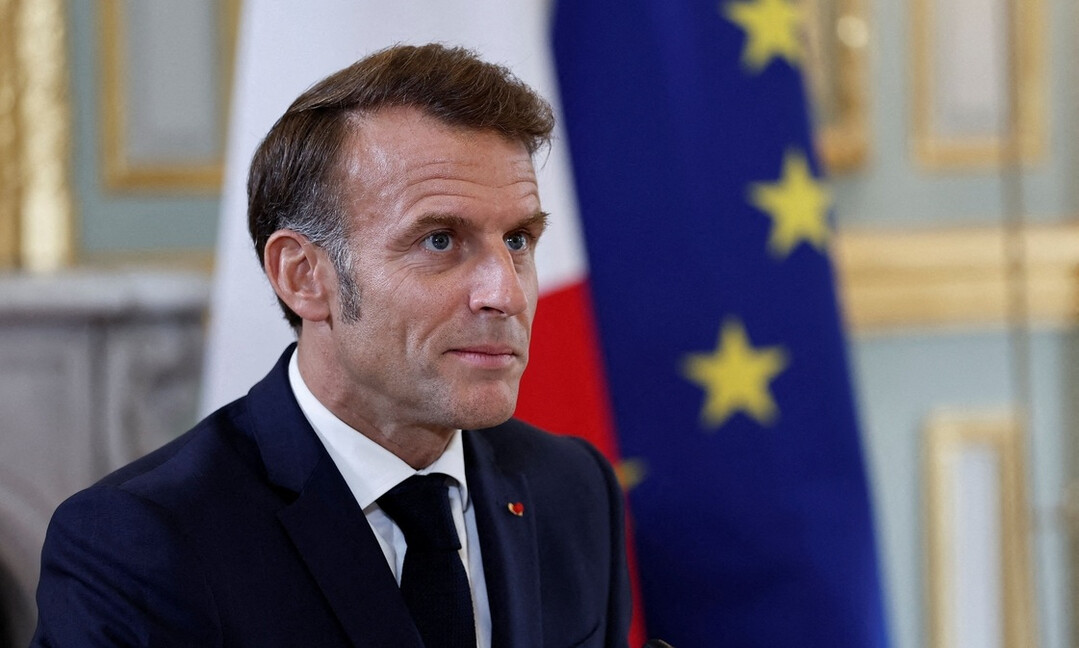
The French political system, the Fifth Republic, is facing an existential crisis. Nearly 70 years after its inception by Charles de Gaulle to ensure stability, the structure is now seen by many as the root cause of the nation's profound political instability and deadlock, highlighted by repeated prime ministerial resignations under President Emmanuel Macron's administration.
The Cracks in De Gaulle’s Design
The current turmoil, marked by the frequent collapse and reconstitution of cabinets—including the farcical episode of Prime Minister Sébastien Lecornu's resignation and reappointment within days—is more than a mere government crisis. Analysts point to a fundamental, structural flaw in the presidential system of the Fifth Republic, established in 1958.
The system was conceived in reaction to the chronic instability of the Fourth Republic, where 21 governments fell in 12 years. De Gaulle’s goal was to create a strong president backed by an absolute majority in the National Assembly. However, this hybrid, semi-presidential model is only effective when the President commands a legislative majority. When this majority is lost, the system quickly descends into paralysis and gridlock—a situation known as "cohabitation" when the president and prime minister are from opposing parties, but now occurring even within the presidential camp due to a fragmented parliament.
Political commentator Alain Duhamel noted in the Telegraph, "France is stuck between two systems." He argues that "the president acts like a monarch but must rely on a National Assembly he cannot control. The two devices are working in opposite directions." Critics, including the newspaper Le Monde, further suggest that President Macron’s "authoritarian and secluded, monarchical governance," coupled with his narrow support base and insistence on appointing close allies, has exacerbated the current political deadlock into a long-term systemic crisis.
The Problem of a Fragmented Assembly
The core of the present dysfunction lies in the three-way political fragmentation in the National Assembly: the Left (led by the New Ecological and Social People's Union, NUPES, and the far-left La France Insoumise), the Centre (Macron's coalition, Ensemble!), and the Far-Right (Marine Le Pen's National Rally, RN). No single bloc holds an absolute majority.
This 'tri-polar' stalemate has transformed the Assembly from a forum for negotiation into an arena for confrontation. Political parties are less focused on compromise and more on positioning themselves for the next presidential election. As Gilles Gressani, head of the French think tank GEG, remarked to Politico, the primary concern for most mid-career politicians and economic elites is "how to become president."
The constant turmoil poses a serious threat to the nation’s fiscal health. Prime Ministers, repeatedly failing to gain parliamentary approval for budget bills, are caught in a vicious cycle. The recently reappointed PM Lecornu faces the daunting task of securing approval for an austerity budget. Failure to pass the budget—possibly around the October 20 deadline—could lead to a downgrade of France's credit rating and increased pressure from the European Union to reduce its fiscal deficit.
The Absence of a Coalition Culture
The stability seen in neighboring European nations further highlights France’s unique struggle. In Germany, coalition governments—where the conservative and social democratic parties frequently work together—are a political norm. Even Italy, once a symbol of political chaos, has maintained a stable coalition government under Prime Minister Giorgia Meloni for three years.
In stark contrast, France lacks a deeply ingrained culture of political cooperation. French political parties often view forming a coalition as an anathema. Macron himself expressed envy for German political culture during a meeting with German Chancellor Friedrich Merz, noting, "Across the Rhine, the conservatives and the socialists work together. This is happening not far from here." Meanwhile, Marine Le Pen, leader of the far-right RN, openly threatens to bring down the next government, escalating the political rift to a point where the institutional framework itself is endangered.
Thierry Baudet, President of the French Economic, Social and Environmental Council, summarized the national mood to the Telegraph, stating, "The phrase ‘in their own world’ speaks for the current state of mind of the French people." Citizens feel abandoned, forced to watch the power struggles of an elite political class while national debt rises, budgets are cut, and politics remains paralyzed.
A Call for the Sixth Republic
The consensus is growing that the current crisis is not a mere "failure of the government" but a deep-seated fatigue and imbalance of the constitutional system.
The conversation is now turning to fundamental constitutional reform. Jean-Luc Mélenchon, leader of the far-left party La France Insoumise, has long championed the creation of a Sixth Republic. While this call for a new constitutional order—likely one that would shift more power back to the parliament—was largely dismissed in the last presidential election, it is now being seriously reconsidered as a viable alternative.
As Politico Europe observed, De Gaulle’s "creation seems to have reached the end of its lifespan." The French Fifth Republic, designed for stability through strong central authority, is paradoxically fostering deeper division, leading the nation to a critical crossroads where its constitutional future hangs in the balance.
[Copyright (c) Global Economic Times. All Rights Reserved.]