![[등록] 2026-09-01 15:48:31](/support/_updata/banner2/tl181982910_6749.png)


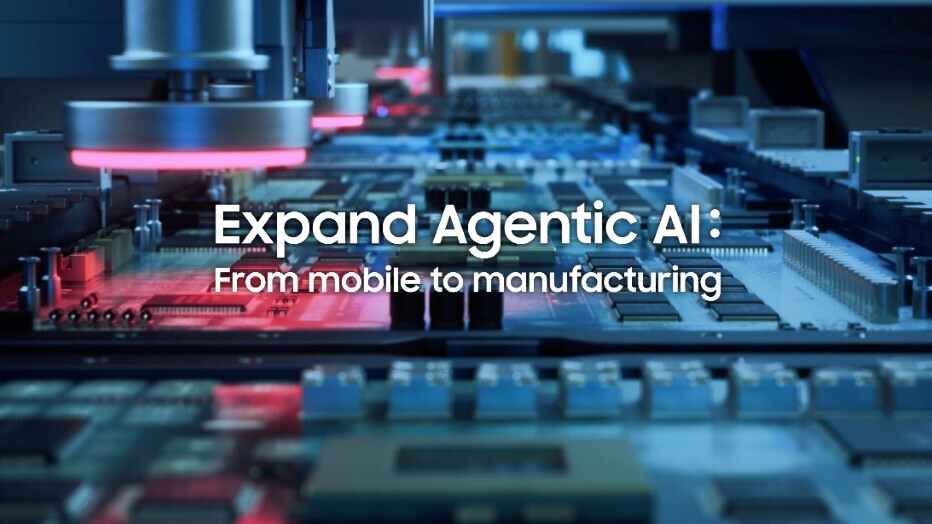
(C) Samsung Global Newsroom
SEOUL – In a move that signals the dawn of a new industrial era, Samsung Electronics officially announced on March 1st its ambitious plan to transform all domestic and international production facilities into "AI-Driven Factories" by the year 2030. This initiative represents a departure from traditional automated manufacturing, pivoting instead toward a fully autonomous ecosystem where Artificial Intelligence oversees every stage of production.
From Automation to Autonomy: The Rise of Agentic AI
The cornerstone of this transformation is the integration of "Agentic AI"—a technology recently spotlighted during the launch of the Galaxy S26. Unlike standard AI that follows pre-programmed commands, Agentic AI possesses the capability to set independent plans and execute complex tasks to achieve specific goals.
Samsung intends to deploy these AI agents across production, equipment maintenance, and logistics. By empowering AI to analyze data in real-time and perform predictive validation, the company aims to achieve a level of "self-healing" and "self-optimizing" manufacturing that minimizes downtime and maximizes yield.
A Workforce of Humanoids and Specialized Robots
To bridge the gap between digital intelligence and physical execution, Samsung is initiating a phased rollout of humanoid and specialized manufacturing robots. The strategy includes:
Operating Bots: Tasked with managing production lines and complex equipment.
Logistics & Assembly Bots: Seamlessly moving materials and performing intricate assembly duties.
Environmental Safety Bots: These digital twin-integrated robots will be deployed in high-risk environments—such as high-temperature or high-noise zones—to replace human workers in hazardous conditions, thereby drastically reducing workplace accidents.
Digital Twin: The Virtual Guardian
Central to the AI-Driven Factory is the Digital Twin technology. By creating a virtual replica of the entire supply chain—from raw material intake to final shipment—Samsung can run exhaustive simulations to foresee potential bottlenecks or safety risks before they occur in the physical world.
"The future of manufacturing innovation lies beyond simple automation," stated Lee Young-su, Vice President and Head of Samsung’s Global Manufacturing Technology Center. "It is about building an autonomous manufacturing site where AI understands the environment and makes optimal decisions independently. Samsung is committed to becoming the global epicenter of AI-integrated industrial innovation."
Global Debut at MWC26
Samsung plans to showcase its industrial AI strategy and Digital Twin vision at the Mobile World Congress (MWC) 2026 in Barcelona. Furthermore, during the Samsung Mobile Business Summit (SMBS) held alongside MWC, the tech giant will address the ethical and operational implications of this shift by announcing its "Governance Strengthening Strategy for Expanded AI Autonomy." This underscores Samsung's commitment to ensuring that as AI gains more independence, it remains governed by rigorous safety and ethical standards.
As the industry watches closely, Samsung’s 2030 vision sets a high bar for the "Fourth Industrial Revolution," potentially redefining how the world’s consumer electronics and semiconductors are built.
[Copyright (c) Global Economic Times. All Rights Reserved.]