![[등록] 2026-09-01 15:48:31](/support/_updata/banner2/tl181982910_6749.png)


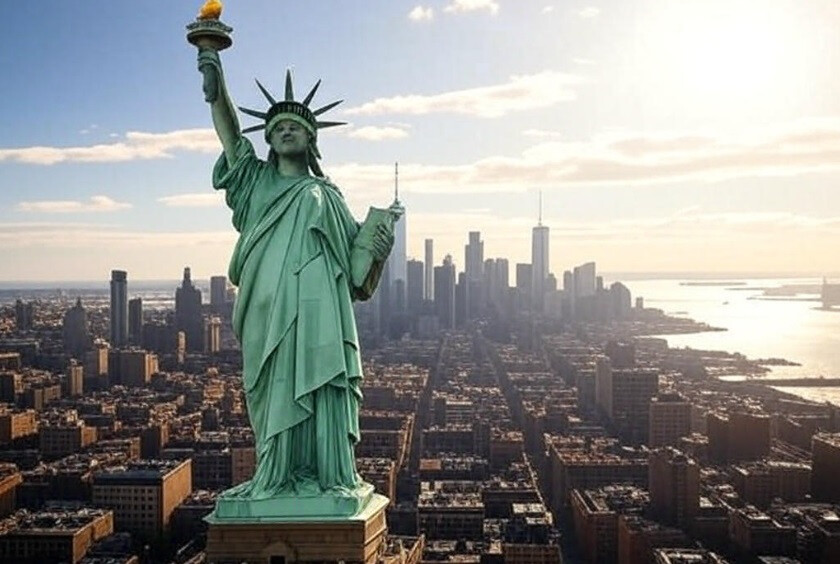
"America is a nation of immigrants, a symbol of openness, inclusivity, and free research. Yet, since the Trump administration, the future has become uncertain, and researchers are self-censoring their work. This questions not only the sustainability of American higher education and the research ecosystem but also the sustainability of American society itself."
These stark words, conveyed by a U.S.-based university researcher in multiple interviews with Hankyoreh, paint a chilling picture of the Trump administration's de facto thought policing within academia, enforced through the threat of visa cancellations. Due to the risk of deportation for criticizing the administration on social media, the researcher’s nationality and affiliation remain undisclosed.
The researcher highlighted the growing financial strain on students due to federal research funding cuts. Research focusing on diversity, equity, inclusion (DEI), gender, disability, advocacy, and exclusion is frequently rejected, leading to widespread self-censorship. This trend aligns with Trump's January 20th executive order, which dismantled federal DEI initiatives and threatened universities with funding cuts if they did not comply.
Visa scrutiny, particularly for international scholars, has intensified. Lengthy processing times and heightened scrutiny for students in military-related industries, nuclear science, aerospace, biochemistry, information security, and robotics have created a climate of fear. "There’s an unspoken rule in academia to avoid international travel due to the risk of re-entry denial," the researcher noted. The Guardian reported the case of Rasha Alawiye, a Brown University medical professor deported to Lebanon after photos and videos of her attending a Hezbollah leader's funeral were found on her phone.
The arbitrary nature of visa cancellations amplifies this fear. Korean assistant professor Jeon at the University of Houston is reportedly preparing for forced repatriation due to a sudden visa revocation. Jeon is among over 1,000 international students, primarily from India, China, and Iran, and STEM fields, who have had their F-1 or J-1 visas canceled without clear explanations, often linked to social media activity or minor traffic violations.
This situation echoes the exodus of European intellectuals to the U.S. during Nazi Germany's rise, a stark contrast to the current climate. The researcher fears a growing number of scholars will abandon U.S. research careers. Yale University professors Timothy Snyder, Marci Shore, and Jason Stanley, known for their work on fascism, will teach at the University of Toronto, signaling a potential brain drain.
“While the post-9/11 fear in American society is somewhat understandable, international researchers and students are investors in the U.S. Losing what they’ve invested feels like a betrayal, and we’re grappling with how to navigate this,” the researcher expressed.
Online doxing of anti-Israel speakers and pro-Palestinian protesters is rampant. Websites dedicated to exposing these individuals, purportedly for public transparency, are proliferating. "This is terrifying," the researcher admitted. "International students and researchers, who have invested heavily in their education and careers, face the constant fear of being targeted, potentially leading to premature academic withdrawal or repatriation."
The core of the conflict between the government and universities, the researcher argues, is white supremacy. "There's more to this than just anti-Semitism," they explained. "The focus on Palestinian and Middle Eastern students is spreading to Latinx and Chinese students. Despite Title IX's anti-discrimination mandate, incidents of harassment against international students are increasing, highlighting the unequal treatment compared to white American citizens."
The academic community is closely monitoring university responses. While approaches vary based on institutional prestige, size, and public vs. private status, Ivy League universities like Harvard, with substantial endowments, are leading the resistance. Harvard is challenging the administration's anti-diversity policies, and is engaged in a legal battle against the Trump administration's threat to revoke their tax-exempt status.
The current political climate is also having a chilling effect on academic freedom. A report from the Academic Freedom Alliance highlighted several cases where university administrators have silenced faculty members for expressing controversial views, particularly those related to Israel and Palestine. The Middle East Studies Association has also documented numerous incidents of harassment and intimidation against scholars working on the Middle East.
Furthermore, the Trump administration has increasingly politicized scientific research, with funding decisions often influenced by political agendas. The Union of Concerned Scientists has warned that this trend undermines the integrity of scientific inquiry and threatens the nation's ability to address critical challenges like climate change and public health.
The long-term impact of these policies on American academia remains uncertain. However, the erosion of academic freedom, the exodus of international talent, and the politicization of research pose significant threats to the nation's intellectual and scientific leadership. The unraveling of America's academic sanctuary is a stark reminder of the fragility of democratic institutions and the importance of safeguarding the principles of free inquiry and open exchange.
[Copyright (c) Global Economic Times. All Rights Reserved.]