

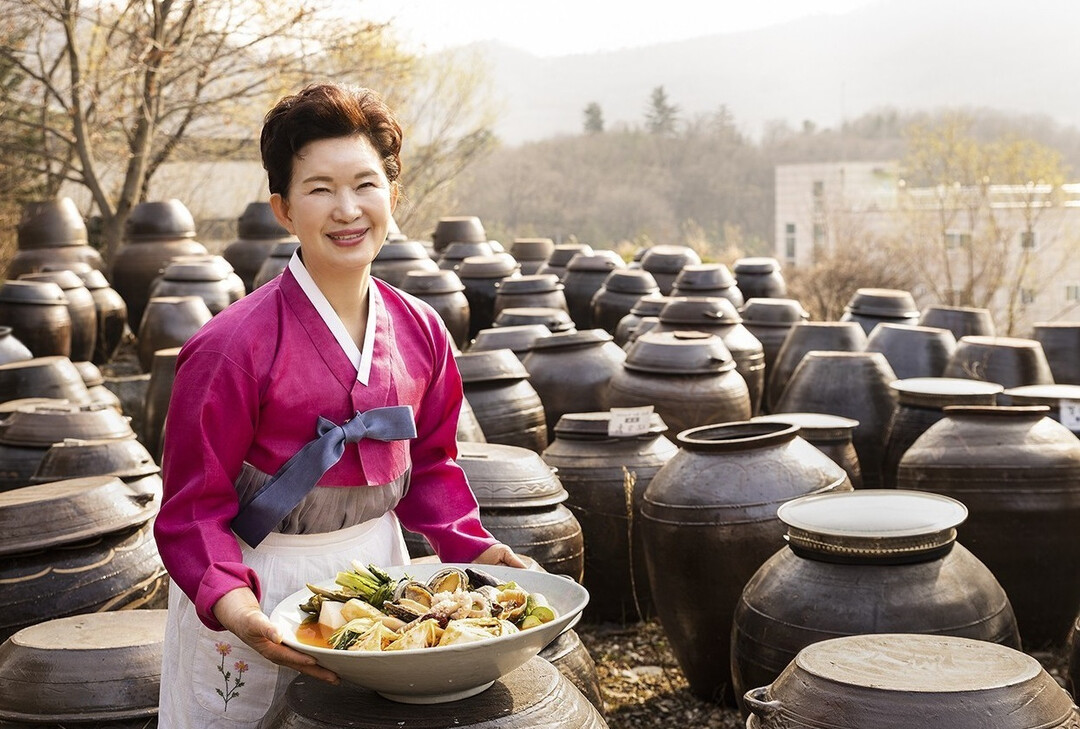
As Korea celebrates its annual Kimchi Day on November 22—a national observance established in 2020—veteran culinary artisan Lee Ha-yeon is calling for a return to fundamentals. Designated as Grand Master No. 58 of Korean Traditional Food, Lee operates the Lee Ha-yeon Kimchi Culture Center in Namyangju, Gyeonggi Province, where she has dedicated four decades to preserving Korea’s signature dish.
Her message comes at a paradoxical moment for Korean households. According to the Korea Price Information Corp., the cost of making gimjang (traditional winter kimchi) for a family of four dropped 14.8% this year to 288,500 won—the lowest level of the 2020s. Yet, data from the Korea Rural Economic Institute reveals that the proportion of households making their own kimchi fell by 5.6 percentage points over the past year to 58.6%. Despite lower ingredient costs, fewer people are preparing kimchi at home.
Rather than offering complicated shortcuts to revive the tradition, Lee insists on simplicity. "People always ask for my secret recipe, but my secret is having no secret at all," she said in a recent interview. "When you stick to the basics, time creates the flavor."
Five Essential Ingredients and the Science of Temperature
Lee believes contemporary kimchi recipes have suffered from "downward standardization," where cooks mask a lack of natural depth by adding sugar, plum extract, starch syrup, or boiled broths.
"Kimchi is a fermented vegetable dish, and napa cabbage already possesses its own natural sweetness at around 6.5 Brix," Lee explained. "All you need are five core ingredients: red pepper powder, garlic, ginger, green onions, and salted fermented seafood (jeotgal). Adding sugar accelerates lactic acid bacteria growth, making it taste good initially, but the flavor deteriorates rapidly over time."
Equally critical is temperature management before refrigeration. Lee recommends letting freshly made kimchi ferment at 15 degrees Celsius for 36 hours—adjusting the duration depending on ambient warmth—before placing it in cold storage. "That was the wisdom of our mothers, yet it isn't taught in schools and is rarely passed down today," she noted. She also highlighted jeotgal as the defining element that sets Korean kimchi apart from global pickled vegetables, as its proteins break down into amino acids to produce deep umami.
Elevating Kimchi to Haute Cuisine
Lee’s culinary journey began in middle school when she first made cucumber kimchi while living on her own. Her passion later led her to study fermentation science and collaborate with researchers at the World Institute of Kimchi.
Her path to becoming a Grand Master was sparked by seokbakji, a historic kimchi recipe recorded in the Joseon-era encyclopedia Gyuhap Chongseo that incorporates abalone, conch, octopus, and oysters. Combining scholarly research with childhood memories of yellow croaker kimchi made by her mother near the ports of Gunsan and Ganggyeong, Lee sought to prove that kimchi is a standalone culinary art rather than a mere side dish.
From National Legislation to Cultural Diplomacy
Lee was instrumental in turning November 22 into a statutory holiday. During her tenure as president of the Korea Kimchi Association, she lobbied lawmakers tirelessly for two years until the bill passed in 2020. The holiday has since gained international traction, with 17 regions across six countries—including the United States, the United Kingdom, France, Argentina, and Brazil—officially recognizing Kimchi Day. This year's seventh domestic ceremony was attended by First Lady Kim Hea-kyung.
Concerned that industrialization is overshadowing the communal heritage of kimchi-making, Lee hosted her inaugural "Gimjang Culture Gala Show" on October 20 to commemorate the UNESCO Intangible Cultural Heritage listing of gimjang. Using 2,500 heads of cabbage harvested from her own garden, Lee and her apprentices prepared 500 kilograms of kimchi, sharing the finished dish and boiled pork (suyuk) free of charge with 150 attendees, including scholars, local council members, and international guests.
"The essence of gimjang culture is sharing," Lee emphasized. "Before refrigerators existed, neighbors pooled their labor to prepare five months' worth of kimchi, exchanging life updates and sharing food with families in need. It wasn't just kimchi itself, but this communal culture that earned UNESCO recognition."
Envisioning a Global Hub in Namyangju
Despite a grueling schedule spanning international cultural events, broadcasts, running a YouTube channel with 140,000 subscribers, and expanding her recipe book to feature 100 varieties of kimchi, Lee is already focused on her next milestone.
"As kimchi becomes a global staple, people around the world will naturally ask where they can go to learn, taste, and experience it firsthand," she said. Having lived in Namyangju for 24 years, Lee hopes to partner with local officials to establish a traditional hanok kimchi experience center as a signature tourist attraction as the city approaches a population of one million.
Her vision is reflected in the name of her company and restaurant, "Bonguri"—derived from Chinese characters meaning "a village where friends meet." Through honest ingredients, patience, and community spirit, Master Lee continues to build a cultural gathering place around Korea’s most iconic dish.
[Copyright (c) Global Economic Times. All Rights Reserved.]